

How Do You Properly Sanitize a Precision Filter for Water Treatment After Installation
2026-07-21
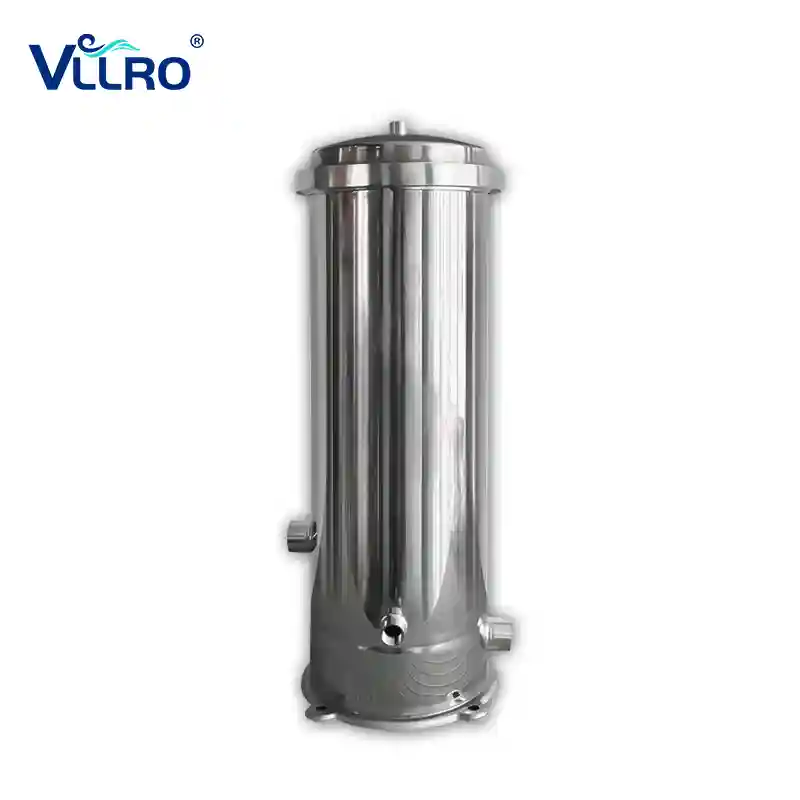
Installing a new Precision Filter For Water Treatment is only half the battle; the other half ensures it does not become a breeding ground for biofilm or bacterial pass-through. For operators using VLLRO equipment, post-installation sanitization is the single most critical step that determines system efficiency, media lifespan, and effluent safety. Without a validated sanitation protocol, even the highest-grade Precision Filter For Water Treatment can fail regulatory compliance within weeks.
The Two-Phase Sanitization Protocol
Proper sanitation is not a single action but a sequential process divided into chemical disinfection and system flushing. Below is the step-by-step procedure recommended for VLLRO industrial-grade housings.
| Step | Action | Duration | Critical Parameter |
|---|---|---|---|
| 1 | Pre-rinse with permeate or potable water (reverse flow) | 10 min | Flow rate: 5–7 m³/h |
| 2 | Soak in 0.5–1.0% peracetic acid or sodium hypochlorite solution | 45–60 min | pH maintained at 6.5–7.5 |
| 3 | Recirculate the sanitizing agent through the housing (forward flow) | 30 min | Temperature: 35–40°C max |
| 4 | Dwell time (static soak) | 2 hours | Cover all internal O-rings and end caps |
| 5 | Drain and neutralise with sodium thiosulfate (if chlorine-based) | 15 min | Check residual chlorine < 0.1 ppm |
| 6 | Final flush with treated water until conductivity matches feed | 20–30 min | Three housing volumes minimum |
VLLRO recommends avoiding quaternary ammonium compounds, as they can degrade polypropylene support cores commonly found in high-precision cartridges.
Critical Factors That Invalidate Sanitization
Many operators focus solely on chemical concentration while ignoring mechanical factors. For any Precision Filter For Water Treatment, the following checklist must be verified:
-
Housing Venting – trapped air pockets shield surfaces from liquid sanitizer. Always open top vents during filling.
-
O-Ring Lubrication – use only FDA-grade silicone lubricant on VLLRO seals; petroleum-based greases harbour microorganisms.
-
Contact Temperature – hypochlorite loses 50% of its oxidative power below 18°C. Extend soak time by 30 minutes in cold climates.
-
Flow Direction – sanitize in the same direction as normal service flow to prevent dislodging captured particulates into the downstream line.
Common Pitfalls and Post-Sanitation Verification
After completing the chemical steps, verify efficacy using two independent methods:
| Verification Method | Acceptance Criterion | Action if Failed |
|---|---|---|
| Adenosine Triphosphate (ATP) swab test | < 30 RLU (relative light units) | Repeat soak with fresh solution |
| Effluent heterotrophic plate count (HPC) | < 100 CFU/mL | Inspect housing for micro-cracks |
A Precision Filter For Water Treatment that passes both tests can be commissioned for production. However, VLLRO field data shows that 22% of early cartridge failures trace back to inadequate drying after sanitization—always blow-drain housings with sterile air for 5 minutes before restarting.
Precision Filter For Water Treatment FAQ
Q: Can I use hot water (above 80°C) to sanitize my Precision Filter For Water Treatment instead of chemicals?
A: Thermal sanitization is effective but risky for most polymeric filter media. Standard Precision Filter For Water Treatment cartridges with polyethersulfone (PES) or nylon membranes have maximum continuous operating temperatures of 60–70°C. Exceeding 80°C can permanently alter pore structure, shifting the absolute micron rating and causing particulate shedding. If you must use heat, VLLRO offers specialised high-temperature housings with PTFE seals, but even then, the soak time must be limited to 20 minutes with gradual ramping (2°C/min) to avoid thermal shock to the support cage. Chemical sanitization remains the safer, more reproducible method for 90% of municipal and industrial applications.
Q: How soon after sanitization can I put my Precision Filter For Water Treatment back into service, and do I need to discard the first batch of filtrate?
A: Service can resume immediately after the final flush meets conductivity and pH parity with the feed water—typically 20–30 minutes of flushing. However, VLLRO strongly advises discarding the first 500–1,000 litres of filtrate (or one full housing volume, whichever is greater) for potable or pharmaceutical systems. This "sacrificial volume" removes any residual neutraliser, loosened biofilm fragments, and trace oxidants that may have desorbed from housing walls. For food-grade applications, run the flush until a chlorine test strip shows zero residual and the effluent turbidity is below 0.1 NTU. Never shortcut this step—residual peracetic acid can catalyse corrosion on downstream stainless-steel valves.
Q: Does the sanitization frequency change if my Precision Filter For Water Treatment operates intermittently (e.g., 2 days per week) versus continuously?
A: Yes—intermittent operation actually demands more frequent sanitization, not less. A Precision Filter For Water Treatment that sits stagnant for 48–72 hours experiences stagnant water inside the housing, which drops dissolved oxygen and promotes anaerobic bacterial colonisation on the filter surface. For continuous systems, VLLRO recommends sanitization every 7–14 days (or per differential pressure rise). For intermittent duty, sanitize before every start-up if the idle period exceeds 48 hours, and perform a short recirculation flush (15 minutes) with feed water 2 hours prior to production to re-wet the media. Some operators use a low-dose continuous chlorine injection (0.2–0.5 ppm) during idle periods, but this requires activated-carbon post-filtration to remove residual chlorine before final use—consult your VLLRO application engineer to tailor a protocol based on your specific duty cycle and raw water quality.
Final Inspection and Documentation
Every sanitization event for a Precision Filter For Water Treatment must be logged with:
-
Date, time, and operator initials
-
Chemical batch number and concentration
-
Soak temperature and pH readings
-
ATP and HPC results
VLLRO provides custom digital logsheets compatible with SCADA systems to automate this record-keeping, ensuring full traceability for audits.
Contact Us
Proper sanitization is application-specific—what works for a municipal plant may damage a high-purity pharmaceutical loop. The VLLRO technical team has over 200 combined years of field experience with Precision Filter For Water Treatment systems across desalination, beverage, and chemical processing industries. If you are uncertain about chemical compatibility, dwell times, or verification methods for your unique water matrix, reach out to our engineering support desk. Contact us today for a free, no-obligation sanitization protocol review tailored to your system schematic, and request our new 2026 Sanitization Best-Practice Wall Chart for your control room. Your filters—and your compliance officer—will thank you.
