

How Does a Carrying Idler Roller Improve Conveyor System Performance?
2026-09-29
Article Summary
Carrying Idler Roller is a critical component in belt conveyor systems, directly affecting belt support, material transportation stability, energy consumption, and maintenance costs. This guide explains how Carrying Idler Roller works, why roller quality matters, how to select the right configuration, and what factors influence service performance. For industries such as mining, cement, ports, power plants, and bulk material handling, choosing a reliable conveyor roller solution can significantly improve operational efficiency. Xin Aneng provides durable Carrying Idler Roller solutions designed for demanding industrial conveying environments.
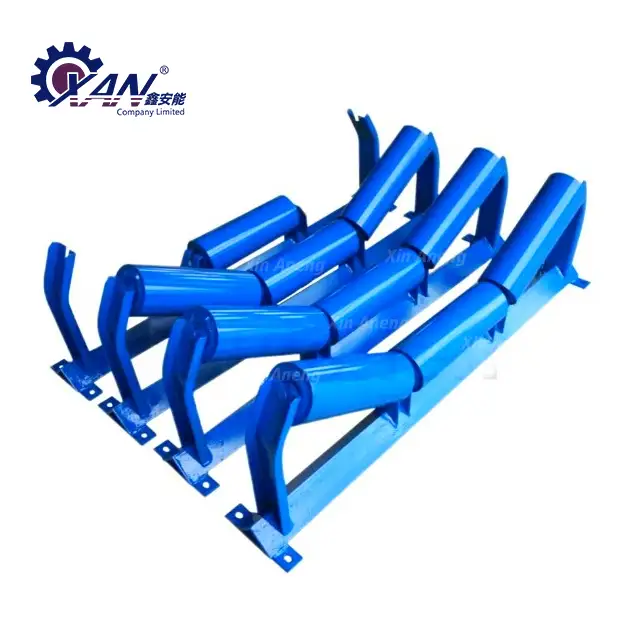
What Is a Carrying Idler Roller?
In a belt conveyor system, the Carrying Idler Roller is installed beneath the loaded side of the conveyor belt to support both the belt and transported materials. Unlike drive pulleys that provide movement power, carrying idlers mainly focus on maintaining belt shape, reducing sag, and ensuring smooth material transportation.
During continuous operation, conveyor belts carry heavy materials such as coal, ore, aggregate, cement, grain, and industrial raw materials. Without proper support, the belt may experience excessive deformation, increased friction, uneven loading, and accelerated wear.
A well-designed Carrying Idler Roller helps maintain stable belt contact while allowing the belt to move smoothly across the conveyor structure. This makes it an essential component for long-distance and heavy-duty conveying systems.
- Support loaded conveyor belts during transportation
- Reduce belt sag between supporting points
- Maintain stable belt alignment
- Lower rolling resistance and operating stress
- Extend conveyor belt service life
How Does a Carrying Idler Roller Improve Conveyor Performance?
Many conveyor problems are related to unstable belt support rather than the conveyor belt itself. A poorly manufactured or incorrectly selected roller can increase friction, create uneven pressure, and lead to unexpected downtime.
Xin Aneng designs Carrying Idler Roller solutions with attention to rotation performance, structural strength, sealing protection, and dimensional accuracy to help conveyors operate reliably under demanding conditions.
| Performance Area | Impact of Quality Carrying Idler Roller |
|---|---|
| Belt Support | Maintains proper belt profile and reduces deformation during heavy loading |
| Running Resistance | Smooth rotation helps reduce unnecessary energy consumption |
| Belt Protection | Stable support reduces abnormal friction and edge wear |
| Maintenance Cost | Reliable bearings and sealing systems reduce replacement frequency |
Key Components Behind Reliable Roller Operation
A Carrying Idler Roller is not simply a steel tube rotating around a shaft. Its performance depends on the cooperation between multiple components, including the roller shell, shaft, bearings, seals, and internal lubrication system.
| Component | Function | Buyer Concern |
|---|---|---|
| Roller Shell | Provides the rotating contact surface for the conveyor belt | Wear resistance and roundness accuracy |
| Shaft | Supports the rotating structure and transfers load | Strength and deformation resistance |
| Bearing | Allows smooth roller rotation | Load capacity and operating lifespan |
| Sealing System | Protects internal parts from dust and moisture | Performance in harsh environments |
| Lubrication | Reduces internal friction | Long-term stability |
Common Types of Carrying Idler Roller Designs
Different conveyor applications require different roller structures. Selecting the correct type depends on belt width, material characteristics, conveyor angle, loading conditions, and operating environment.
- Trough Carrying Idler Roller: Commonly used for bulk materials because the angled rollers create a trough shape that improves material retention.
- Flat Carrying Idler Roller: Suitable for applications where a flat belt support surface is required.
- Impact Carrying Idler Roller: Designed for loading areas where falling materials create higher impact forces.
- Self-Aligning Carrying Idler Roller: Helps reduce belt deviation and maintain stable tracking.
How to Select the Right Carrying Idler Roller?
Choosing a conveyor roller only by price or appearance may result in higher maintenance costs later. The correct selection should consider actual operating conditions and technical requirements.
| Selection Factor | Why It Matters |
|---|---|
| Belt Width | Determines roller length and support coverage |
| Material Weight | Affects required load capacity |
| Conveyor Speed | Influences bearing performance and rotation requirements |
| Working Environment | Dust, moisture, and temperature affect sealing requirements |
| Installation Structure | Ensures proper compatibility with existing conveyor frames |
Before ordering Carrying Idler Roller products, buyers should prepare information including conveyor belt width, roller diameter, loading capacity, operating speed, material type, and installation requirements.
Manufacturing Quality Factors That Affect Service Life
Industrial conveyors often operate continuously under heavy loads. Small differences in roller manufacturing accuracy can influence long-term performance.
Precision Manufacturing
Accurate tube forming, shaft machining, and assembly control help reduce vibration and improve rotation stability.
Reliable Bearing Protection
Dust and moisture are common causes of bearing failure. Effective sealing structures help protect internal components in harsh working environments.
Stable Material Selection
Proper material selection improves resistance against mechanical stress, impact, and continuous operation.
Consistent Inspection Process
Xin Aneng focuses on product consistency through manufacturing control and inspection procedures to provide dependable conveyor components for industrial applications.
Applications Across Different Industries
Carrying Idler Roller products are widely used wherever bulk materials need continuous transportation.
| Industry | Typical Application |
|---|---|
| Mining | Transportation of coal, minerals, and ores |
| Cement | Handling limestone, clinker, and raw materials |
| Ports | Bulk cargo loading and unloading systems |
| Power Plants | Fuel and material conveying operations |
| Steel Industry | Heavy material transportation processes |
Frequently Asked Questions
What is the main purpose of a Carrying Idler Roller?
A Carrying Idler Roller supports the loaded side of a conveyor belt, helping maintain belt shape, reduce sagging, and achieve stable material transportation.
How often should conveyor idler rollers be replaced?
Replacement frequency depends on load conditions, operating environment, maintenance practices, bearing quality, and conveyor working hours. Regular inspection helps identify problems before serious failures occur.
What causes carrying idler roller failure?
Common causes include bearing damage, insufficient sealing protection, excessive load, poor installation accuracy, and contamination from dust or water.
Can Xin Aneng provide customized Carrying Idler Roller solutions?
Yes. Xin Aneng can provide solutions according to conveyor specifications, working conditions, and customer requirements.
What information should be provided for quotation?
Buyers should provide conveyor belt width, roller dimensions, application environment, material characteristics, quantity requirements, and technical specifications.
Conclusion
Although Carrying Idler Roller is a small part of a complete conveyor system, its performance directly influences conveyor reliability, belt protection, maintenance requirements, and production efficiency.
Selecting rollers with suitable structure, accurate manufacturing, reliable sealing, and stable performance helps create a more efficient material handling system. Xin Aneng continues to provide professional conveyor roller solutions for customers requiring dependable performance in challenging industrial environments.
Need Reliable Carrying Idler Roller Solutions?
Whether you are replacing existing conveyor rollers or developing a new material handling system, Xin Aneng can provide suitable Carrying Idler Roller solutions based on your application requirements. Contact us today to discuss your project specifications and receive professional support.
Contact Us