

How Does a High Temperature Centrifugal Fan Operate in Extreme Industrial Environments?
2025-12-22
Article Abstract
A High Temperature Centrifugal Fan is a critical airflow solution designed for continuous operation under extreme thermal conditions commonly found in metallurgy, cement production, power generation, chemical processing, and waste incineration. This article provides a comprehensive technical analysis of how a high temperature centrifugal fan operates, how its structural design supports stable performance at elevated temperatures, and how engineers can evaluate key parameters for real-world applications. The content is structured to align with industrial procurement logic and search behavior, offering detailed specifications, operational principles, frequently asked questions, and long-term development considerations.
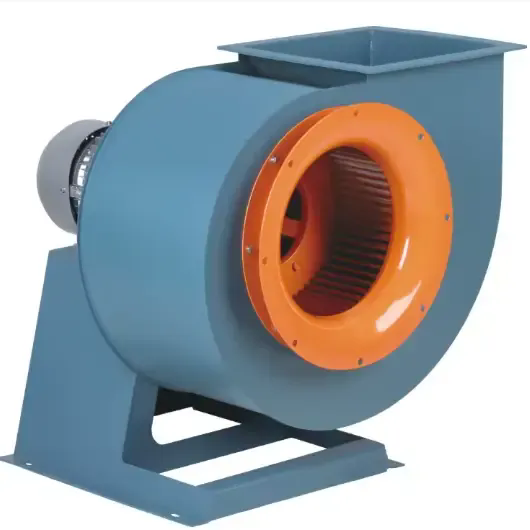
Table of Contents
- 1. How Is a High Temperature Centrifugal Fan Engineered for Thermal Stability?
- 2. How Do Technical Parameters Define Performance Boundaries?
- 3. How Is a High Temperature Centrifugal Fan Applied Across Industries?
- 4. How Can Engineers Address Common Questions and Operational Challenges?
1. How Is a High Temperature Centrifugal Fan Engineered for Thermal Stability?
A High Temperature Centrifugal Fan is a mechanical ventilation device designed to transport hot gases or air streams typically ranging from 300°C to over 1,000°C, depending on material configuration and cooling methods. Unlike standard centrifugal fans, this equipment must withstand sustained thermal stress while maintaining aerodynamic efficiency and mechanical integrity.
The core working principle is based on centrifugal force. Ambient or process gas enters the fan axially through the inlet, is accelerated radially by the rotating impeller, and is discharged tangentially through the volute casing. Under high-temperature conditions, each component must be engineered to compensate for thermal expansion, oxidation, and potential material fatigue.
Thermal stability is achieved through a combination of structural layout and material selection. The impeller is typically fabricated from heat-resistant alloy steel or stainless steel grades with controlled carbon content. The casing incorporates expansion joints or reinforced ribs to reduce deformation, while the shaft system is designed with extended length to isolate bearings from direct heat exposure.
In many industrial designs, auxiliary cooling methods such as air cooling, water cooling, or oil circulation are introduced around the bearing housing. This approach ensures that mechanical components remain within acceptable operating temperatures even when the conveyed gas exceeds several hundred degrees Celsius.
2. How Do Technical Parameters Define Performance Boundaries?
Understanding technical parameters is essential for evaluating whether a High Temperature Centrifugal Fan can meet specific process requirements. These parameters define the operational envelope and directly influence efficiency, safety, and service life.
Below is a consolidated technical parameter overview presented in a single structured table to highlight engineering professionalism and clarity.
| Parameter | Typical Range | Technical Significance |
|---|---|---|
| Operating Temperature | 300°C – 1,200°C | Determines material grade and cooling strategy |
| Airflow Capacity | 1,000 – 300,000 m³/h | Defines volumetric transport capability |
| Total Pressure | 1,500 – 25,000 Pa | Indicates resistance-handling performance |
| Impeller Material | Heat-resistant alloy steel | Ensures strength under thermal load |
| Drive Mode | Belt drive / Direct coupling | Affects transmission efficiency and maintenance |
| Shaft Cooling | Optional air or water cooling | Protects bearings from heat conduction |
| Installation Orientation | Horizontal / Vertical | Adapts to spatial constraints |
Each parameter must be evaluated in relation to the specific process environment. For example, furnace exhaust systems prioritize temperature resistance, while kiln induced draft systems emphasize stable airflow and pressure consistency.
3. How Is a High Temperature Centrifugal Fan Applied Across Industries?
The application scope of a High Temperature Centrifugal Fan is closely tied to processes that involve combustion, thermal treatment, or high-energy reactions. Its role is not limited to ventilation; it often becomes an integral part of process control.
In metallurgical plants, these fans are used to extract flue gas from blast furnaces, converters, and reheating furnaces. Stable airflow directly influences combustion efficiency and emission control.
In cement production lines, high temperature centrifugal fans serve as kiln exhaust fans and clinker cooler fans. They handle dust-laden hot gas streams while maintaining constant draft, which is essential for material calcination stability.
Power generation facilities rely on high temperature centrifugal fans for boiler induced draft systems and flue gas desulfurization units. The fan must operate continuously under fluctuating thermal loads without inducing vibration or mechanical stress.
Chemical and waste treatment plants use these fans to transport corrosive or particulate-laden hot gases. In such environments, surface coatings and internal clearances are carefully optimized to prevent erosion and chemical degradation.
4. How Can Engineers Address Common Questions and Operational Challenges?
Below is a concise High Temperature Centrifugal Fan FAQ section structured in a clear question-and-answer format.
How does a high temperature centrifugal fan differ from a standard centrifugal fan?
A high temperature centrifugal fan is designed with heat-resistant materials, extended shaft structures, and specialized cooling systems, allowing it to operate safely at temperatures that would cause deformation or failure in standard fans.
How is bearing reliability ensured under high thermal conditions?
Bearing reliability is maintained by isolating the bearing housing from the hot gas zone, using extended shafts, heat shields, and auxiliary cooling methods such as forced air or water circulation.
How should airflow and pressure be matched to the system?
Airflow and pressure selection must be based on system resistance curves, process temperature, and operating margin. Oversizing can lead to energy loss, while undersizing can cause unstable operation and thermal overload.
How often should maintenance be performed?
Maintenance intervals depend on operating temperature, dust concentration, and runtime. Regular inspection of impeller balance, bearing lubrication, and casing integrity is recommended to ensure long-term stability.
References
- AMCA Standards for Centrifugal Fan Performance
- ISO 5801: Industrial Fans — Performance Testing
- ASHRAE Handbook: HVAC Applications
From a long-term industrial development perspective, the High Temperature Centrifugal Fan continues to evolve toward higher efficiency, lower vibration, and improved thermal endurance. Manufacturers increasingly integrate computational fluid dynamics and advanced metallurgy to refine airflow patterns and reduce energy consumption under extreme conditions.
As a professional manufacturer in this field, Hebei Ketong focuses on delivering high temperature centrifugal fan solutions that align with demanding industrial standards and complex operating environments. Through continuous engineering optimization and strict quality control, stable performance and long service life can be achieved across diverse applications.
For project-specific selection guidance, technical consultation, or customized fan configurations, contact us to discuss detailed operating requirements and system conditions.
