

How Does a Parallel Twin Screw Improve Plastic Extrusion Efficiency?
2026-05-15
Abstract: Parallel twin screw extruders are widely used in the plastics industry for compounding, blending, and processing thermoplastics. This article explores the benefits, working principles, and applications of parallel twin screw extruders, aiming to address common operational challenges, improve production efficiency, and guide manufacturers in selecting the right equipment.
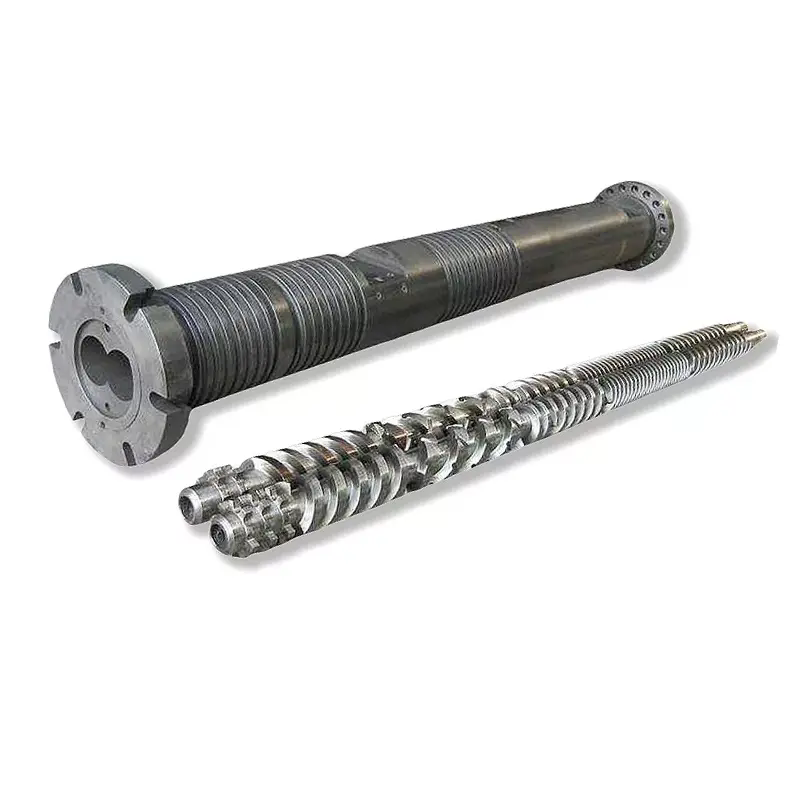
Table of Contents
- Introduction to Parallel Twin Screw Extruders
- Working Principle of Parallel Twin Screw Extruders
- Advantages of Using Parallel Twin Screw Extruders
- Key Applications
- Common Operational Challenges and Solutions
- How to Select the Right Parallel Twin Screw Extruder
- Frequently Asked Questions
- Conclusion
Introduction to Parallel Twin Screw Extruders
In modern plastic processing, parallel twin screw extruders have become essential for manufacturers seeking consistent quality and high efficiency. Unlike single-screw extruders, parallel twin screw machines feature two intermeshing screws that rotate within a barrel, enabling superior mixing and compounding capabilities.
Manufacturers such as Zhoushan Nanhaiya Plastic Machinery Co., Ltd. specialize in designing and producing high-performance parallel twin screw extruders suitable for various thermoplastic materials.
- Enhanced mixing and homogenization of polymers.
- Higher output with better temperature control.
- Flexibility for compounding and reactive extrusion.
Working Principle of Parallel Twin Screw Extruders
The parallel twin screw extruder works by the synchronized rotation of two screws inside a barrel. Each screw consists of several segments, including conveying, kneading, and mixing elements, designed to transport and process polymer material efficiently.
Key features of the working principle:
| Component | Function |
|---|---|
| Screw | Conveys material through the barrel while applying shear for mixing |
| Kneading Blocks | Enhances dispersive and distributive mixing of additives and polymers |
| Barrel | Maintains temperature and provides structural support |
By adjusting screw configurations, speed, and temperature zones, operators can optimize material flow, prevent degradation, and achieve consistent product quality.
Advantages of Using Parallel Twin Screw Extruders
Choosing a parallel twin screw extruder offers several benefits compared to traditional extrusion systems:
- Improved Mixing: The intermeshing screws create intense shear and elongational flow, ensuring uniform blending of fillers, colorants, and polymers.
- Higher Throughput: Multiple screw configurations allow for higher output without compromising product consistency.
- Reduced Degradation: Efficient temperature control and controlled shear minimize thermal and mechanical degradation of sensitive materials.
- Versatility: Suitable for compounding, reactive extrusion, and processing a variety of thermoplastics such as PVC, PE, and PP.
Key Applications
Parallel twin screw extruders are widely utilized in industries where precise material handling and high-quality output are critical:
- Plastic Compounding: Blending polymers with additives, fillers, or reinforcements.
- Food and Pharmaceutical Industries: For extruding products where consistent mixing is required.
- Recycling: Reprocessing waste plastics into reusable granules.
- Advanced Material Processing: Producing bio-polymers or high-performance composites.
Common Operational Challenges and Solutions
Despite their advantages, parallel twin screw extruders require careful operation to avoid common issues:
| Problem | Solution |
|---|---|
| Poor Mixing | Adjust screw configuration or add kneading blocks for better dispersive mixing. |
| Overheating | Check barrel temperature settings and cooling system efficiency. |
| Material Degradation | Reduce screw speed and optimize feed rate to prevent excessive shear. |
| Inconsistent Output | Ensure uniform feed and maintain proper screw alignment. |
How to Select the Right Parallel Twin Screw Extruder
When choosing a parallel twin screw extruder, consider the following criteria:
- Material Type: Different polymers and composites require specific screw designs and temperature control zones.
- Production Capacity: Evaluate required throughput to select screw diameter and length-to-diameter (L/D) ratio.
- Application Needs: Compounding, reactive extrusion, or recycling may dictate specific configurations and auxiliary equipment.
- Manufacturer Expertise: Partner with experienced suppliers like Zhoushan Nanhaiya Plastic Machinery Co., Ltd. to ensure reliable equipment and support.
Frequently Asked Questions
- Q: What types of polymers can a parallel twin screw extruder handle?
- A: These extruders are suitable for thermoplastics like PVC, PE, PP, and specialty polymers, as well as composites and recycled materials.
- Q: Can the screw configuration be customized?
- A: Yes, screws can be tailored with different kneading blocks, mixing zones, and segment lengths to optimize performance for specific materials.
- Q: How does a parallel twin screw extruder compare to a single-screw extruder?
- A: Parallel twin screws provide superior mixing, higher throughput, and better control of temperature-sensitive materials.
- Q: Is maintenance difficult?
- A: Routine maintenance involves checking screw alignment, barrel condition, and lubrication. Partnering with a reliable manufacturer simplifies support.
Conclusion
Parallel twin screw extruders play a critical role in modern plastic processing by offering high efficiency, superior mixing, and flexible material handling. Manufacturers can overcome operational challenges by understanding working principles, optimizing configurations, and partnering with reputable suppliers like Zhoushan Nanhaiya Plastic Machinery Co., Ltd.
For inquiries about our advanced parallel twin screw extruders and to discuss how they can enhance your production line, contact us today.
