

How Does a Roots Blower Solve Industrial Airflow and Pressure Challenges?
2026-01-27
Article Summary
Industrial systems across wastewater treatment, pneumatic conveying, chemical processing, and aquaculture often face challenges related to consistent airflow, pressure stability, maintenance downtime, energy efficiency, and operational continuity. Roots blowers deliver fixed-volume airflow under varying pressure conditions, making them a reliable solution for many industries that require steady, oil-free air supply and continuous performance. This article explores how Roots blowers meet these needs by explaining their operating principle, key performance parameters, typical industrial applications, common pain points customers encounter, and answers to frequent questions related to deployment and service considerations.
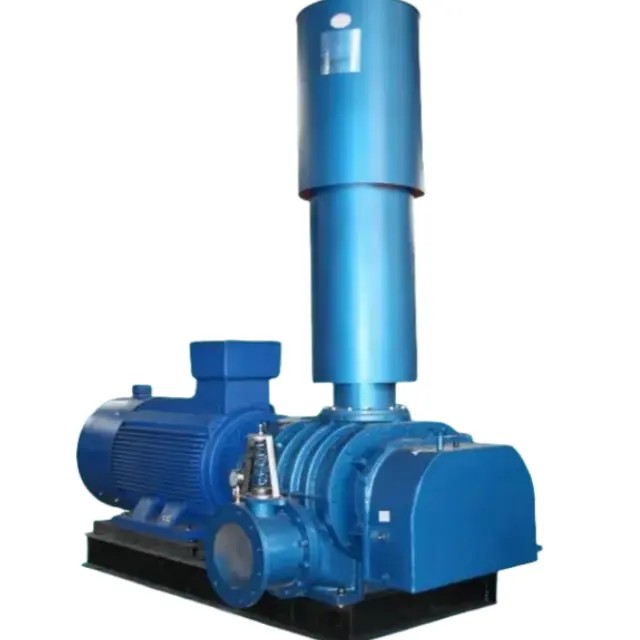
Table of Contents
- Overview of Roots Blower Fundamentals
- How Roots Blowers Operate
- Industrial Benefits and Pain Point Solutions
- Common Application Scenarios
- Selecting the Right Roots Blower
- Frequently Asked Questions
- Conclusion and Next Steps
Overview of Roots Blower Fundamentals
A Roots blower is a type of positive displacement air-moving machine characterized by two counter-rotating lobed rotors enclosed in a casing. As the rotors turn, air is captured and transported from the inlet to the outlet, resulting in a continuous and predictable flow of air or gas. Unlike turbo or centrifugal blowers whose performance is highly sensitive to pressure changes, Roots blowers maintain a steady volume flow rate even when system backpressure fluctuates. This fundamental operating principle makes them particularly well-suited for industrial processes requiring stable airflow under varied load conditions. :contentReference[oaicite:0]{index=0}
The core feature of Roots blowers is positive displacement, meaning they displace a fixed volume of air with each rotor revolution. As pressure increases, the volume flow remains near constant within the design range, enabling reliable performance in applications like aeration, pneumatic conveying, and fluidization air support. :contentReference[oaicite:1]{index=1}
How Roots Blowers Operate
At the heart of a Roots blower is the mechanical interaction between its lobed rotors and housing. As the rotors spin in opposite directions, they create discrete pockets that capture air at the inlet and move it to the outlet. This process repeats continuously, generating a consistent airflow without internal compression within the rotors themselves. The compression effect results from the decreasing volume between the rotors and the discharge port. :contentReference[oaicite:2]{index=2}
| Component | Function |
|---|---|
| Rotors | Trap and transport fixed volumes of air |
| Casing | Encloses rotors and maintains geometry for volumetric movement |
| Inlet | Air intake for expansion chambers |
| Outlet | Expels captured air at increased pressure |
Industrial Benefits and Pain Point Solutions
Roots blowers are widely applied because they address several core operational stressors experienced in heavy-duty manufacturing, wastewater treatment, and material handling systems: consistent airflow under varying pressure conditions, reduced maintenance downtime, and the ability to operate oil-free where air purity matters. :contentReference[oaicite:3]{index=3}
- Consistent airflow: Fixed-volume displacement ensures predictable performance even as system resistance changes. :contentReference[oaicite:4]{index=4}
- Reduced maintenance: Simple mechanical structure results in fewer wear points and easier servicing. :contentReference[oaicite:5]{index=5}
- Oil-free operation: Because the air path remains independent of lubrication, these blowers deliver clean air, ideal for sensitive industrial processes. :contentReference[oaicite:6]{index=6}
- Continuous duty capability: Robust design enables extended runtime without sudden performance degradation. :contentReference[oaicite:7]{index=7}
Common Application Scenarios
Roots blowers are deployed across diverse industrial contexts where reliable airflow and pressure control are essential. Primary sectors include wastewater aeration, pneumatic conveying systems, aquaculture oxygen supply, combustion air support, and chemical processing. :contentReference[oaicite:8]{index=8}
- Wastewater treatment: Stable air delivery improves oxygen transfer and biological breakdown processes. :contentReference[oaicite:9]{index=9}
- Pneumatic conveying: Enables bulk material transport with consistent airflow. :contentReference[oaicite:10]{index=10}
- Aquaculture: Supplies clean, oil-free air to oxygenation systems. :contentReference[oaicite:11]{index=11}
- Chemical processing: Supports reaction environments where pressure and flow stability matter. :contentReference[oaicite:12]{index=12}
Selecting the Right Roots Blower
Choosing an appropriate Roots blower model hinges on understanding airflow requirements, pressure range, duty cycle, and environmental conditions. Key considerations include the required volumetric flow rate, expected backpressure, ambient temperature, noise constraints, and maintenance access. Models with advanced acoustics or noise attenuation may be chosen where workplace sound levels are regulated. :contentReference[oaicite:13]{index=13}
| Selection Factor | Consideration |
|---|---|
| Airflow range | Match blower capacity to system demand |
| Pressure range | Ensure pressure capability meets operating backpressure |
| Environment | Account for dust, humidity, and corrosives |
| Serviceability | Ensure easy access for routine inspection |
Frequently Asked Questions
Q: Why choose a Roots blower over a centrifugal blower?
A: Roots blowers provide nearly constant flow under varying backpressure, unlike centrifugal units where flow can drop significantly as pressure rises. They are ideal where consistent volumetric airflow is prioritized over high-pressure compression. :contentReference[oaicite:14]{index=14}
Q: Can Roots blowers run continuously?
A: Yes, the robust design and fewer moving parts allow Roots blowers to operate continuously for long periods when properly specified and maintained, making them suitable for industrial duty cycles. :contentReference[oaicite:15]{index=15}
Q: Do Roots blowers require special lubricants?
A: While the rotors themselves operate without oil in the airflow path, bearings and gearboxes still require proper lubrication per manufacturer guidance to protect internal components and ensure long-term reliability. :contentReference[oaicite:16]{index=16}
Q: Are Roots blowers noisy?
A: Basic models can produce moderate noise levels due to pulsation and rotor dynamics; however, advanced designs incorporate acoustical enclosures or silencers to mitigate noise in sensitive environments. :contentReference[oaicite:17]{index=17}
Conclusion and Next Steps
In summary, Roots blowers remain a practical industrial choice where consistent airflow, durable continuous performance, and oil-free operation matter. Their positive displacement principle, simple mechanical design, and adaptability to a variety of sectors make them a reliable option in many airflow and pressure management applications.
Lano’s range of industrial Roots blowers is engineered to meet demanding operational requirements with quality construction and reliable service life. For tailored solutions, detailed specifications, or project inquiries, please contact Lano’s technical support team and contact us to discuss your airflow application needs.
