

How Does a Roots Vacuum Pump Operate in Industrial Vacuum Systems?
2025-12-18
Article Abstract
Roots Vacuum Pump technology is widely applied across chemical processing, metallurgy, electronics, energy, and environmental engineering. This article provides a structured and technically grounded explanation of how a Roots Vacuum Pump operates within industrial vacuum systems, with a focus on design logic, operating parameters, system compatibility, and long-term application considerations. The discussion is organized into four core sections to support engineers, procurement specialists, and technical decision-makers seeking a comprehensive understanding aligned with real-world operating conditions.
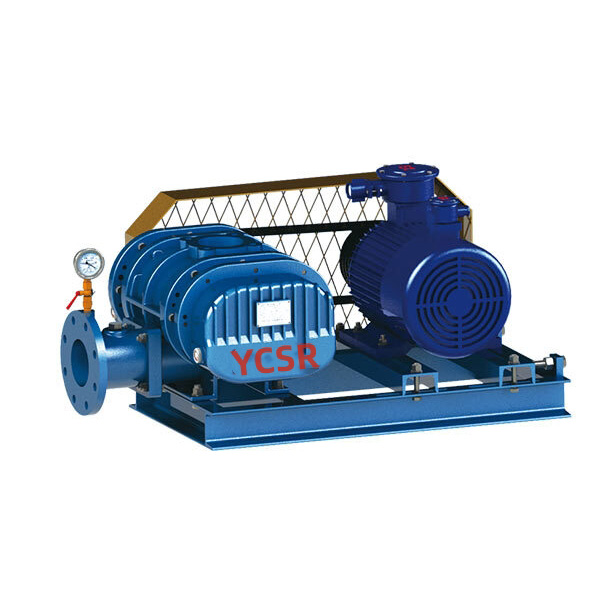
Table of Contents
- How Is a Roots Vacuum Pump Structured and What Is the Core Operating Principle?
- How Do Technical Parameters Define Roots Vacuum Pump Performance?
- How Is a Roots Vacuum Pump Integrated into Multi-Stage Vacuum Systems?
- How Should Roots Vacuum Pumps Be Evaluated for Long-Term Industrial Use?
Content Outline
- Fundamental mechanical design and gas transfer mechanism
- Key parameters and engineering specifications
- System-level configuration and operational logic
- Application trends and selection considerations
How Is a Roots Vacuum Pump Structured and What Is the Core Operating Principle?
A Roots Vacuum Pump is a positive displacement vacuum device derived from the Roots blower concept. Its internal structure is based on two symmetrical, figure-eight-shaped rotors mounted on parallel shafts inside a precision-machined housing. These rotors rotate in opposite directions without physical contact, maintaining extremely tight clearances that enable gas transfer without internal compression.
During operation, gas enters the pump chamber through the inlet port. As the rotors rotate, sealed gas volumes are formed between the rotor lobes and the housing wall. These gas volumes are transported from the inlet side to the outlet side, where they are discharged into a backing pump or downstream system. Compression does not occur within the pump body itself; instead, pressure reduction is achieved through continuous gas displacement.
This operating logic allows the Roots Vacuum Pump to deliver very high pumping speeds at low and medium vacuum ranges. Because there is no internal compression, thermal load inside the chamber remains low, which supports stable operation under continuous industrial duty cycles.
Key structural characteristics include synchronized timing gears, oil-lubricated bearings isolated from the pumping chamber, and dynamically balanced rotors. These elements collectively ensure dimensional stability, minimal vibration, and consistent volumetric efficiency.
How Do Technical Parameters Define Roots Vacuum Pump Performance?
The performance of a Roots Vacuum Pump is determined by a combination of mechanical design and operating parameters. Understanding these parameters is essential for correct system sizing and application matching.
| Parameter | Typical Range | Engineering Significance |
|---|---|---|
| Pumping Speed | 150–30,000 m³/h | Determines gas throughput capacity at specified pressure ranges |
| Ultimate Pressure (with backing pump) | 10⁻³ to 10⁻⁵ mbar | Defines achievable vacuum level in multi-stage systems |
| Rotor Clearance | 0.1–0.3 mm | Ensures non-contact operation and volumetric efficiency |
| Rotational Speed | 1,000–6,000 rpm | Impacts pumping speed and thermal characteristics |
| Cooling Method | Air-cooled / Water-cooled | Controls thermal stability during continuous operation |
These parameters should be evaluated as a system rather than individually. For example, higher pumping speed must be matched with appropriate backing pump capacity to prevent overload conditions. Similarly, cooling method selection depends on ambient temperature, gas composition, and duty cycle.
Material selection also influences performance. Cast iron housings are common for general industrial use, while stainless steel configurations are preferred for corrosive or high-purity environments.
How Is a Roots Vacuum Pump Integrated into Multi-Stage Vacuum Systems?
In most industrial applications, a Roots Vacuum Pump does not operate independently. It is typically installed as a booster stage in combination with a backing pump such as a rotary vane pump, liquid ring pump, or dry screw vacuum pump.
The system logic is based on staged pressure reduction. The backing pump initially evacuates the system from atmospheric pressure to the operating range where the Roots Vacuum Pump becomes effective. Once activated, the Roots stage significantly increases pumping speed, reducing evacuation time and stabilizing system pressure.
Integration considerations include:
- Startup pressure thresholds to prevent motor overload
- Bypass valve configuration for pressure equalization
- Gas composition and particulate management
- Thermal expansion compensation
Advanced systems may incorporate frequency-controlled drives to adjust rotor speed dynamically based on process demand. This allows precise control of pumping capacity while maintaining mechanical safety margins.
Proper instrumentation, including pressure sensors and temperature monitoring, is essential for maintaining operational stability and extending service life.
How Should Roots Vacuum Pumps Be Evaluated for Long-Term Industrial Use?
Long-term evaluation of a Roots Vacuum Pump involves more than initial performance metrics. Factors such as maintenance intervals, seal durability, energy efficiency, and system compatibility must be considered.
From an operational perspective, non-contact rotor design significantly reduces internal wear, resulting in predictable maintenance schedules. However, external components such as bearings, timing gears, and seals require periodic inspection.
Energy consumption should be analyzed at the system level. Although the Roots stage increases instantaneous power demand, overall energy usage may decrease due to shorter evacuation times and improved process efficiency.
As industrial processes evolve toward higher throughput and stricter environmental control, Roots Vacuum Pump systems continue to be adapted for intelligent monitoring and modular integration. These trends reflect a broader shift toward reliability-centered design in vacuum engineering.
Roots Vacuum Pump FAQ
How does a Roots Vacuum Pump differ from a rotary vane vacuum pump?
A Roots Vacuum Pump operates without internal compression and is designed for high pumping speed at low pressures, whereas a rotary vane pump performs internal compression and is typically used as a primary or backing pump in higher pressure ranges.
How is overheating prevented during continuous Roots Vacuum Pump operation?
Overheating is controlled through precise rotor clearances, external cooling systems, and proper coordination with the backing pump to ensure the Roots stage operates within its designed pressure range.
Brand Reference and Contact Information
In industrial vacuum applications requiring stable performance and engineered reliability, Roots Vacuum Pump solutions from Yinchi are designed to support diverse operating conditions and system configurations. Through disciplined manufacturing standards and application-driven design, Yinchi provides vacuum equipment aligned with modern industrial requirements.
For detailed technical consultation, system matching, or product specifications tailored to specific processes, please contact the Yinchi technical team to discuss application requirements and project objectives.
