

How Does a Single Jet Water Meter Improve Accuracy and Efficiency?
2025-12-05
Single Jet Water Meters have become a cornerstone in accurate water consumption monitoring for residential, commercial, and industrial applications. Designed for simplicity, reliability, and long-term durability, these meters are widely used to measure water flow in pipelines while maintaining low maintenance requirements. The primary focus of this article is to explore the technical advantages, functional applications, future trends, and practical guidance for Single Jet Water Meters, providing a detailed understanding of why they remain an essential component in modern water management systems.
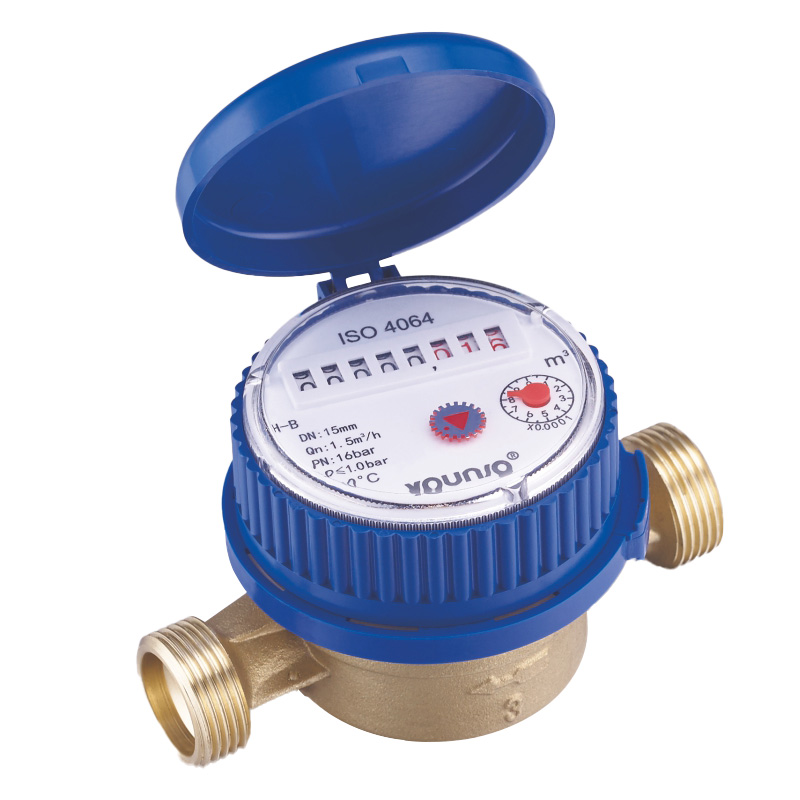
Single Jet Water Meters operate using a single-jet impeller mechanism. Water flows through the meter, striking the impeller at a precise angle, causing it to rotate. This rotation is then translated into volumetric flow readings via mechanical or electronic registers. Unlike multi-jet meters, the single-jet design reduces turbulence, resulting in better accuracy, even under low flow conditions. The following table summarizes the key technical parameters of typical Single Jet Water Meters:
| Parameter | Specification |
|---|---|
| Nominal Diameter (DN) | DN15, DN20, DN25, DN32, DN40, DN50 |
| Flow Range | Qmin: 1.5 m³/h, Qmax: 15 m³/h |
| Maximum Working Pressure | 1.6 MPa |
| Accuracy Class | Class B (±2%) |
| Material | Brass body, stainless steel impeller |
| Temperature Range | 0°C – 50°C |
| Register Type | Mechanical or electronic |
| Connection Type | Threaded (G) or flange |
| Anti-magnetic Features | Optional |
| Service Life | ≥10 years |
This table demonstrates the versatility of Single Jet Water Meters in adapting to various pipeline sizes and operational conditions, making them suitable for municipal water supply, commercial buildings, and industrial process water applications.
How Do Single Jet Water Meters Ensure Long-Term Accuracy and Reliability?
One of the most critical aspects of water metering is maintaining consistent accuracy over time. Single Jet Water Meters are engineered to deliver precise readings even under fluctuating water pressures and varying flow rates. The impeller design minimizes friction and wear, while high-quality materials, such as stainless steel impellers and corrosion-resistant brass or bronze bodies, reduce the risk of degradation.
Key Functional Advantages:
-
High Measurement Accuracy
The single-jet impeller mechanism provides accurate readings across low, medium, and high flows, reducing errors in billing and consumption monitoring. -
Durability and Longevity
With robust materials and anti-corrosion treatments, these meters can operate reliably for more than a decade, even in demanding environments. -
Easy Installation and Maintenance
Compact design and standard connection types simplify installation, while fewer moving parts reduce maintenance needs. -
Versatile Application
Applicable to both cold and slightly warm water systems, Single Jet Water Meters can accommodate a wide range of residential, commercial, and industrial applications. -
Cost-Effective Operation
Low-pressure loss, minimal maintenance requirements, and long service life make these meters economically efficient for both utilities and end users.
How Does Technology Influence Single Jet Water Meters?
Advancements in water meter technology, particularly in digital and remote reading capabilities, have significantly enhanced the functionality of Single Jet Water Meters. Electronic registers enable remote monitoring, real-time data collection, and automated leak detection, which can substantially reduce operational costs. Additionally, anti-tampering designs and magnetic-resistant materials prevent external interference, ensuring data integrity.
How Can Single Jet Water Meters Meet Future Water Management Demands?
With global water consumption on the rise and utilities facing stricter efficiency and monitoring standards, Single Jet Water Meters are evolving to meet future demands. Integration with smart water management systems is becoming increasingly important. Key trends include:
-
Smart Meter Integration
Modern Single Jet Meters can be equipped with electronic or wireless modules to provide real-time flow data to utility control centers. This integration allows for predictive maintenance, leak detection, and consumption analytics. -
Energy Efficiency
By minimizing pressure loss in pipelines, Single Jet Water Meters contribute to energy savings in pump-driven systems. Accurate metering prevents overuse, optimizing water distribution networks. -
Sustainability
Reliable measurement ensures equitable water distribution and prevents wastage, aligning with global sustainability goals. -
Enhanced Durability in Harsh Environments
Improved materials and coatings allow Single Jet Meters to function in high-chlorine water, moderate temperature variations, and other challenging conditions, extending their operational life.
How to Choose and Maintain a Single Jet Water Meter?
Selecting the right Single Jet Water Meter requires careful consideration of several factors, including pipe diameter, flow rate, water quality, and installation requirements. Proper maintenance ensures longevity and accuracy. Below are practical recommendations and common concerns addressed in a question-and-answer format:
Common Questions About Single Jet Water Meters:
Q1: How often should a Single Jet Water Meter be calibrated?
A1: Calibration frequency depends on usage and local regulations. Typically, residential meters are calibrated every 5 years, while commercial or industrial meters may require calibration every 2–3 years. Regular calibration ensures measurement accuracy and compliance with billing standards.
Q2: What are common causes of measurement errors in Single Jet Water Meters?
A2: Measurement errors often result from debris accumulation, wear on the impeller, or extreme turbulence in the pipeline. Ensuring proper filtration and installation orientation, along with periodic inspection, can mitigate these issues.
Q3: Can Single Jet Water Meters handle high water flow?
A3: Yes, Single Jet Meters are designed to cover a range of flow rates. For higher flows, ensure that the selected meter’s maximum flow specification exceeds expected peak usage.
Q4: How can the lifespan of a Single Jet Water Meter be extended?
A4: Using anti-corrosion materials, avoiding exposure to extreme temperatures, and ensuring clean water supply with minimal suspended solids are effective ways to extend service life.
Maintenance Guidelines:
-
Inspect meters annually for debris or blockages.
-
Clean or replace the impeller if readings fluctuate abnormally.
-
Check seals and gaskets to prevent leakage.
-
Upgrade to electronic registers for improved monitoring when needed.
Why Choose Wenling Younio Water Meter Co., Ltd?
Single Jet Water Meters provide unmatched reliability, accuracy, and ease of use for water measurement applications. By combining durable materials, precise impeller design, and evolving technology integration, these meters meet both current and future water management demands. Wenling Younio Water Meter Co., Ltd specializes in producing high-quality Single Jet Water Meters that deliver consistent performance across a variety of operational environments. For inquiries, product details, or partnership opportunities, contact us to explore tailored solutions that ensure precise water measurement and optimized water distribution.
