

How Does a Sodium Hypochlorite Generator Work?
2026-04-29
Abstract: Sodium hypochlorite generators are crucial in water treatment, disinfection, and industrial cleaning applications. They allow on-site production of sodium hypochlorite, eliminating the need for transportation and storage of hazardous chemicals. This article explores the working principle, types, applications, advantages, and maintenance of sodium hypochlorite generators, helping businesses and facilities choose the right solution for their needs.
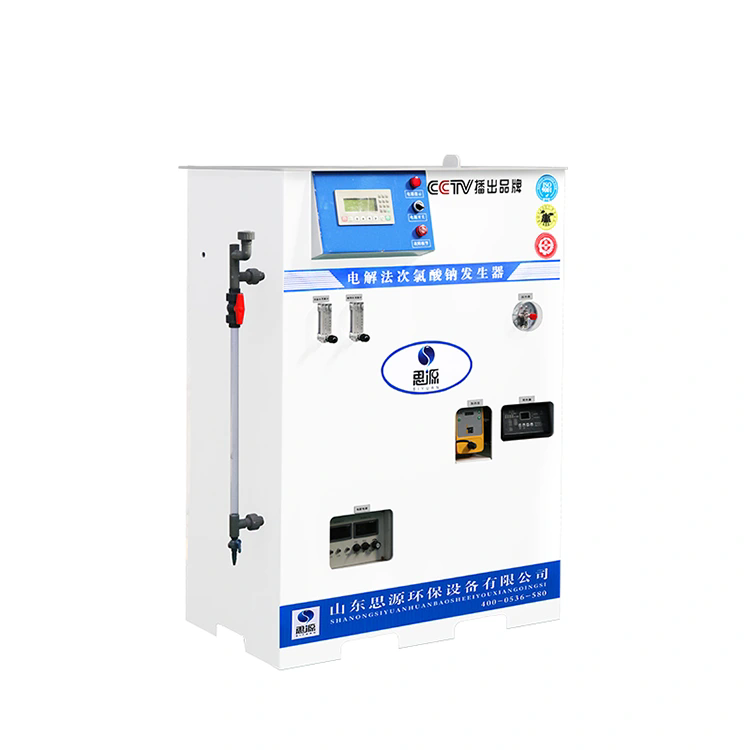
Table of Contents
- Introduction to Sodium Hypochlorite Generators
- Working Principle
- Types of Sodium Hypochlorite Generators
- Applications and Benefits
- Operation and Maintenance Tips
- FAQ
Introduction to Sodium Hypochlorite Generators
Sodium hypochlorite (NaOCl) is widely used as a disinfectant in municipal water systems, swimming pools, and industrial processes. Traditional storage and transportation of sodium hypochlorite are risky due to its corrosive and unstable nature. A Sodium Hypochlorite Generator produced by Siyuan solves this problem by allowing on-site production, ensuring safety, cost efficiency, and continuous availability.
- Eliminates storage hazards
- Reduces operational costs
- Ensures consistent chlorine concentration
Working Principle
The generator works primarily through electrolysis, converting common salt (NaCl) into sodium hypochlorite and hydrogen gas. The process involves a series of carefully controlled steps:
- Salt Solution Preparation: Dissolving salt in water to form brine.
- Electrolysis: Brine is passed through an electrolytic cell where electric current splits the molecules.
- Sodium Hypochlorite Formation: Chlorine reacts with the remaining water to produce NaOCl.
- Collection and Dilution: The produced sodium hypochlorite is collected and diluted to the desired concentration.
| Step | Purpose | Outcome |
|---|---|---|
| Brine Preparation | Dissolve salt | Ready for electrolysis |
| Electrolysis | Split molecules | Produces chlorine and hydrogen |
| Reaction with Water | Form NaOCl | Generates disinfectant solution |
| Collection & Dilution | Adjust concentration | Safe, ready-to-use solution |
Types of Sodium Hypochlorite Generators
Siyuan offers a range of generators designed for various capacities and applications:
- Small-scale units: Ideal for swimming pools and small water treatment systems.
- Medium-scale units: Suitable for municipal water treatment and industrial plants.
- Large-scale units: Used in high-volume municipal water systems and industrial operations.
Key selection criteria include capacity, chlorine concentration, automation level, and maintenance requirements.
Applications and Benefits
Sodium hypochlorite generators are widely used in:
- Municipal water disinfection
- Swimming pool sanitation
- Food and beverage industry cleaning
- Wastewater treatment and odor control
Benefits of using a generator from Siyuan:
- On-site production ensures fresh, high-quality solution
- Reduces transportation and storage costs
- Minimizes safety risks associated with chemical handling
- Automated systems reduce labor requirements
Operation and Maintenance Tips
To ensure optimal performance, consider the following:
- Regularly check and clean the electrolytic cells to avoid scaling
- Monitor the salt concentration in the brine for consistent output
- Inspect electrical connections and control panels periodically
- Replace worn parts according to the manufacturer's guidelines
Proper maintenance extends the life of the generator and guarantees stable chlorine production, minimizing downtime for your facility.
FAQ
1. Can sodium hypochlorite generators produce different concentrations?
Yes, the concentration can be adjusted by controlling brine density, electrolysis time, and dilution rate.
2. Are these generators safe to operate on-site?
Absolutely. Siyuan designs its generators with safety features such as automatic shut-off, leak detection, and overcurrent protection.
3. What is the typical lifespan of a generator?
With proper maintenance, a well-built sodium hypochlorite generator can last 10–15 years, depending on usage intensity.
4. How much space is required for installation?
Small-scale units require minimal space, whereas large-scale generators need a dedicated room with proper ventilation.
For high-quality, reliable sodium hypochlorite solutions, Siyuan provides industry-leading generators tailored to your needs. Enhance your water treatment operations, reduce risks, and lower costs by choosing Siyuan. Contact us today to learn more about our solutions.
