

How Does a Stainless Impeller Improve Pump Performance and Durability?
2026-05-25
In industrial pumping systems, the impeller plays a decisive role in determining flow rate, pressure stability, energy efficiency, and long-term operational reliability. Among the many material options available today, stainless impellers have become one of the most preferred choices for industries that demand corrosion resistance, mechanical strength, and low maintenance costs.
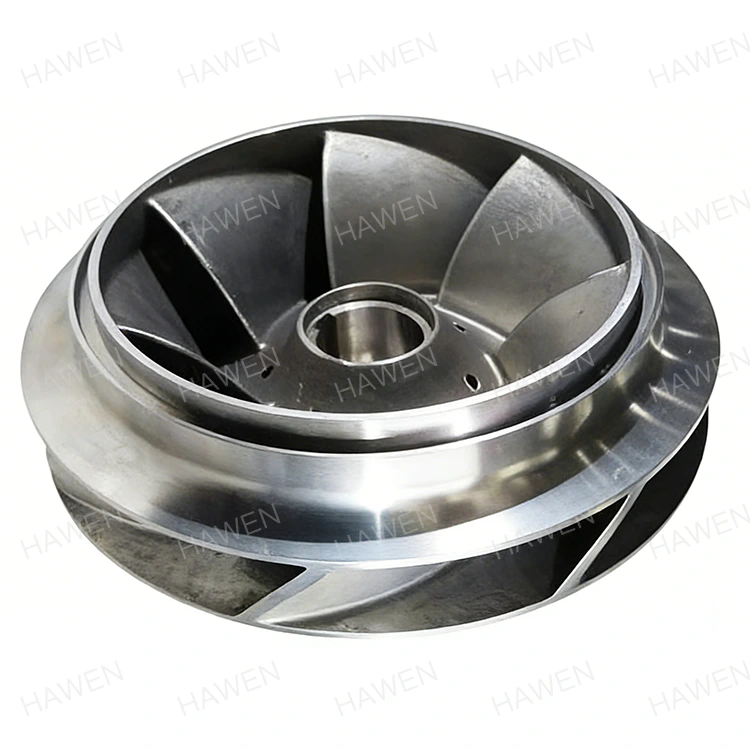
Whether used in chemical processing, water treatment, marine engineering, food production, or agricultural irrigation systems, a high-quality stainless impeller can significantly improve equipment lifespan and operational efficiency. At HAWEN, stainless impeller manufacturing focuses on precision engineering, stable hydraulic performance, and long-term durability under harsh working conditions.
Article Summary
This article explains how stainless impellers enhance pump performance, why stainless steel materials are widely used in demanding industrial applications, and what buyers should evaluate before selecting the right impeller. It also covers material advantages, manufacturing technologies, application scenarios, maintenance practices, and common purchasing mistakes.
Table of Contents
- What Is a Stainless Impeller?
- Key Advantages of Stainless Impellers
- Common Stainless Steel Grades Used
- Industrial Applications
- How to Choose the Right Stainless Impeller
- Manufacturing Process and Precision Standards
- Stainless Impeller vs Other Materials
- Maintenance and Service Life Tips
- Common Buyer Mistakes
- FAQ
- Conclusion
What Is a Stainless Impeller?
A stainless impeller is a rotating component installed inside a pump that transfers energy from the motor to the fluid. Through centrifugal force, the impeller increases liquid velocity and pressure, enabling efficient fluid transportation throughout the system.
Stainless steel impellers are specifically designed for environments involving:
- Corrosive liquids
- High humidity conditions
- Saltwater exposure
- High-temperature applications
- Food-grade sanitary systems
- Chemical transfer operations
Compared with plastic or cast iron alternatives, stainless impellers offer superior structural integrity and significantly longer service life.
Product page: https://www.hawentech.com/stainless-impeller.html
Key Advantages of Stainless Impellers
1. Excellent Corrosion Resistance
Corrosion is one of the most common causes of pump failure. Stainless steel contains chromium, which forms a protective oxide layer on the surface. This protective film helps resist chemical attack and oxidation.
This makes stainless impellers ideal for:
- Acidic liquids
- Alkaline solutions
- Industrial wastewater
- Saltwater environments
- Chemical processing plants
2. High Mechanical Strength
Stainless impellers can withstand high rotational speeds, hydraulic loads, and pressure fluctuations without deformation. Their strong structural properties reduce the risk of cracking or mechanical fatigue during continuous operation.
3. Improved Pump Efficiency
Precision-machined stainless impellers provide smoother fluid flow channels, reducing turbulence and energy losses. This contributes to:
- Higher flow efficiency
- Lower energy consumption
- Reduced vibration
- Stable pressure output
4. Longer Operational Lifespan
Stainless steel is highly resistant to wear, erosion, and scaling. Even under challenging operating conditions, the impeller maintains dimensional accuracy for long periods, reducing replacement frequency.
5. Hygienic Performance
In food processing and pharmaceutical industries, stainless steel is widely preferred because it is easy to clean and resistant to bacterial contamination.
Common Stainless Steel Grades Used
| Material Grade | Main Features | Typical Applications |
|---|---|---|
| SS304 | Good corrosion resistance and affordability | Water pumps, food equipment |
| SS316 | Superior chemical and saltwater resistance | Marine and chemical industries |
| Duplex Stainless Steel | High strength and chloride resistance | Offshore engineering |
| SS410 | High hardness and wear resistance | Industrial machinery |
Choosing the correct material depends on fluid properties, operating temperature, pressure requirements, and environmental conditions.
Industrial Applications of Stainless Impellers
Water Treatment Systems
Stainless impellers are widely used in municipal water supply systems, wastewater treatment plants, and desalination facilities due to their anti-corrosion performance.
Chemical Processing
Chemical plants often handle aggressive liquids that can rapidly damage standard metal components. Stainless impellers improve operational reliability and reduce downtime.
Food and Beverage Industry
Hygienic pumping systems require smooth surfaces and contamination-resistant materials. Stainless steel satisfies strict sanitary standards.
Marine Engineering
Saltwater exposure accelerates corrosion in ordinary metals. Stainless impellers provide excellent durability in marine cooling and seawater circulation systems.
Agricultural Irrigation
Modern irrigation systems require stable flow performance and long-term outdoor durability. Stainless impellers help reduce maintenance frequency in agricultural operations.
How to Choose the Right Stainless Impeller
Selecting the correct impeller is critical for achieving optimal pump performance. Buyers should evaluate several technical factors before making a purchase decision.
| Selection Factor | Why It Matters |
|---|---|
| Fluid Type | Determines corrosion resistance requirements |
| Flow Rate | Affects impeller diameter and vane design |
| Operating Temperature | Influences material stability |
| Pressure Requirements | Determines structural strength needs |
| Solid Particle Content | Impacts wear resistance requirements |
| Rotational Speed | Affects balancing and fatigue performance |
At HAWEN, customized stainless impeller solutions can be developed according to specific operating conditions and technical requirements.
Manufacturing Process and Precision Standards
The performance of a stainless impeller depends heavily on manufacturing precision. Advanced production technologies ensure consistent hydraulic efficiency and dimensional stability.
Precision Casting
Precision casting enables complex blade geometries and smooth surface finishes, improving fluid dynamics and minimizing energy losses.
CNC Machining
CNC machining ensures tight tolerances and accurate balancing, reducing vibration during operation.
Dynamic Balancing
Proper balancing minimizes mechanical stress on bearings and shafts, extending pump lifespan.
Surface Treatment
Polishing and passivation improve corrosion resistance while enhancing sanitary performance in sensitive industries.
Stainless Impeller vs Other Materials
| Material | Corrosion Resistance | Strength | Service Life | Maintenance |
|---|---|---|---|---|
| Stainless Steel | Excellent | High | Long | Low |
| Cast Iron | Poor | Medium | Moderate | High |
| Plastic | Good | Low | Short | Moderate |
| Bronze | Good | Medium | Moderate | Moderate |
Although stainless impellers may have a higher initial cost, their long-term operational value often results in lower total ownership expenses.
Maintenance and Service Life Tips
Proper maintenance significantly extends impeller lifespan and preserves pump efficiency.
- Inspect for corrosion or erosion regularly
- Monitor vibration and noise levels
- Maintain correct alignment between motor and pump
- Prevent dry running conditions
- Clean deposits and scaling periodically
- Use compatible fluids within design limits
Preventive maintenance can reduce unexpected downtime and improve operational safety.
Common Buyer Mistakes
Choosing Based Only on Price
Low-cost impellers may use inferior materials or poor manufacturing processes, resulting in frequent failures and higher maintenance costs.
Ignoring Fluid Characteristics
Chemical composition, temperature, and particle content directly affect impeller performance and material compatibility.
Using Incorrect Dimensions
Even minor dimensional deviations can reduce hydraulic efficiency and damage pump components.
Overlooking Dynamic Balancing
Poor balancing increases vibration, accelerates bearing wear, and shortens equipment lifespan.
FAQ
Why is stainless steel preferred for impellers?
Stainless steel offers excellent corrosion resistance, high strength, long service life, and reliable performance under demanding industrial conditions.
Which stainless steel grade is best for seawater applications?
SS316 and duplex stainless steel are commonly preferred for seawater environments due to their superior chloride resistance.
Can stainless impellers handle abrasive liquids?
Yes. Certain stainless steel grades provide excellent wear resistance and can handle moderate abrasive conditions effectively.
How long does a stainless impeller last?
Lifespan depends on operating conditions, maintenance quality, and material selection. Under proper conditions, stainless impellers can operate reliably for many years.
Does a precision impeller improve energy efficiency?
Yes. Accurate hydraulic design and precision machining reduce turbulence and energy losses, improving overall pump efficiency.
Conclusion
Stainless impellers have become essential components in modern industrial pumping systems because of their durability, corrosion resistance, mechanical strength, and stable hydraulic performance. From chemical processing to food manufacturing and marine engineering, stainless steel impellers provide reliable long-term operation while reducing maintenance costs and downtime.
Choosing a high-quality stainless impeller requires careful consideration of material grade, manufacturing precision, operating environment, and pump specifications. Working with an experienced manufacturer ensures better performance, improved efficiency, and longer equipment lifespan.
HAWEN provides professional stainless impeller solutions for a wide range of industrial applications. If you are looking for durable, precision-engineered impellers that deliver stable performance in demanding environments, contact us today for customized support and product consultation.
