

How Does a Standard Hydraulic Cylinder Work in Industrial Applications?
2026-06-25
Abstract
A standard hydraulic cylinder is a fundamental actuation component widely used in industrial machinery, construction equipment, manufacturing systems, and automation lines. It converts hydraulic energy into linear mechanical force, enabling controlled motion under heavy loads. This article explains the structure, working principles, selection considerations, and maintenance practices of standard hydraulic cylinders, helping engineers, procurement managers, and equipment users solve common operational pain points such as leakage, pressure instability, and premature wear.
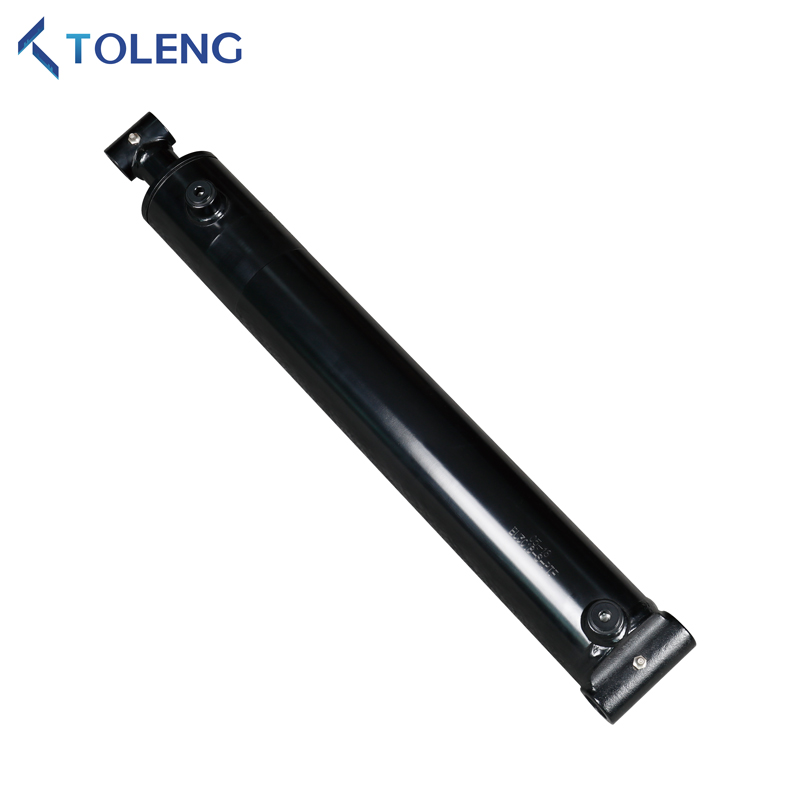
Table of Contents
- Article Outline
- 1. Introduction
- 2. What is a Standard Hydraulic Cylinder?
- 3. Core Components Explained
- 4. Working Principle
- 5. Main Types of Hydraulic Cylinders
- 6. Industrial Applications
- 7. Selection Criteria
- 8. Common Pain Points and Solutions
- 9. Maintenance Guidelines
- 10. Why Choose TOLENG Hydraulic Cylinders
- 11. Frequently Asked Questions
- Conclusion
Article Outline
This article is structured to provide a complete understanding of standard hydraulic cylinders, beginning with foundational definitions and progressing through technical structure, operational principles, application scenarios, and practical maintenance strategies. It concludes with industry-focused purchasing guidance and answers to frequently asked questions.
1. Introduction
Hydraulic systems are the backbone of heavy-duty industrial operations, and the standard hydraulic cylinder plays a central role in converting fluid power into precise linear motion. Whether in excavators, presses, injection molding machines, or material handling systems, hydraulic cylinders are essential for achieving high-force output in a compact design.
Despite their robust nature, many users face recurring issues such as seal leakage, inconsistent stroke performance, and reduced efficiency over time. Understanding how these cylinders work and how to properly select and maintain them is key to maximizing equipment lifespan and operational stability.
2. What is a Standard Hydraulic Cylinder?
A standard hydraulic cylinder is a mechanical actuator that uses pressurized hydraulic fluid to generate linear motion. It consists of a cylindrical barrel, piston, rod, and sealing elements that work together to convert fluid pressure into mechanical force.
Unlike specialized or custom cylinders, standard hydraulic cylinders follow widely accepted dimensional and performance specifications, making them easy to integrate into most industrial systems without major redesigns.
3. Core Components Explained
The performance of a hydraulic cylinder depends on the precision and durability of its components:
- Cylinder Barrel: Houses the internal pressure chamber and guides piston movement.
- Piston: Separates fluid chambers and transmits force to the rod.
- Piston Rod: Transfers mechanical force to external machinery.
- Seals: Prevent fluid leakage and maintain pressure integrity.
- End Caps: Close the cylinder and support structural alignment.
Each component must withstand high pressure cycles and mechanical stress, making material selection and manufacturing precision critical.
4. Working Principle
The working principle of a standard hydraulic cylinder is based on Pascal’s Law, which states that pressure applied to a confined fluid is transmitted equally in all directions.
When hydraulic fluid enters one side of the cylinder, it pushes the piston, generating linear motion. The direction of movement depends on which chamber receives pressurized fluid. This controlled motion allows machines to lift, press, push, or pull heavy loads with high accuracy.
Key operational cycle:
- Hydraulic pump supplies pressurized fluid
- Directional valve controls fluid flow
- Piston moves within the barrel
- Rod transmits force to external load
- Fluid returns to reservoir
5. Main Types of Hydraulic Cylinders
Different industrial requirements call for different cylinder structures:
- Welded Hydraulic Cylinders: Compact design suitable for heavy-duty equipment.
- Tie-Rod Cylinders: Easy to disassemble and maintain, commonly used in manufacturing machines.
- Telescopic Cylinders: Provide extended stroke lengths in compact space.
- Double-Acting Cylinders: Enable powered motion in both directions.
6. Industrial Applications
Standard hydraulic cylinders are used across multiple industries due to their versatility and reliability:
- Construction machinery such as excavators and loaders
- Industrial presses and stamping machines
- Agricultural equipment including harvesters and tractors
- Manufacturing automation systems
- Material handling and lifting platforms
7. Selection Criteria
Choosing the correct hydraulic cylinder is critical for system efficiency and durability. Key factors include:
- Operating pressure range
- Stroke length requirements
- Load capacity and force output
- Mounting style compatibility
- Environmental conditions (temperature, corrosion risk)
- Seal material compatibility with hydraulic fluid
8. Common Pain Points and Solutions
Many users encounter operational issues with hydraulic cylinders. Below are common problems and practical solutions:
- Oil Leakage: Often caused by worn seals. Solution: Replace seals with high-quality materials and ensure proper installation.
- Rod Scoring: Caused by contamination. Solution: Improve filtration and maintenance cycles.
- Pressure Drop: Indicates internal leakage. Solution: Inspect piston seals and barrel condition.
- Misalignment: Leads to uneven wear. Solution: Ensure correct mounting and alignment calibration.
9. Maintenance Guidelines
Regular maintenance significantly extends cylinder service life and improves system efficiency. Recommended practices include:
- Routine inspection of seals and rods
- Maintaining clean hydraulic fluid
- Monitoring pressure consistency
- Checking for corrosion or surface damage
- Ensuring proper lubrication of moving parts
Preventive maintenance is more cost-effective than reactive repairs, especially in high-load industrial environments.
10. Why Choose TOLENG Hydraulic Cylinders
TOLENG provides high-performance standard hydraulic cylinders designed for demanding industrial environments. With a focus on precision engineering and durable materials, TOLENG products aim to reduce downtime and improve operational reliability.
- High-strength steel construction for extended durability
- Advanced sealing systems to minimize leakage risks
- Strict manufacturing tolerances for consistent performance
- Compatibility with a wide range of industrial machinery
By integrating TOLENG hydraulic cylinders into your systems, you gain improved stability, reduced maintenance costs, and enhanced operational efficiency.
11. Frequently Asked Questions
Q1: What is the lifespan of a standard hydraulic cylinder?
A properly maintained cylinder can last several years depending on workload intensity, environment, and maintenance practices.
Q2: Why do hydraulic cylinders fail prematurely?
Common reasons include contamination, seal wear, improper installation, and excessive pressure beyond design limits.
Q3: Can hydraulic cylinders be repaired?
Yes, many components such as seals and rods can be replaced, but severe barrel damage often requires full replacement.
Q4: How do I choose the correct cylinder size?
Selection depends on required force, stroke length, mounting configuration, and system pressure specifications.
Conclusion
Standard hydraulic cylinders remain indispensable in modern industrial systems due to their efficiency, reliability, and ability to generate high force in compact designs. Understanding their structure, operation, and maintenance requirements is essential for maximizing performance and reducing operational risks.
By selecting high-quality solutions such as those provided by TOLENG and following proper maintenance practices, industries can significantly improve productivity and minimize downtime.
For tailored solutions, technical consultation, or bulk procurement support, contact us today to discuss how TOLENG hydraulic cylinders can enhance your operations and deliver long-term value.
