

How Does a Swing Handle Lock Improve Industrial Cabinet Security?
2026-05-27
Article Abstract
A Swing Handle Lock is a widely used mechanical locking solution designed for electrical cabinets, industrial enclosures, control panels, and outdoor equipment housings. It combines a rotating handle mechanism with a secure locking cylinder to provide both ease of operation and strong physical security. This article explains how Swing Handle Locks work, their internal structure, benefits, applications, installation considerations, and how to choose the right model for different environments. It also addresses common user concerns such as durability, corrosion resistance, and maintenance requirements, offering a complete guide for engineers, procurement managers, and equipment designers.
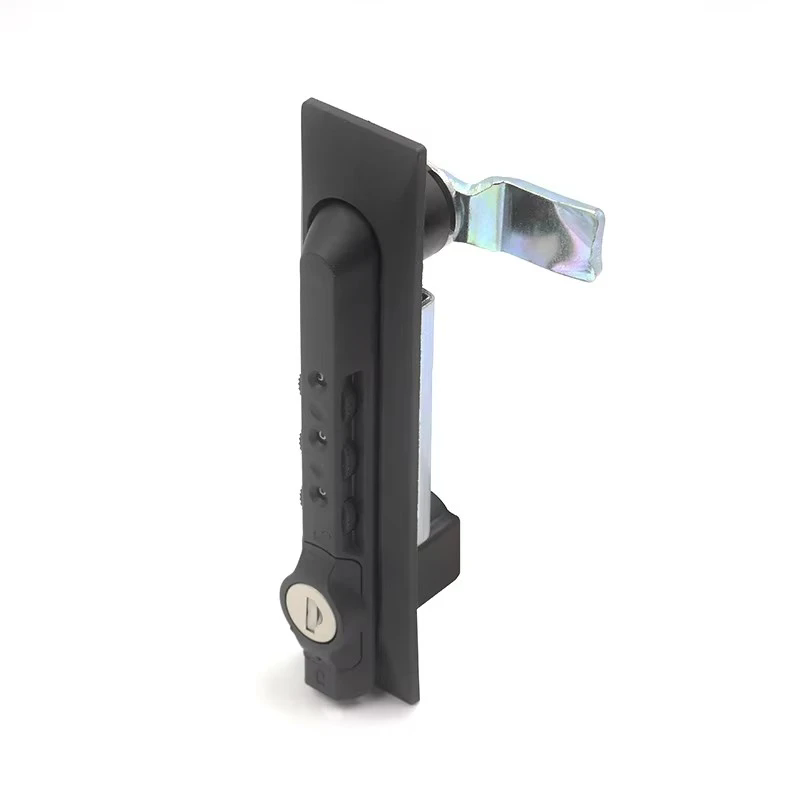
Table of Contents
- Article Outline
- Understanding Swing Handle Lock
- How Swing Handle Lock Works
- Key Features and Components
- Industrial Applications
- Core Benefits
- Selection Guide
- Installation and Maintenance
- Common Problems & Troubleshooting
- Safety and Compliance Considerations
- FAQ
- Conclusion
Article Outline
This article is structured to provide a complete technical and practical understanding of Swing Handle Locks:
- Definition and structural overview of Swing Handle Locks
- Mechanical operating principle and locking cycle
- Key components and material engineering
- Industry use cases across electrical, telecom, and transportation systems
- Advantages over traditional locking mechanisms
- Selection criteria based on environment and security needs
- Installation guidelines and maintenance best practices
- Failure modes and troubleshooting strategies
Understanding Swing Handle Lock
A Swing Handle Lock is a hybrid locking system combining a pivoting handle and a cam or multi-point locking mechanism. When the handle is in a closed position, it engages internal rods or cams that secure the enclosure door. The handle itself typically remains flush with the surface, reducing accidental impact and improving ergonomics.
Unlike conventional key-only locks, Swing Handle Locks integrate motion control and locking force into a single interface. This makes them especially suitable for environments where frequent access is required but security cannot be compromised.
How Swing Handle Lock Works
The working principle of a Swing Handle Lock is based on rotational torque transfer. When the user inserts a key and rotates it, the locking cylinder disengages the internal locking mechanism. This allows the handle to swing outward.
Once swung open, the handle disengages the cam system. When closed again, rotating the handle re-engages the cam, pulling the door tightly against the frame to ensure a sealed and secure closure.
- Step 1: Insert key and unlock cylinder
- Step 2: Swing handle outward
- Step 3: Open enclosure door
- Step 4: Close door and return handle
- Step 5: Lock by rotating key back to secure position
Key Features and Components
A typical Swing Handle Lock consists of several precision-engineered components:
- Handle Body: Usually made from zinc alloy, stainless steel, or reinforced polymer.
- Lock Cylinder: Provides key-based security control.
- Cam Mechanism: Converts rotational motion into locking force.
- Mounting Base: Ensures stable installation on cabinet doors.
- Sealing Elements: Rubber or silicone gaskets for IP-rated protection.
High-quality manufacturing ensures resistance against vibration, corrosion, and forced entry attempts.
Industrial Applications
Swing Handle Locks are used across multiple industries due to their reliability and ease of operation.
- Electrical control cabinets
- Telecommunication outdoor enclosures
- Data center rack systems
- Railway and transportation equipment panels
- Energy storage and power distribution units
Their adaptability makes them a standard choice in both indoor and harsh outdoor environments.
Core Benefits
The advantages of Swing Handle Locks extend beyond basic locking functionality:
- Enhanced Security: Multi-point locking reduces unauthorized access risk.
- User Convenience: Single-hand operation simplifies access control.
- Durability: Designed for repeated mechanical cycles.
- Environmental Resistance: Suitable for dust, moisture, and vibration exposure.
- Space Efficiency: Flush-mounted design prevents external obstruction.
Selection Guide
Choosing the correct Swing Handle Lock depends on environmental and operational requirements. The following table provides a simplified selection framework:
| Criteria | Recommendation |
|---|---|
| Indoor Electrical Cabinets | Standard zinc alloy lock with basic corrosion coating |
| Outdoor Installations | Stainless steel with IP65 or higher sealing |
| High Security Applications | Multi-point locking system with reinforced cylinder |
| High Vibration Environments | Anti-loosening cam design with reinforced mounting |
Installation and Maintenance
Proper installation is essential for ensuring optimal performance. The lock should be aligned precisely with the cabinet frame to avoid misalignment stress on the cam mechanism.
- Ensure correct cut-out dimensions before installation
- Use torque-controlled fastening tools
- Apply lubrication to moving parts periodically
- Inspect sealing components every 6–12 months
Routine maintenance significantly extends the operational life of the locking system and reduces failure risk in critical environments.
Common Problems & Troubleshooting
Although Swing Handle Locks are reliable, certain issues may arise during long-term use:
- Stiff Handle Movement: Often caused by dust accumulation or lack of lubrication.
- Key Not Turning Smoothly: May indicate cylinder wear or misalignment.
- Loose Locking Force: Check cam alignment and mounting tightness.
- Seal Degradation: Replace gasket if moisture ingress is detected.
Safety and Compliance Considerations
In industrial environments, Swing Handle Locks contribute to operational safety by preventing accidental access to live electrical components. Compliance with enclosure protection standards (such as IP ratings) is often required.
Proper grounding and insulation of metal enclosures should be maintained alongside lock installation to ensure full system safety.
FAQ
Q1: Can Swing Handle Locks be used outdoors?
Yes, stainless steel and sealed versions are specifically designed for outdoor and harsh environments.
Q2: Are Swing Handle Locks compatible with all cabinet types?
They are compatible with most standard industrial enclosures, provided cut-out dimensions match specifications.
Q3: How often should maintenance be performed?
Every 6 to 12 months depending on environmental exposure.
Q4: Can the lock be rekeyed?
Yes, many models support interchangeable cylinders for security management flexibility.
Conclusion
Swing Handle Locks represent a critical component in modern enclosure security systems, combining mechanical strength, ergonomic operation, and environmental resistance. Their widespread use across industrial sectors demonstrates their reliability in protecting sensitive equipment and ensuring controlled access.
For high-quality engineering solutions, Cofiy provides professionally designed Swing Handle Lock systems tailored for industrial applications, balancing durability and precision manufacturing standards.
To learn more or request technical support and product details, please contact us and connect with the Cofiy engineering team for customized solutions.
