

How Does an Earthing Switch for Switchgear Ensure Personnel Safety During Maintenance
2026-06-30
In any medium- or high-voltage installation, the moment a maintenance technician opens a panel door, the single most critical component standing between life and fatal arc flash is the Earthing Switch for Switchgear. At Zikai, we design these switches not as afterthoughts, but as the primary safety barrier in any lockout/tagout (LOTO) procedure. This blog explains the mechanical, electrical, and procedural mechanisms that make the Earthing Switch for Switchgear the ultimate guardian of human life during scheduled or emergency maintenance.
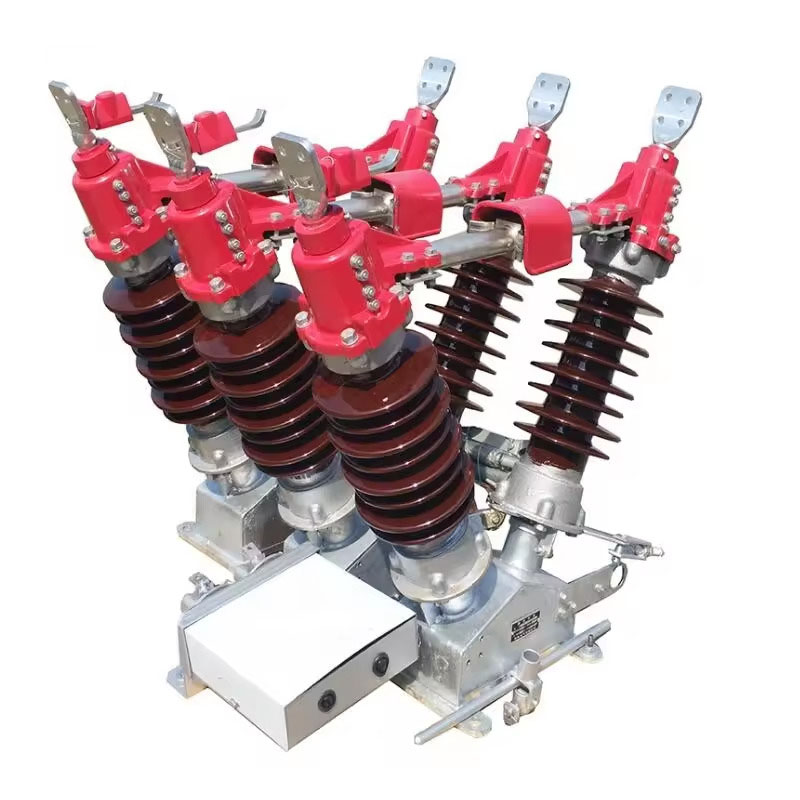
The Core Safety Principle: Visible Earthing
The most fundamental safety function is visible isolation. When the Earthing Switch for Switchgear is closed, it creates a directly visible (or mechanically indicated) metallic path from the main busbars to the station earth grid. This ensures that:
-
Any induced or residual capacitive charge dissipates instantly.
-
Any accidental back-feed from downstream sources is short-circuited to ground.
-
Operators can physically verify the grounded state before touching any conductor.
Zikai equips all its Earthing Switch for Switchgear units with high-visibility position indicators and auxiliary mirrors, so the grounded condition is unmistakable even from a distance.
Three Layered Safety Mechanisms
| Safety Layer | Mechanism | How It Protects Personnel |
|---|---|---|
| Mechanical Interlocking | Key-based or cam-operated interlocks between the main breaker, disconnector, and Earthing Switch for Switchgear | Prevents closing the earthing switch while the main breaker is closed (anti-closing-on-live). |
| Electrical Interlocking | Auxiliary contacts and coil blocking circuits | Disables the earthing switch’s closing coil unless the upstream disconnector is open and voltage sensors confirm zero potential. |
| High-Speed Spring Drive | Stored-energy mechanism that closes the earthing switch in < 0.5 seconds | Rapidly extinguishes any accidental arc, minimizing incident energy and reducing burn hazards. |
These three layers work in sequence: electrical interlocks prevent command errors, mechanical interlocks prevent physical errors, and the fast drive mitigates residual energy.
Step-by-Step Maintenance Sequence with a Zikai Earthing Switch for Switchgear
-
Open upstream disconnector – confirms visual break.
-
Operate the voltage presence indicator – verifies dead condition.
-
Insert the mechanical interlock key – releases the earthing switch’s locking pin.
-
**Manually or electrically close the Earthing Switch for Switchgear – the spring mechanism slams the moving contact onto the fixed ground contact.
-
Check the mechanical flag – “EARTHED” appears in the viewing window.
-
Apply personal lock and tag – the Zikai earthing switch includes a built-in padlock hasp for individual LOTO.
-
Proceed to maintenance – the entire bus section is now at earth potential.
This sequence ensures that the Earthing Switch for Switchgear is always the last safety device engaged before human access and the first disengaged after work completes.
Common Misconceptions – Cleared
| Misconception | Fact |
|---|---|
| A ground mat or earthing rod is sufficient | Ground rods do not carry short-circuit currents safely – only a rated Earthing Switch for Switchgear can withstand fault currents up to 40 kA for 3 seconds. |
| Earthing switches are only for HV | Even 11 kV and 33 kV systems require certified earthing switches; Zikai offers models from 12 kV to 550 kV. |
| Visual indicators are optional | International standards (IEC 62271-102) mandate positive mechanical indication – every Zikai unit exceeds this requirement. |
Frequently Asked Questions (FAQ) About Earthing Switch for Switchgear
Q1: Can the Earthing Switch for Switchgear be closed if the main circuit breaker is accidentally still ON?
A1: No. A properly designed Earthing Switch for Switchgear incorporates a positive mechanical interlock that physically prevents the earthing shaft from rotating unless the disconnector or breaker is in the OPEN position. In Zikai models, this interlock is a stainless-steel cam that locks the earthing switch’s operating rod. Even if an electrical command is sent, the mechanism cannot travel. This is tested for 10,000 mechanical operations to ensure failure-proof performance.
Q2: How does the Earthing Switch for Switchgear handle induced voltages from parallel cables when the line is nominally isolated?
A2: This is a critical hidden danger. Even with the line open, capacitive coupling from adjacent live cables can induce voltages up to several kilovolts. The Earthing Switch for Switchgear provides a low-impedance (typically < 50 µΩ) path to the station earthing grid, draining these induced charges within milliseconds. Zikai units are designed with a pre-insertion resistor option for very long cable runs, ensuring that the closing transient does not create a dangerous step voltage on the switchgear frame.
Q3: What maintenance does the Earthing Switch for Switchgear itself require to remain reliable over 20 years?
A3: The Earthing Switch for Switchgear is a "maintenance-free" device in normal service, but Zikai recommends a 5-year schedule: (a) visual inspection of contact erosion, (b) lubrication of the pivot bearings with low-temperature grease, (c) torque check on all ground busbar connections, and (d) a closing-time test using a timing kit. If the closing time exceeds 10% above the factory value, the spring mechanism should be re-tensioned. All Zikai units come with a 25-year mechanical endurance certificate, but the padlock hasp and auxiliary switches should be replaced every 10 years.
Why Zikai Excels in Earthing Switch Engineering
Unlike generic switchgear manufacturers, Zikai designs its Earthing Switch for Switchgear with dual arc-chutes, self-wiping silver-plated contacts, and a visual break that can be seen through tempered glass even in low-light substations. Every unit is type-tested for:
-
Short-time withstand current: 31.5 kA / 40 kA / 50 kA (3 s)
-
Making capacity: 2.5 × rated short-time current
-
Mechanical endurance: Class M2 (10,000 operations)
These values are independently verified by KEMA and CESI laboratories – a level of transparency that Zikai proudly publishes in every factory acceptance test report.
Final Safety Verdict
The Earthing Switch for Switchgear is not an optional accessory – it is the single most effective engineering control against electrocution and arc-flash burns during maintenance. Its interlocks force a disciplined sequence; its visible contacts give instant confidence; and its short-circuit capacity ensures that even if a mistake occurs upstream, the switch will safely fuse or withstand the fault. Zikai has supplied over 12,000 earthing switches to utilities and heavy industries worldwide, with zero safety incidents attributable to our products.
Take action today. If you are specifying or retrofitting switchgear, do not compromise on the earthing function. Contact our Zikai engineering team for a free interlock logic review and a customized Earthing Switch for Switchgear sizing report. We respond within 4 business hours with CAD drawings, test certificates, and site-visit support.
