

How Does Compressed Air Drive an Air Impact Wrench Motor?
2026-09-29
A technician picks up an Air Impact Wrench to remove a stubborn axle nut. The tool spins freely but lacks the torque to break the nut loose. He checks the air pressure at the compressor—it reads 120 psi. He checks the hose—no visible leaks. He assumes the wrench is worn out and orders a new one. But the problem may not be the wrench. It may be the air path, the lubricant, or the motor design. Understanding how compressed air actually drives the impact wrench motor helps technicians diagnose torque loss without replacing parts unnecessarily.
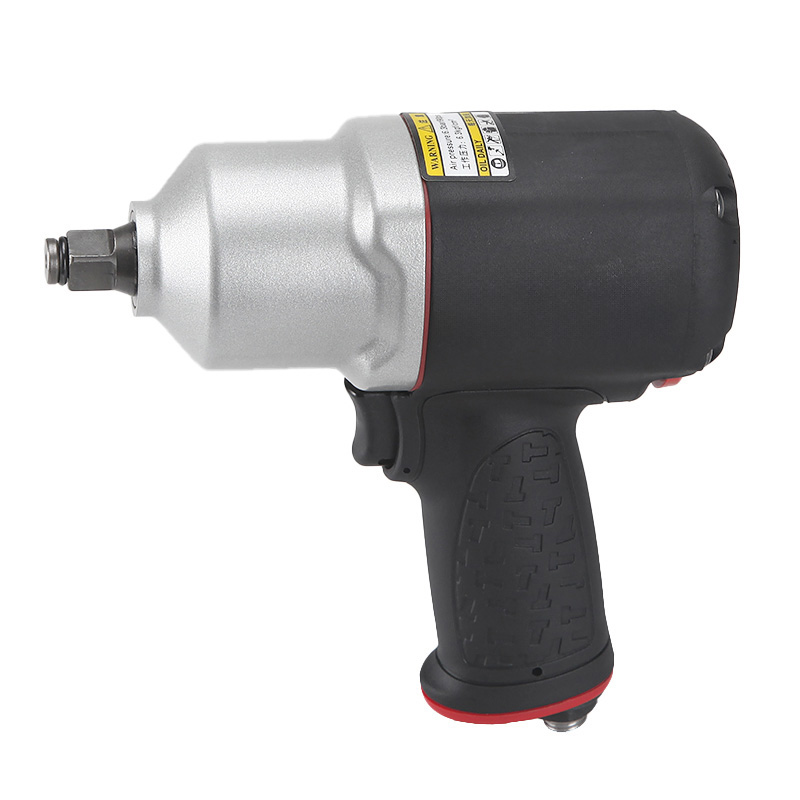
1. How Does the Vane Motor Convert Air Pressure Into Rotation?
The motor inside an Air Impact Wrench is a rotary vane motor. It consists of a cylindrical rotor with slots, and each slot holds a rectangular vane. The rotor is mounted off-center inside a larger cylindrical chamber called the stator. When compressed air enters the chamber, it pushes against the vanes. The vanes slide outward against the stator wall due to centrifugal force and air pressure. The pressure differential across the vanes creates a torque that rotates the rotor. The air expands as it moves from the inlet to the exhaust, converting pressure energy into kinetic energy. The table below shows the key motor components and their function.
| Component | Function | Common wear mode |
| Rotor | Holds the vanes and rotates on bearings | Bearing wear, slot wear |
| Vanes | Slide outward to seal against the stator wall | Edge wear, chipping, sticking |
| Stator (cylinder) | Provides the sealing surface for the vanes | Scoring, ovality |
| End plates | Seal the ends of the rotor chamber | Scratches, wear from vane contact |
| Bearings | Support the rotor and allow rotation | Roughness, play, seizure |
In our factory, we test the motor of every Air Impact Wrench on a dynamometer. The test measures the torque output at different air pressures and speeds. The data is used to verify that the motor meets the design specification. Foshan WYMA Pneumatic Tools Co., Ltd. has been manufacturing Air Impact Wrench units for over 12 years and has a library of motor performance data for different configurations.
2. Why Does Air Pressure and Flow Rate Matter More Than Static Pressure?
The torque output of an Air Impact Wrench depends on the air pressure at the inlet and the flow rate through the motor. Static pressure, measured with the tool not running, is not a reliable indicator. When the tool is running, the pressure drops due to friction losses in the hose, fittings, and internal passages. A tool that requires 90 psi to produce rated torque may only receive 70 psi if the hose is too long or too narrow. The flow rate is equally important. A 1/2-inch impact wrench typically consumes 4 to 6 cubic feet per minute at full load. If the compressor cannot deliver this flow, the pressure will drop, and the torque will fall. The table below shows the relationship between hose diameter, length, and pressure drop for a typical 1/2-inch impact wrench.
| Hose diameter | Hose length | Pressure drop at 5 CFM | Torque loss vs. 90 psi inlet |
| 1/4 inch | 25 feet | 18 psi | 25 – 30% |
| 1/4 inch | 50 feet | 32 psi | 40 – 50% |
| 3/8 inch | 25 feet | 8 psi | 10 – 15% |
| 3/8 inch | 50 feet | 15 psi | 20 – 25% |
| 1/2 inch | 25 feet | 3 psi | < 5% |
| 1/2 inch | 50 feet | 6 psi | 5 – 10% |
This table explains why a technician may experience torque loss even when the compressor gauge reads 120 psi. The pressure at the tool inlet is lower than the pressure at the tank. In our factory, we recommend using a 3/8-inch or 1/2-inch hose for impact wrenches, and keeping the hose as short as practical. We also recommend installing a pressure gauge at the tool inlet to verify the actual working pressure.
3. How Do Vanes Wear and Affect Torque Over Time?
The vanes are the most wear-prone components in the motor. They slide in and out of the rotor slots thousands of times per minute. The edges of the vanes wear against the stator wall. As the vanes wear, the clearance between the vane tip and the stator increases. This allows air to leak past the vane, which reduces the pressure differential and the torque. The table below shows the effect of vane wear on torque output.
| Vane condition | Vane tip clearance | Torque loss | Recommended action |
| New | 0.02 – 0.05 mm | 0% | None |
| Light wear | 0.05 – 0.10 mm | 10 – 15% | Monitor; replace at next service |
| Moderate wear | 0.10 – 0.15 mm | 20 – 30% | Replace vanes |
| Heavy wear | 0.15 – 0.20 mm | 35 – 50% | Replace vanes and inspect stator |
| Severe wear | > 0.20 mm | > 50% | Replace motor or tool |
In our factory, we use vanes made from a high-strength phenolic composite or a sintered metal alloy. The phenolic vanes are lighter and generate less friction, but they wear faster. The sintered metal vanes last longer but are heavier and generate more friction. The choice depends on the application. For high-torque applications, we recommend sintered metal vanes. For high-speed applications, we recommend phenolic vanes. Foshan WYMA Pneumatic Tools Co., Ltd. can advise on the best vane material for your specific use case.
4. How Does Lubrication Affect Motor Life and Torque?
Air tools require lubrication to reduce friction and prevent wear. The lubricant is carried by the air stream in the form of an oil mist. Without lubrication, the vanes and bearings wear rapidly. With too much lubrication, the oil can accumulate in the motor and cause drag. The correct lubricant is a light oil with a viscosity of 10 to 20 centistokes at 40°C. It should be added to the air line through a lubricator or directly into the tool inlet before each use. The table below shows the effect of lubrication on motor life.
| Lubrication condition | Vane life | Bearing life | Torque consistency |
| No lubrication | 1 – 2 months | 2 – 3 months | Poor (rapid loss) |
| Intermittent lubrication | 6 – 12 months | 12 – 18 months | Moderate |
| Daily lubrication | 18 – 24 months | 24 – 36 months | Good |
| Proper lubricator system | 24 – 36 months | 36 – 48 months | Excellent |
Diagnostic tip: If the Air Impact Wrench loses torque gradually over weeks, the vanes are likely worn. If the torque loss is sudden, the problem is likely air supply or a broken vane. If the tool runs but produces no impact, the impact mechanism may be faulty. Always check the air supply first before disassembling the tool.
Frequently Asked Questions About Air Impact Wrench Motors
Summary for Technicians and Shop Owners
An Air Impact Wrench motor converts compressed air into rotation using a rotary vane design. The torque output depends on the air pressure at the tool inlet, the flow rate through the motor, the condition of the vanes, and the lubrication. Torque loss is usually caused by low air pressure, worn vanes, or inadequate lubrication. By understanding these factors, technicians can diagnose and correct torque problems without replacing the entire tool. Foshan WYMA Pneumatic Tools Co., Ltd. has been manufacturing Air Impact Wrench units for over 12 years and provides diagnostic support and rebuild kits for all of our products.
Foshan WYMA Pneumatic Tools Co., Ltd. manufactures Air Impact Wrench units with high-efficiency vane motors, durable vanes, and precision bearings. We provide motor performance data and maintenance guides for all of our tools.
