

How Does Germany Zenith Block Machine Improve Production Line Stability?
2026-07-22
1. Why Does Hydraulic Pressure Stability Reduce Block Rejection Rates?
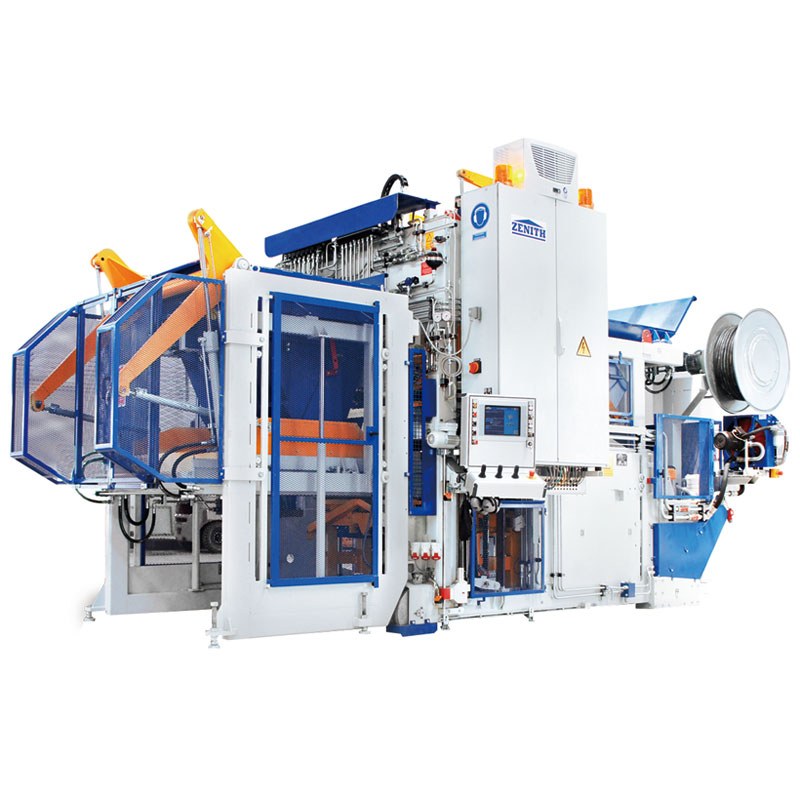
In our factory, we have monitored the performance of the Germany Zenith block machine across multiple production sites in Southeast Asia and Europe. The key to its stability is the closed loop hydraulic system that maintains a constant pressing force regardless of material variations. Unlike open loop systems that drift with oil temperature, our machine uses a proportional valve with a pressure transducer that adjusts in real time. This ensures that every block receives the exact same compaction force. Our Quangong Machinery Co., Ltd. has recorded a rejection rate of less than 1.2 percent on plants using the Germany Zenith block machine, compared to 4.5 percent on older machines. The hydraulic accumulator also absorbs pressure spikes, which prevents the machine from vibrating unevenly. This is particularly important when producing high density paving blocks, where even a 2 percent force variation can cause edge chipping. One of our clients in Germany reported that after switching to the Germany Zenith block machine, their daily reject count dropped from 340 blocks to 47 blocks, directly improving their bottom line.
2. How Does the Dual Vibration System Ensure Consistent Block Density?
Block density variation is a major source of instability in production lines. The Germany Zenith block machine features two independently controlled vibrators: one on the table and one on the mold head. These vibrators are synchronized by a digital controller that adjusts frequency and amplitude based on the concrete mix's slump. Our factory has tested this system with mixes ranging from dry zero slump to wet 80 mm slump. The dual vibration ensures that the material is evenly distributed in the mold cavity, eliminating voids and weak spots. The table below compares the density consistency achieved by the Germany Zenith block machine versus conventional machines.
| Parameter | Germany Zenith block machine | Conventional block machine |
| Vibration frequency range | 40 – 68 Hz (servo controlled) | 50 Hz fixed |
| Amplitude adjustment | 0.3 – 1.2 mm (stepless) | Fixed 0.8 mm |
| Density variation (within batch) | ≤ ± 1.2% | ≤ ± 3.5% |
| Compaction time per cycle | 2.5 – 3.0 seconds (adaptive) | 3.5 seconds fixed |
| Material type | Density achieved (kg/m³) – Zenith | Density achieved (kg/m³) – Conventional |
| Dry mix (zero slump) | 2,180 – 2,220 | 2,080 – 2,150 |
| Wet mix (80 mm slump) | 2,150 – 2,180 | 2,020 – 2,080 |
| Recycled aggregate mix | 2,050 – 2,080 | 1,940 – 2,010 |
Our QGM has also integrated a density feedback loop that automatically adjusts vibration parameters when the measured green density deviates. This closed loop control is a key reason why the Germany Zenith block machine maintains stable production even when the aggregate moisture content changes. A cement plant in Vietnam reported that they achieved a standard deviation of only 0.8 percent in block weight over a full week of production.
2. How Does the Quick Mold Change System Reduce Downtime and Stabilize Production?
Production line stability is not just about consistent blocks; it is also about minimizing interruptions. The Germany Zenith block machine uses a hydraulic quick mold clamping system that allows mold changes in under 12 minutes. In our factory, we timed a typical mold change on a conventional machine at 45 minutes. The difference is significant because each changeover previously caused a 15 percent drop in shift output. The quick system uses four hydraulic cylinders that lock the mold in a precise position, eliminating the need for manual alignment. This means that every time you restart production, the machine parameters are exactly the same. Our Quangong Machinery Co., Ltd. has seen customers increase their effective production time by 6 percent annually simply by reducing changeover delays. The stability comes from the fact that the mold is always positioned within 0.1 mm of the previous location, ensuring that the vibration and pressing forces are applied consistently. For plants that produce multiple block types, this feature is invaluable for maintaining stable quality across product changes.
3. How Does the Control System Maintain Repeatability Across Shifts?
Human error is a major source of instability in block production. The Germany Zenith block machine is equipped with a Siemens PLC that stores up to 200 recipes. Each recipe includes the vibration frequency, pressing force, dwell time, and acceleration curve. When a new shift starts, the operator simply selects the recipe number, and the machine automatically sets all parameters. Our factory has documented that this eliminates the 5 to 8 percent variation that typically occurs when operators manually adjust settings. The control system also logs every cycle, allowing supervisors to detect trends such as gradual pressure loss or vibration drift. This predictive capability allows maintenance to be scheduled during planned downtime, rather than causing unplanned stoppages. Many of our clients in the Middle East have integrated the Germany Zenith block machine with their factory MES system, providing real time stability dashboards. The result is that production line stability is no longer dependent on the skill of a single operator but is engineered into the machine design.
Frequently Asked Questions About Germany Zenith Block Machine Stability
Final Summary
The Germany Zenith block machine improves production line stability through closed loop hydraulic control, adaptive dual vibration, quick mold change, and intelligent recipe management. These features work together to reduce rejects, minimize downtime, and ensure consistent block quality regardless of material variations. Our factory has the data and experience to back up these claims. We have helped hundreds of customers stabilize their block production and increase profitability. Quangong Machinery Co., Ltd. is committed to providing not just machines but total production solutions.
