

How Does High-Strength Steel Improve the Durability of a Garbage Truck Hydraulic Cylinder?
2026-11-09
A fleet maintenance supervisor reviews the repair history of 60 refuse vehicles. The seals in the Garbage Truck Hydraulic Cylinder are replaced on schedule, but the cylinders still fail. The failures are not at the seals. They are at the tube. The tube is bulged, ovalized, or cracked at the weld collar. The supervisor sends three failed tubes to a metallurgical lab. The report shows that the tube material yielded under the combined load of the packer cycle and the uneven load distribution. The seal was the symptom, not the cause. The cause was the tube steel. This guide explains how high-strength steel changes the failure mode and improves the durability of a garbage truck hydraulic cylinder.
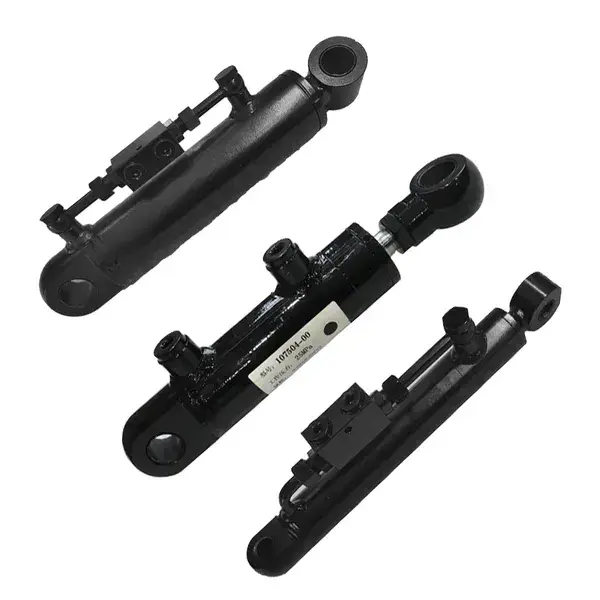
1. Why Does a Garbage Truck Hydraulic Cylinder Usually Fail at the Tube, Not at the Seal?
A refuse vehicle hydraulic cylinder operates under conditions that are more severe than most industrial cylinders. The packer blade cycles 400 to 800 times per day. The load is not centered. The refuse in the hopper creates a side load that bends the cylinder rod and applies a bending moment to the tube. The tube is also exposed to leachate, road salt, and grit. The combination of cyclic pressure, side load, and corrosion creates a fatigue environment. The seal is a wear item and is replaced regularly. The tube is a structural item, and its failure is a structural failure. In our factory, we analyze the failed tubes from fleet returns and we measure the yield strength of the material. In most cases, the failed tube was made from a standard grade with a yield strength of 235 to 355 MPa. The measured stress at the failure location exceeds the yield strength of that grade. Raydafon has been manufacturing Garbage Truck Hydraulic Cylinder units for over 20 years.
The seal failure and the tube failure are related but not the same. When the tube yields, the bore becomes oval, and the piston seal cannot maintain contact. The seal leaks, and the maintenance team replaces the seal. The new seal fails because the bore is no longer round. The root cause remains the tube.
2. How Does the Yield Strength of High-Strength Steel Change Wall Thickness and Pressure Margin?
The wall thickness of a hydraulic cylinder tube is determined by the required burst pressure and by the yield strength of the steel. For a given pressure, a higher yield strength allows a thinner wall. The thinner wall reduces the weight of the cylinder and the weight of the vehicle. The weight reduction is important for a refuse vehicle because every kilogram of hydraulic equipment reduces the payload. The thinner wall also reduces the hoop stress at the inner surface for the same pressure, which improves the fatigue life. The table below compares a standard grade and a high-strength grade for a cylinder with a 100 mm bore and a 160 bar working pressure.
| Parameter | Standard steel (E355) | High-strength steel (27MnCr5) |
| Yield strength | 355 MPa | 450 – 550 MPa |
| Required wall thickness (160 bar) | 6.0 mm | 4.5 mm |
| Weight reduction | Baseline | 25% lighter |
| Burst pressure | 520 bar | 610 bar |
| Safety factor at 160 bar | 3.3 | 3.8 |
| Fatigue life (cycles at 160 bar) | 350,000 | 600,000 |
The high-strength steel allows a 25 percent weight reduction while increasing the burst pressure and the fatigue life. The weight reduction is not just a fuel saving. It reduces the load on the chassis and the suspension, which improves the vehicle reliability. In our factory, we use 27MnCr5 for the tubes of our heavy-duty refuse cylinders and we verify the yield strength of every heat with a tensile test. Raydafon Technology Group Co.,Limited provides the material certificate and the tensile test report with each cylinder.
3. Why Does the Weld Heat-Affected Zone Decide Whether High-Strength Steel Actually Delivers Its Strength?
The tube is welded to the end cap and to the port collar. The welding process creates a heat-affected zone (HAZ) around the weld. In the HAZ, the steel is heated above the critical temperature and then cooled rapidly. The rapid cooling can produce a hard, brittle microstructure, or it can soften the steel if the cooling rate is too slow. Both conditions reduce the fatigue life of the weld. The HAZ is the location where most tube failures originate. The table below shows the common failure modes and how high-strength steel with proper welding control addresses them.
| Failure mode | Standard steel behavior | High-strength steel with controlled HAZ |
| Weld toe cracking | Soft HAZ, low fatigue strength | Controlled cooling, matching filler, higher fatigue strength |
| Tube bulging | Yields at 355 MPa | Yields at 450 – 550 MPa |
| Bore ovalization | Occurs at lower pressure | Occurs at higher pressure |
| Corrosion fatigue | Pits initiate cracks | Harder surface, slower pit growth |
Hydraulic engineer's note: The high-strength steel is only beneficial if the weld is controlled. A high-strength tube with a poor weld will fail at the HAZ, and the failure will be worse than a standard tube because the strength mismatch concentrates the strain. In our factory, we preheat the weld area, use a matching low-hydrogen filler, and control the cooling rate. We also perform a 100 percent ultrasonic inspection of the weld and a hardness survey across the HAZ. Raydafon Technology Group Co.,Limited provides the weld inspection report with each cylinder.
4. How Do Bore Hardness and Coating Compatibility Affect Rod and Tube Wear?
The bore of the cylinder tube is the surface that the piston seal runs against. If the bore is too soft, the seal wears the surface and creates a path for leakage. If the bore is too hard, the seal may not bed in, and the initial leakage may be high. The high-strength steel responds well to honing and to the application of a hard chrome or a ceramic coating. The coating must be compatible with the steel and with the honing process. In our factory, we hone the bore to a surface finish of Ra 0.2 to 0.4 micrometers and we measure the hardness at three points along the tube. We also apply a hard chrome layer of 20 to 30 micrometers on the inner surface for refuse cylinders that handle leachate. The chrome layer must be dense and free of cracks, because the leachate is acidic and can penetrate a cracked coating and attack the steel. Raydafon has tested the chrome adhesion with a bend test and a thermal shock test.
The rod is also exposed to the leachate. The rod should be induction hardened to 55 to 60 HRC and chrome plated to 20 to 30 micrometers. The rod wiper must be a double lip design to remove the abrasive grit before it reaches the rod seal.
5. How Should Fleet Buyers Specify and Verify High-Strength Steel in Garbage Truck Hydraulic Cylinders?
The specification should include six items. The first is the steel grade and the yield strength. The second is the wall thickness and the burst pressure. The third is the welding process and the HAZ control. The fourth is the bore hardness and the surface finish. The fifth is the coating type and thickness. The sixth is the test requirement, including the tensile test, the burst test, and the fatigue test. The verification should include four checks. The first is the material certificate. The second is the tensile test report. The third is the weld inspection report. The fourth is the burst test report. In our factory, we perform these tests on every production lot and provide the reports with the shipment. Raydafon Technology Group Co.,Limited also offers a fatigue test on a sample basis and provides the S-N curve for the material.
We recommend that the buyer compare cylinders by the steel grade and the test reports, not by the price per kilogram. A cylinder made from a standard grade may be cheaper, but it will fail earlier and will cost more in downtime and replacement. The high-strength cylinder has a higher initial cost but a lower cost per operating hour.
Frequently Asked Questions About High-Strength Steel in Garbage Truck Hydraulic Cylinders
Summary for Fleet Buyers and Hydraulic Engineers
High-strength steel improves the durability of a Garbage Truck Hydraulic Cylinder by raising the yield strength, which allows a thinner wall with a higher burst pressure and a longer fatigue life. The weight reduction improves the vehicle payload and reduces the chassis load. The benefit is only realized if the weld heat-affected zone is controlled with a qualified welding procedure and a post-weld inspection. The bore hardness and the coating compatibility determine the wear and corrosion resistance. The specification should include the steel grade, the yield strength, the wall thickness, the welding procedure, the bore hardness, and the coating. The verification should include the material certificate, the tensile test, the weld inspection, and the burst test. Raydafon Technology Group Co.,Limited has been manufacturing Garbage Truck Hydraulic Cylinder units for over 20 years and provides full material and weld verification support for our customers.
