

How Does New Auxiliary Equipment Designs Improve Production Line Efficiency?
2025-12-04
Modern production environments continue to evolve as factories expand their automation strategies and upgrade critical support systems. As manufacturers increase throughput expectations, new engineering approaches to auxiliary equipment have become essential for achieving measurable efficiency gains. With stronger emphasis on line stability, cycle-time control, and safety performance, the latest designs bring more reliability to the shop floor.
Our engineering team has seen how well-optimized systems reduce operational friction while helping technicians maintain consistency under higher workloads. Hubei Intop Machinery Co., Ltd. has followed this shift closely, integrating practical improvements into our product line to support upgraded plant layouts and tighter delivery commitments.
Why Do Modern Production Lines Rely on Precision-Controlled Support Systems?
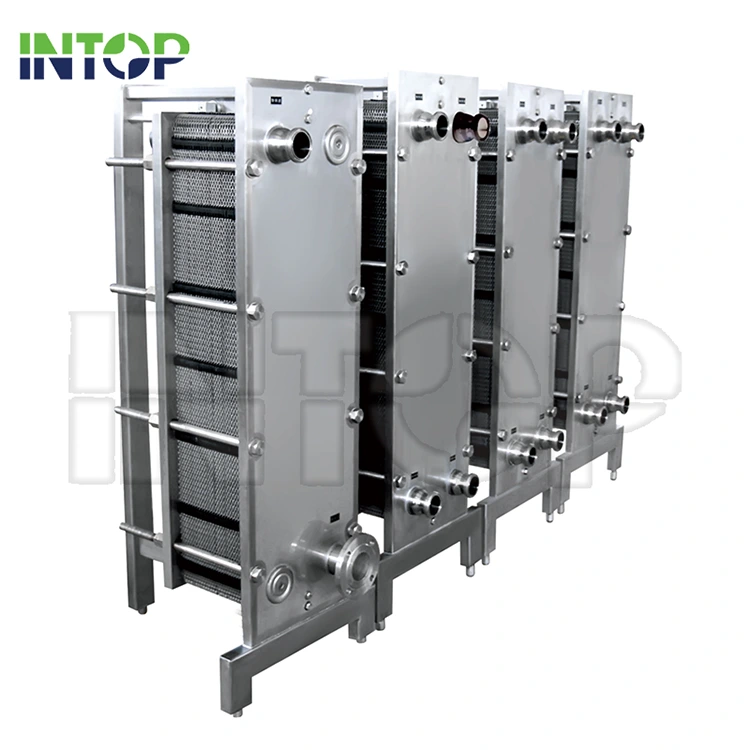
Production lines today are shaped around highly coordinated workflows, where every mechanical process depends on stable and predictable support functions. When Auxiliary Equipment operates with precise timing, the primary machinery can maintain smooth cycles without stoppages. Our factory has invested in better performance monitoring and responsive components to eliminate common bottlenecks such as uneven feeding, material misalignment, or inconsistent discharge points. These refinements make it easier for plant managers to maintain operating discipline while reducing operator intervention. By combining practical engineering updates with stronger build quality, the system achieves dependable performance under continuous load.
How Do Enhanced Drive Modules and Control Units Improve Daily Operations?
Many efficiency problems originate from outdated drive modules or slow-response control units. Upgraded systems now emphasize synchronized actuation, improved torque management, and better temperature tolerance. With these improvements, Auxiliary Equipment becomes more resilient in high-cycle environments. Our updated control configurations allow operators to fine-tune motion profiles, helping the production line avoid micro-delays that accumulate over long shifts. This also contributes to energy savings, because responsive equipment requires less idle power and runs more steadily across variable-duty cycles. These factors support more reliable downstream processes and help teams maintain predictable output quality.
| Parameter | Specification | Description |
| Drive Module Speed Range | 0.5 to 60 rpm | Designed for flexible material handling and controlled feeding |
| Load Capacity | Up to 200 kg | Suitable for mid and heavy-duty line configurations |
| Controller Response Time | 10 ms | Ensures precise timing through synchronized operation |
How Do New Mechanical Layouts Reduce Runtime Variability?
A major benefit of re-engineered support systems is improved mechanical layout, allowing smoother material transfer between production stages. When Auxiliary Equipment components follow optimized geometry and balanced load distribution, the system experiences far less vibration and wear. Our design team emphasizes stable mounting points, reinforced frame structures, and precision alignment to extend service life. This makes maintenance intervals more predictable and reduces sudden operational drops that typically lead to unplanned downtime. Hubei Intop Machinery Co., Ltd. incorporates modular construction principles, allowing plant engineers to adapt layouts without substantial redesign work.
How Does Real-Time Monitoring Strengthen Line Efficiency?
Digital monitoring has become a core advantage for factories upgrading their Auxiliary Equipment. Operators can now view torque load, bearing temperature, vibration signatures, and cycle counts in real time. Our monitoring systems integrate seamlessly with existing plant dashboards, helping supervisors quickly identify irregularities long before they impact production. This shift from reactive to proactive management reduces maintenance pressure and allows informed decisions when adjusting work rhythms. The enhanced transparency benefits quality assurance teams as well, improving traceability and supporting higher compliance standards.
| Monitoring Feature | Function | Operational Benefit |
| Vibration Tracking | Detects abnormal mechanical patterns | Reduces bearing failure risk |
| Cycle-Time Logging | Records all process durations | Helps refine production scheduling |
| Thermal Alerts | Monitors heat buildup | Improves component service life |
FAQ About How Does New Auxiliary Equipment Designs Improve Production Line Efficiency?
Question 1: How do newer designs help minimize cycle-time delays?
Answer: They improve synchronization between feeding, transport, and discharge actions, allowing the primary machinery to run without micro-pauses. Our configuration focuses on rapid response control units and stable mechanical alignment to maintain consistent speed during extended shifts.
Question 2: Why does real-time monitoring increase operational reliability?
Answer: Real-time data allows technicians to detect abnormalities before they escalate into failures. Our monitoring integrations reveal temperature spikes, vibration drift, and cycle deviations early, protecting uptime and supporting planned maintenance strategy adjustments.
Question 3: How does improved structural durability impact overall plant efficiency?
Answer: Stronger materials reduce wear, allowing the system to operate longer with fewer disruptions. Our factory builds components designed for heavy-duty cycles, lowering replacement frequency and ensuring the line maintains its intended output.
Conclusion
Stronger production performance comes from smart upgrades that align mechanical stability, digital insight, and operational safety. Modern engineering practices applied to auxiliary equipment can elevate throughput, reduce downtime, and support cleaner workflow designs. With well-balanced components, responsive controls, and improved durability, manufacturers gain long-term value from each step of their production line. Hubei Intop Machinery Co., Ltd. continues developing practical enhancements to help factories improve efficiency without adding unnecessary complexity. Contact our team today to review your current setup and explore reliable solutions tailored to your production goals.
