

How Does Operating Pressure Influence Telescopic Hydraulic Cylinders Performance?
2026-10-16
A service engineer is called to a construction site. The dump truck's Telescopic Hydraulic Cylinders raises the bed normally when empty. When the bed is loaded with 20 tons of gravel, the second stage extends halfway and then stops. The pressure gauge on the pump reads 180 bar, which is below the relief valve setting of 250 bar. The engineer checks the pump, the valve, and the oil level. All are normal. The problem is the operating pressure. The second stage has a larger effective area than the first stage, so it requires less pressure to lift the same load. But the pressure required to extend the second stage is higher than the pressure required to extend the first stage. If the relief valve is set too low, or if the load is too heavy, the second stage will stall. This guide explains how operating pressure influences the performance of a telescopic hydraulic cylinder.
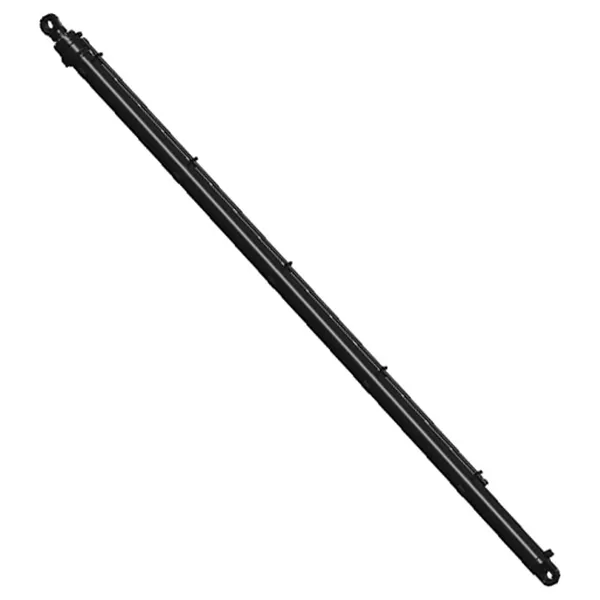
1. How Does Effective Area Change at Each Stage?
A telescopic hydraulic cylinder has multiple stages that extend in sequence. The first stage has the largest diameter and the smallest effective area for lifting. The second stage has a smaller diameter and a larger effective area. The third stage has an even smaller diameter and an even larger effective area. The effective area is the annular area between the stage that is extending and the stage that is already extended. The table below shows the effective area and the lifting force at each stage for a typical three-stage cylinder.
| Stage | Bore diameter (mm) | Rod diameter (mm) | Effective area (cm²) | Lifting force at 200 bar (kN) |
| Stage 1 (first to extend) | 180 | 140 | 100 | 200 |
| Stage 2 (second to extend) | 140 | 100 | 75 | 150 |
| Stage 3 (third to extend) | 100 | 70 | 40 | 80 |
The lifting force decreases as the stages extend because the effective area decreases. This means that the cylinder can lift the heaviest load when it is fully retracted and the lightest load when it is fully extended. In our factory, we design Telescopic Hydraulic Cylinders with the stage areas optimized for the load profile of the application. Raydafon has been manufacturing telescopic cylinders for over 20 years.
2. How Does Operating Pressure Affect Stage Sequencing?
The stages of a telescopic cylinder extend in sequence from the largest to the smallest. The sequence is determined by the pressure required to overcome the load and the friction of each stage. The first stage extends when the pressure reaches the level required to lift the load with the largest effective area. The second stage extends when the pressure reaches the level required to lift the load with the second largest effective area. If the operating pressure is too low, the second stage will not extend. If the operating pressure is too high, the stages may extend out of sequence or the cylinder may fail. The table below shows the pressure required to extend each stage for a typical load.
| Stage | Load (kN) | Required pressure (bar) | Relief valve setting (bar) |
| Stage 1 | 200 | 200 | 250 |
| Stage 2 | 150 | 200 | 250 |
| Stage 3 | 80 | 200 | 250 |
The pressure required to extend each stage is the same if the load is the same. But the load decreases as the bed is raised because the center of gravity moves. The pressure required to extend the second stage is usually lower than the pressure required to extend the first stage. However, if the load is unevenly distributed or if the cylinder is binding, the pressure required for the second stage can be higher. In our factory, we recommend that the relief valve be set at 1.25 times the maximum pressure required for the first stage. This provides a margin for the second and third stages. Raydafon Technology Group Co.,Limited provides pressure setting recommendations for each cylinder model.
3. What Happens When the Operating Pressure Is Too Low or Too High?
If the operating pressure is too low, the cylinder will not lift the load. The first stage may extend partially, but the second stage will not extend. The pump will continue to run, and the oil will heat up. If the operating pressure is too high, the cylinder may extend too fast, causing shock loads and instability. The seals may be damaged, and the cylinder may fail. The table below shows the symptoms of incorrect operating pressure.
| Pressure condition | Symptom | Root cause | Corrective action |
| Too low | Second stage stalls; oil heats up | Relief valve set too low; pump worn | Adjust relief valve; repair pump |
| Too high | Fast extension; shock at end of stroke | Relief valve set too high; flow control valve open | Adjust relief valve; adjust flow control |
| Fluctuating | Jerky extension; pressure gauge fluctuates | Air in system; contaminated oil | Bleed air; change oil and filter |
| Correct | Smooth extension; pressure stable | N/A | None |
Field engineer's note: The most common cause of second-stage stall is a relief valve that is set too low. The operator may have adjusted the valve to reduce the lifting speed, not realizing that the lower setting prevents the second stage from extending. The correct way to reduce the lifting speed is to use a flow control valve, not to reduce the relief valve setting. In our factory, we provide a pressure and flow setting guide with every Telescopic Hydraulic Cylinders order.
4. How Does Pressure Affect the Stability of the Load?
The operating pressure affects the stability of the load during lifting and lowering. If the pressure is too low, the load may descend too slowly or not at all. If the pressure is too high, the load may descend too quickly, causing shock and instability. The stability also depends on the sequence of the stages. If the stages extend out of sequence, the load may shift to one side. The table below shows the effect of pressure on load stability.
| Pressure condition | Lifting stability | Lowering stability | Risk of tipping |
| Too low | Poor (stalls) | Poor (slow) | Moderate |
| Correct | Good (smooth) | Good (controlled) | Low |
| Too high | Poor (shock) | Poor (fast) | High |
| Fluctuating | Poor (jerky) | Poor (jerky) | High |
In our factory, we test the stability of our Telescopic Hydraulic Cylinders under different pressure conditions. We recommend that the operating pressure be set to the value that provides a smooth extension and retraction with a margin of 20 percent above the maximum load pressure. We also recommend that the cylinder be equipped with a load holding valve to prevent the load from descending if the hose bursts. Raydafon Technology Group Co.,Limited provides load holding valves as an optional feature on all of our telescopic cylinders.
Frequently Asked Questions About Operating Pressure in Telescopic Hydraulic Cylinders
Summary for Field Engineers and Maintenance Technicians
The operating pressure in a Telescopic Hydraulic Cylinders determines the lifting force, the stage sequencing, and the stability of the load. The effective area decreases as the stages extend, so the pressure required to lift a given load increases. The relief valve must be set high enough to allow the second and third stages to extend, but not so high that it damages the cylinder. The most common cause of second-stage stall is a relief valve that is set too low or a pressure drop in the hose or valve. By understanding the relationship between pressure, effective area, and load, field engineers can diagnose and correct performance problems. Raydafon Technology Group Co.,Limited has been manufacturing Telescopic Hydraulic Cylinders for over 20 years and provides full field support for our customers.
Raydafon Technology Group Co.,Limited manufactures Telescopic Hydraulic Cylinders with 2 to 5 stages, bore diameters from 100 to 250 mm, and maximum working pressures up to 250 bar. We provide pressure calculations, relief valve recommendations, and load holding valves for all of our products.
