

How Does Pipe Assembly Support Reliable and Efficient Fluid Systems?
2026-01-12
Abstract
Pipe assembly plays a decisive role in the stability, safety, and efficiency of modern fluid and gas transmission systems. From industrial manufacturing lines to energy, chemical processing, and infrastructure projects, a well-designed pipe assembly directly affects operational continuity and lifecycle cost. This article provides a structured and practical explanation of pipe assembly, focusing on common customer pain points such as leakage risks, installation complexity, material compatibility, and long-term maintenance. It also explains how professional pipe assembly solutions help organizations achieve consistent performance and reduce operational uncertainty.
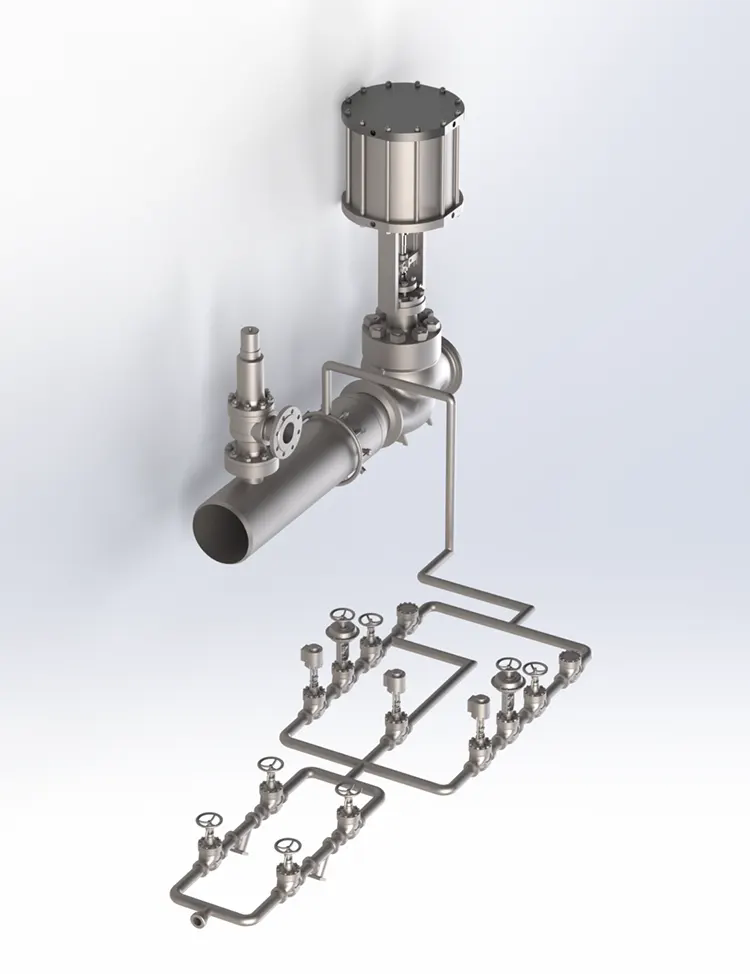
Table of Contents
- Understanding Pipe Assembly and Its Core Function
- Common Challenges Faced by Buyers and Engineers
- Key Components Within a Pipe Assembly System
- How Pipe Assembly Is Applied Across Industries
- Material Selection and Structural Considerations
- Quality Control and Manufacturing Consistency
- Installation, Maintenance, and Lifecycle Value
- Frequently Asked Questions
Understanding Pipe Assembly and Its Core Function
Pipe assembly refers to a pre-engineered combination of pipes, fittings, connectors, and sealing elements designed to transport liquids, gases, or slurries under specific pressure and temperature conditions. Unlike single pipe components, an integrated pipe assembly is developed to function as a complete system, ensuring alignment accuracy, secure connections, and predictable flow behavior.
For many customers, the core value of pipe assembly lies in reliability. A properly manufactured assembly minimizes the probability of leakage, vibration failure, or pressure loss, especially in complex industrial environments where downtime leads to significant financial impact.
Common Challenges Faced by Buyers and Engineers
Organizations sourcing pipe assembly solutions often encounter recurring technical and operational challenges. These issues typically arise from inconsistent component quality or insufficient system-level design.
- Leakage caused by poor sealing or dimensional mismatch
- Extended installation time due to on-site assembly complexity
- Material incompatibility with corrosive or high-temperature media
- Inconsistent performance across different production batches
- High maintenance frequency and unexpected system shutdowns
Addressing these challenges requires more than selecting individual parts. It demands a pipe assembly solution engineered with application-specific parameters in mind.
Key Components Within a Pipe Assembly System
A complete pipe assembly consists of multiple interdependent components. Each element contributes to system integrity and operational safety.
| Component | Primary Function |
|---|---|
| Pipes | Provide the main flow channel for fluids or gases |
| Fittings | Enable direction changes, branching, or diameter transitions |
| Connectors | Ensure secure and repeatable connections between sections |
| Sealing Elements | Prevent leakage under pressure and thermal variation |
| Supports and Brackets | Maintain alignment and reduce mechanical stress |
How Pipe Assembly Is Applied Across Industries
Pipe assembly solutions are widely used across industries that demand controlled fluid transmission and structural reliability.
- Manufacturing and automation systems requiring stable hydraulic and pneumatic lines
- Chemical and processing plants handling corrosive or reactive substances
- Energy and power facilities operating under high pressure and temperature
- Construction and infrastructure projects with long service life requirements
In each application, pipe assembly design must account for operating conditions, safety standards, and environmental exposure.
Material Selection and Structural Considerations
Material selection is a critical factor influencing the durability and safety of pipe assembly systems. Common materials include stainless steel, carbon steel, copper alloys, and engineered polymers, each offering distinct performance characteristics.
Structural considerations such as wall thickness, connection type, and tolerance control are equally important. Precision manufacturing ensures consistent fit and reduces stress concentration points that could lead to premature failure.
Quality Control and Manufacturing Consistency
Consistent quality is essential for pipe assembly used in large-scale or safety-critical applications. Professional manufacturers implement dimensional inspection, pressure testing, and material verification to ensure each assembly meets defined performance criteria.
Companies like Lozose focus on standardized production processes combined with application-driven customization, allowing customers to receive assemblies that integrate smoothly into existing systems without extensive modification.
Installation, Maintenance, and Lifecycle Value
Pre-assembled pipe systems significantly reduce on-site installation time and labor cost. Clear identification, precise alignment, and tested connections simplify commissioning and lower the risk of installation errors.
Over the system lifecycle, a well-designed pipe assembly contributes to predictable maintenance schedules, fewer emergency repairs, and improved operational planning. This long-term value is often more significant than initial procurement cost.
Frequently Asked Questions
What is the main advantage of using a pipe assembly instead of individual components?
A pipe assembly provides system-level compatibility and reliability, reducing installation errors and improving overall performance.
How can pipe assembly reduce leakage risks?
Leakage risks are minimized through controlled manufacturing tolerances, tested sealing methods, and proper material selection for the operating environment.
Can pipe assemblies be customized for specific applications?
Yes. Professional suppliers can adjust materials, dimensions, and connection types based on pressure, temperature, and media requirements.
What should buyers evaluate when selecting a pipe assembly supplier?
Buyers should assess manufacturing capability, quality control procedures, technical support, and experience with similar applications.
Conclusion
Pipe assembly is more than a collection of connected parts; it is a critical system that supports safe, efficient, and long-term fluid transmission. By addressing common operational challenges and focusing on quality-driven design, organizations can significantly improve system reliability and reduce hidden costs. For tailored pipe assembly solutions backed by consistent manufacturing standards, Lozose offers professional support and application-focused expertise. To explore how the right pipe assembly can enhance your system performance, contact us today to discuss your project requirements.
