

How Does Precision Sheet Metal Fabrication Improve Product Quality and Manufacturing Efficiency?
2026-06-03
Precision sheet metal fabrication plays a critical role in modern manufacturing. From electronics enclosures and medical equipment to telecommunications hardware and industrial machinery, businesses rely on highly accurate metal components to ensure performance, durability, and consistency. However, many buyers face common challenges such as dimensional inaccuracies, production delays, rising costs, and inconsistent quality among suppliers.
This article explores how precision sheet metal fabrication helps manufacturers overcome these issues while improving product quality, reducing waste, and accelerating production timelines. Whether you are sourcing custom metal parts or evaluating fabrication partners, understanding the benefits of precision manufacturing can help you make better business decisions.
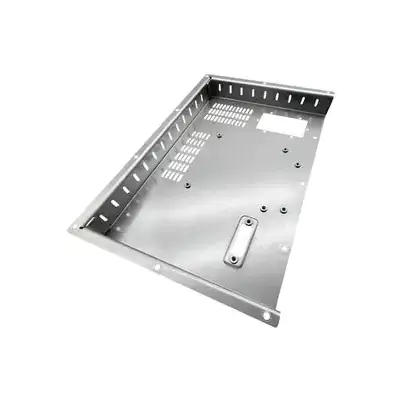
Table of Contents
- What Is Precision Sheet Metal Fabrication?
- Why Precision Matters in Manufacturing
- Core Processes Used in Precision Sheet Metal Fabrication
- Key Benefits of Precision Sheet Metal Fabrication
- Industries That Depend on Precision Sheet Metal Components
- How to Choose the Right Fabrication Partner
- Traditional vs Precision Sheet Metal Fabrication
- Future Trends in Precision Fabrication
- Frequently Asked Questions
- Conclusion
What Is Precision Sheet Metal Fabrication?
Precision sheet metal fabrication refers to the process of transforming flat metal sheets into highly accurate and functional components through advanced manufacturing techniques. Unlike conventional fabrication methods, precision fabrication focuses on maintaining extremely tight tolerances and consistent quality throughout production.
The process typically involves computerized equipment, automated machinery, and strict quality control procedures to ensure that every component meets exact design specifications.
Materials commonly used include:
- Stainless steel
- Carbon steel
- Aluminum
- Copper
- Brass
- Galvanized steel
These materials can be fabricated into enclosures, brackets, chassis, cabinets, panels, frames, and various custom components for industrial applications.
Why Precision Matters in Manufacturing
One of the biggest concerns manufacturers face is ensuring that parts fit together perfectly during assembly. Even small dimensional errors can lead to costly production delays, rework, product failures, or customer complaints.
Precision sheet metal fabrication minimizes these risks by maintaining tight tolerances throughout the manufacturing process.
Key reasons precision matters include:
- Improved product reliability
- Better assembly efficiency
- Reduced material waste
- Lower production costs
- Enhanced product appearance
- Greater consistency across large production runs
- Faster time-to-market
For industries such as medical devices, telecommunications, aerospace, and electronics, precision is often essential rather than optional.
Core Processes Used in Precision Sheet Metal Fabrication
Modern fabrication facilities utilize a combination of advanced technologies to achieve exceptional accuracy and efficiency.
Laser Cutting
Laser cutting uses concentrated beams of light to create highly precise cuts with smooth edges. It is ideal for complex geometries and intricate designs while reducing material waste.
CNC Punching
Computer-controlled punching equipment creates holes, slots, and custom shapes with remarkable speed and repeatability.
CNC Bending
Advanced press brakes accurately form metal sheets into specific angles and configurations while maintaining strict tolerances.
Welding and Assembly
Precision welding techniques ensure structural integrity and aesthetic quality for finished products.
Surface Finishing
Finishing processes improve corrosion resistance, appearance, and durability.
- Powder coating
- Anodizing
- Electroplating
- Brushing
- Polishing
- Sandblasting
Key Benefits of Precision Sheet Metal Fabrication
1. Superior Accuracy
Computer-controlled manufacturing systems significantly reduce human error, resulting in components that consistently meet engineering specifications.
2. Faster Production Cycles
Automation and digital manufacturing technologies enable rapid production without sacrificing quality.
3. Cost Efficiency
Although precision fabrication requires advanced equipment, it often lowers overall project costs by reducing scrap rates, minimizing rework, and improving production efficiency.
4. Scalability
Manufacturers can easily move from prototype development to mass production while maintaining consistent quality.
5. Design Flexibility
Complex geometries, customized features, and unique product designs can be produced with greater ease compared to traditional fabrication methods.
6. Enhanced Product Durability
High-quality fabrication techniques create stronger, more reliable components capable of withstanding demanding environments.
Industries That Depend on Precision Sheet Metal Components
Precision fabrication supports a wide range of industries where quality and consistency are essential.
| Industry | Typical Applications |
|---|---|
| Electronics | Server cabinets, enclosures, control panels |
| Medical Equipment | Device housings, surgical equipment components |
| Telecommunications | Network cabinets, communication hardware |
| Industrial Automation | Machine frames, brackets, structural assemblies |
| Energy Sector | Control boxes, equipment enclosures |
| Transportation | Vehicle components and structural parts |
As products become more sophisticated, demand for precision-manufactured metal components continues to grow.
How to Choose the Right Fabrication Partner
Selecting the right supplier can directly affect project success. Buyers should evaluate more than just pricing.
Consider the following factors:
- Manufacturing experience
- Engineering capabilities
- Quality management systems
- Production capacity
- Equipment technology
- Material sourcing capabilities
- Lead times
- Customization support
- Prototype development services
- Post-processing options
A reliable fabrication partner should be capable of supporting projects from concept development through final production while maintaining consistent quality standards.
Traditional vs Precision Sheet Metal Fabrication
| Factor | Traditional Fabrication | Precision Fabrication |
|---|---|---|
| Accuracy | Moderate | Extremely High |
| Consistency | Variable | Highly Consistent |
| Material Waste | Higher | Lower |
| Production Speed | Slower | Faster |
| Complex Designs | Limited | Excellent Capability |
| Scalability | Moderate | Excellent |
This comparison illustrates why precision fabrication has become the preferred solution for modern manufacturing environments.
Future Trends in Precision Fabrication
The precision sheet metal fabrication industry continues to evolve as manufacturers seek greater efficiency and product performance.
- Smart manufacturing integration
- Advanced automation systems
- AI-assisted production planning
- Digital quality monitoring
- Sustainable manufacturing practices
- Higher-speed laser technologies
- Increased customization capabilities
These developments enable manufacturers to deliver better products while reducing operational costs and environmental impact.
Frequently Asked Questions
Q1: What industries benefit most from precision sheet metal fabrication?
Industries such as electronics, medical equipment, telecommunications, industrial automation, transportation, and energy systems benefit significantly due to their need for highly accurate components.
Q2: What materials can be used in precision sheet metal fabrication?
Common materials include stainless steel, aluminum, carbon steel, copper, brass, and galvanized steel.
Q3: How does precision fabrication reduce costs?
By minimizing errors, reducing scrap, lowering rework requirements, and improving production efficiency, precision fabrication can significantly reduce total manufacturing costs.
Q4: Is precision sheet metal fabrication suitable for custom projects?
Yes. Advanced CNC machinery and digital manufacturing systems make it possible to produce highly customized components with exceptional accuracy.
Q5: Can precision fabrication support both prototyping and mass production?
Absolutely. Modern fabrication facilities can efficiently handle small prototype batches as well as large-volume production runs while maintaining consistent quality.
Conclusion
Precision sheet metal fabrication has become an essential manufacturing solution for companies seeking superior quality, tighter tolerances, faster production cycles, and greater cost efficiency. By leveraging advanced technologies such as laser cutting, CNC punching, precision bending, welding, and surface finishing, manufacturers can produce reliable components that meet the increasingly demanding requirements of modern industries.
For businesses looking to improve product performance, reduce manufacturing risks, and streamline supply chains, partnering with an experienced precision sheet metal fabrication provider can deliver significant long-term value.
Xinyang specializes in high-quality precision sheet metal fabrication solutions, offering customized manufacturing services, advanced production capabilities, and strict quality control to support diverse industry requirements. Whether you need prototypes, low-volume production, or large-scale manufacturing, our experienced team is ready to help turn your designs into reliable finished products. Contact us today to discuss your project requirements and discover how Xinyang can provide the precision, efficiency, and manufacturing support your business needs.
