

How Does Proper Alignment Prevent Worm Gearbox Failure?
2026-09-24
When a Worm Gearbox fails, the first suspect is usually the gearbox itself. The maintenance team replaces the unit, and six months later the new one fails in the same way. The real root cause is often not inside the gearbox at all. It is the alignment between the gearbox input shaft and the motor shaft, or between the output shaft and the driven equipment. Misalignment imposes forces on the bearings and seals that they were never designed to handle. A radial offset of just 0.2 mm can reduce bearing life by 50 percent. An angular error of 0.1 degree over a 100 mm coupling span can double the load on the output bearing. This guide explains how misalignment causes specific failure modes and how to detect and correct it before the next gearbox fails.
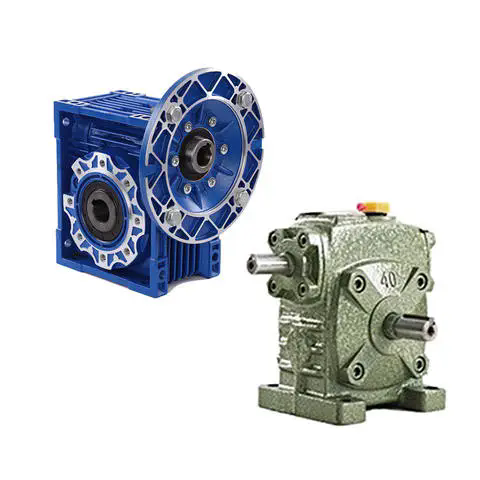
1. What Are the Failure Symptoms That Point to Misalignment in a Worm Gearbox?
Misalignment does not cause a sudden, catastrophic failure. It causes a gradual degradation that manifests in four symptoms. The first is abnormal vibration. The vibration frequency is typically twice the shaft rotation frequency for parallel misalignment, and once per revolution for angular misalignment. The second is excessive heat at the bearing housing. Misalignment increases the load on the bearings, which increases friction and temperature. The third is oil seal leakage. The radial force from misalignment deflects the shaft, which opens the seal lip and allows oil to escape. The fourth is uneven tooth wear. The worm and wheel contact pattern shifts to one side, causing accelerated wear on that side. The table below shows the relationship between misalignment type and failure symptom.
| Misalignment type | Primary symptom | Vibration frequency | Typical time to failure |
| Parallel offset (radial) | Bearing overheating, vibration | 2x shaft speed | 3 – 12 months |
| Angular misalignment | Seal leakage, coupling wear | 1x shaft speed | 6 – 18 months |
| Combined offset and angular | Uneven tooth wear, noise | 1x and 2x shaft speed | 2 – 8 months |
| Axial misalignment (end float) | Thrust bearing failure | High frequency | 1 – 6 months |
In our factory, we have analyzed returned Worm Gearbox units from field failures. Over 40 percent of the units showed evidence of misalignment-induced damage, including spalled bearings, worn seals, and asymmetric tooth contact patterns. These failures were not caused by manufacturing defects. They were caused by installation errors.
2. How Does Misalignment Cause Bearing and Seal Failure?
The bearings in a Worm Gearbox are designed to carry the radial and axial loads from the gear mesh. When the gearbox is misaligned with the motor or the driven equipment, additional forces are imposed on the bearings. These forces are not uniformly distributed. They create edge loading on the bearing races, which leads to fatigue spalling. The seal is also affected. The lip of the seal is designed to run concentrically on the shaft. Misalignment causes the shaft to run eccentrically, which opens a gap on one side of the seal. Oil leaks through the gap, and contaminants enter the gearbox. The table below shows the effect of misalignment magnitude on bearing life and seal leakage.
| Radial misalignment (mm) | Bearing life reduction | Seal leakage rate increase | Recommended action |
| 0 – 0.05 | None | None | Acceptable |
| 0.05 – 0.10 | 10 – 20% | 50% | Monitor; realign at next maintenance |
| 0.10 – 0.20 | 30 – 50% | 200% | Realign immediately |
| 0.20 – 0.50 | 60 – 80% | 500% | Realign immediately; inspect bearings |
| > 0.50 | > 90% | > 1000% | Replace bearings and seals; realign |
Saifu Vietnam Company Limited has tested Worm Gearbox units on a misalignment rig to quantify these effects. The test data confirms that a radial misalignment of 0.2 mm reduces the L10 bearing life from 20,000 hours to less than 8,000 hours. This is why alignment tolerance is so critical.
3. What Are the Alignment Methods and Tolerances for a Worm Gearbox?
There are three methods for aligning a Worm Gearbox: straightedge and feeler gauge, dial indicator, and laser alignment. The straightedge method is the least accurate and should only be used for rough positioning. The dial indicator method is more accurate and can measure both parallel and angular misalignment. The laser alignment method is the most accurate and the fastest. It uses a laser transmitter and a receiver to measure the offset and angle in two planes. The table below compares the three methods.
| Method | Accuracy | Time required | Skill level | Recommended application |
| Straightedge and feeler gauge | ±0.20 mm | 10 minutes | Low | Rough positioning only |
| Dial indicator | ±0.02 mm | 45 – 60 minutes | Moderate | General maintenance |
| Laser alignment | ±0.005 mm | 20 – 30 minutes | Low to moderate | Precision and critical applications |
The recommended alignment tolerance for a Worm Gearbox depends on the shaft speed and the coupling type. For a flexible coupling, the allowable parallel offset is typically 0.05 mm and the allowable angular error is 0.05 degrees. For a rigid coupling, the tolerance is tighter: 0.02 mm parallel and 0.02 degrees angular. In our factory, we provide an alignment tolerance chart with every gearbox. We also offer a laser alignment service for customers who do not have the equipment in house.
4. How Should Alignment Be Verified After Installation?
Alignment should be verified in three stages. The first stage is before tightening the foundation bolts. The gearbox should be positioned so that the alignment is within tolerance, and then the bolts should be tightened evenly in a cross pattern. The second stage is after tightening the bolts. The tightening process can shift the gearbox slightly, so the alignment should be rechecked. The third stage is after the first 100 hours of operation. The gearbox may settle or the foundation may shift. A final alignment check at this point ensures that the gearbox is operating within tolerance. In our factory, we recommend that a laser alignment report be included in the installation documentation. This report provides a baseline for future maintenance.
Frequently Asked Questions About Worm Gearbox Alignment
Summary for Maintenance Engineers
Proper alignment is the single most effective way to prevent Worm Gearbox failure. Misalignment causes bearing spalling, seal leakage, and uneven tooth wear. The failure is gradual, but the root cause is present from the first day of operation. By using the correct alignment method, adhering to the recommended tolerances, and verifying alignment after installation and during operation, maintenance teams can extend gearbox life by 2 to 3 times. Saifu Vietnam Company Limited has been manufacturing Worm Gearbox units for over 15 years and provides alignment specifications and support for all of our products.
Saifu Vietnam Company Limited manufactures Worm Gearbox units with precision-machined bearing bores, high-quality seals, and alignment tolerance charts. We provide laser alignment services and thermal growth data for critical applications.
