
How Does Reverse Osmosis Equipment Meet the Growing Demand for High-Purity Water?
2026-01-07
Abstract
Reverse Osmosis Equipment has become a foundational technology in industrial, commercial, and municipal water treatment due to its ability to remove dissolved salts, organic compounds, microorganisms, and trace contaminants with high efficiency. This article provides a comprehensive examination of how reverse osmosis systems operate, how equipment parameters determine performance, and how the technology is evolving to meet increasingly stringent water quality standards.
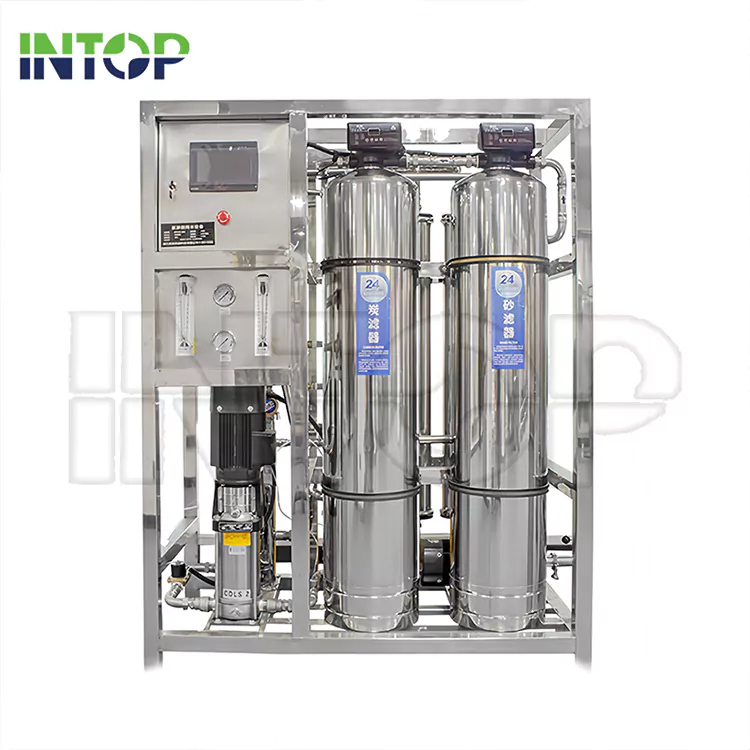
Table of Contents
- How Is Reverse Osmosis Equipment Structured and Why Does It Matter?
- How Do Key Parameters Define the Performance of Reverse Osmosis Equipment?
- How Is Reverse Osmosis Equipment Applied Across Different Industries?
- How Will Reverse Osmosis Equipment Develop in the Future?
Outline
- Overview of reverse osmosis technology and equipment composition
- Detailed explanation of system parameters and configuration logic
- Industry-specific application analysis
- Common questions and operational insights
- Future trends and brand introduction
How Is Reverse Osmosis Equipment Structured and Why Does It Matter?
Reverse Osmosis Equipment is a pressure-driven membrane separation system designed to purify water by forcing it through a semi-permeable membrane. The membrane allows water molecules to pass while rejecting dissolved salts, colloids, bacteria, and most organic matter. The effectiveness of the system depends not only on membrane quality, but also on the integration of pretreatment, pressure control, monitoring instruments, and post-treatment modules.
A standard reverse osmosis system consists of several core components: pretreatment units (such as multimedia filters, activated carbon filters, and water softeners), high-pressure pumps, membrane housings with RO membranes, control valves, and monitoring sensors. Each component plays a defined role in protecting the membrane and maintaining stable operation. Equipment design directly influences recovery rate, salt rejection, energy consumption, and service life.
From an engineering perspective, system layout determines hydraulic balance and fouling risk. Poorly matched flow rates or pressure drops can lead to membrane scaling, reduced permeate quality, and increased operating costs. For this reason, professional Reverse Osmosis Equipment is designed as an integrated solution rather than a collection of independent components.
How Do Key Parameters Define the Performance of Reverse Osmosis Equipment?
The performance of Reverse Osmosis Equipment is quantified through a set of technical parameters that guide system selection and operation. These parameters provide measurable indicators of efficiency, capacity, and reliability under defined operating conditions.
| Parameter | Typical Range | Technical Significance |
|---|---|---|
| Permeate Flow Rate | 0.25–1000 m³/h | Defines system capacity and production efficiency |
| Operating Pressure | 0.8–6.5 MPa | Determines driving force for membrane separation |
| Salt Rejection Rate | 95%–99.8% | Indicates purification accuracy and water quality |
| Recovery Rate | 40%–75% | Reflects water utilization efficiency |
| Feed Water TDS | < 50,000 ppm | Defines applicable raw water conditions |
These parameters must be evaluated as a system rather than individually. For example, increasing recovery rate may reduce wastewater discharge, but it also raises the risk of membrane scaling if pretreatment and chemical dosing are not properly designed. Similarly, higher operating pressure improves permeate output but increases energy consumption and mechanical stress.
Professional Reverse Osmosis Equipment balances these parameters through optimized membrane selection, variable-frequency pumps, and automated control systems. This balance is essential for long-term stability and predictable operating costs.
Reverse Osmosis Equipment: Common Questions and Detailed Answers
How often should reverse osmosis membranes be cleaned?
Membrane cleaning frequency depends on feed water quality, pretreatment efficiency, and operating recovery. In industrial applications, cleaning is typically required when normalized permeate flow drops by 10–15% or differential pressure increases by 15–20%. Proper monitoring can extend membrane life beyond three years.
How does feed water temperature affect system performance?
Water temperature directly impacts membrane permeability. Lower temperatures reduce permeate flow, while higher temperatures increase flux but may accelerate membrane aging. Most systems are designed around a standard reference temperature of 25°C, with correction factors applied during operation.
How can fouling be minimized in reverse osmosis equipment?
Fouling control relies on effective pretreatment, correct system hydraulics, and routine chemical cleaning. Multimedia filtration, activated carbon adsorption, antiscalant dosing, and cartridge filtration are commonly used to protect membranes from particulate, organic, and biological fouling.
How Is Reverse Osmosis Equipment Applied Across Different Industries?
Reverse Osmosis Equipment is widely adopted across industries where water purity directly affects product quality, operational reliability, or regulatory compliance. In power generation, RO systems provide boiler feedwater with low conductivity to prevent scaling and corrosion. In pharmaceuticals, purified water systems ensure compliance with stringent hygiene and consistency standards.
The food and beverage industry uses reverse osmosis to standardize water composition, remove off-flavors, and support concentration processes. Semiconductor manufacturing relies on multi-stage RO and polishing systems to achieve ultrapure water with extremely low ionic and organic content. Municipal and desalination projects use large-scale reverse osmosis equipment to convert brackish or seawater into potable water.
Each application requires tailored system design. Factors such as feed water variability, peak demand, and discharge regulations influence configuration choices. As a result, modular and scalable reverse osmosis equipment has become increasingly popular in complex projects.
How Will Reverse Osmosis Equipment Develop in the Future?
The future development of Reverse Osmosis Equipment is shaped by rising water scarcity, stricter discharge regulations, and the need for energy efficiency. Advances in membrane materials are improving fouling resistance and permeability, reducing energy consumption per unit of water produced. Intelligent control systems enable predictive maintenance and real-time optimization.
Another key direction is system integration. Reverse osmosis is increasingly combined with ultrafiltration, electrodeionization, and zero-liquid-discharge technologies to form comprehensive water treatment solutions. These integrated systems support sustainable water management while meeting diverse industrial requirements.
Within this evolving landscape, INTOP has established itself as a reliable provider of reverse osmosis equipment, offering engineered systems that align with international standards and application-specific demands. By focusing on stable performance, configurable design, and long-term operational value, INTOP supports clients across multiple industries.
For organizations evaluating water treatment upgrades or new projects, professional consultation remains essential. Contact us to discuss system configuration, technical specifications, and application requirements for reverse osmosis equipment tailored to your operational goals.
