

How Does the Grade of Stainless Steel Affect the Long Term Performance of a Penstock System
2026-03-26
When designing critical water infrastructure, the selection of materials for a Stainless Steel Penstock directly determines operational reliability over decades of service. At FYL, we have witnessed how the choice of stainless steel grade influences corrosion resistance, structural integrity, and lifecycle costs. Understanding these metallurgical distinctions is essential for engineers and project managers seeking to optimize long term performance while minimizing maintenance interventions.
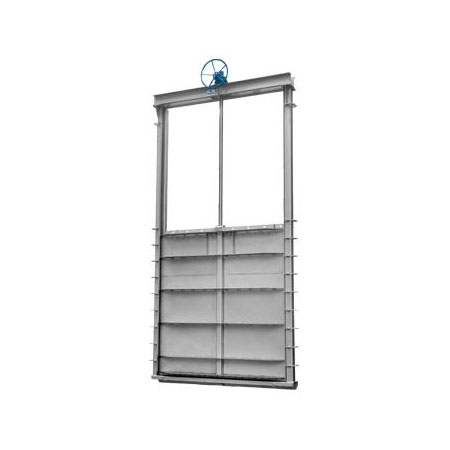
The Metallurgical Foundation of Penstock Durability
The grade of stainless steel dictates a Stainless Steel Penstock ability to withstand the three primary degradation mechanisms: pitting corrosion, crevice corrosion, and stress corrosion cracking. Austenitic grades such as 304 and 316 remain the industry standard, while duplex and super austenitic grades offer enhanced performance in aggressive environments.
| Grade | Key Properties | Typical Applications | Expected Service Life |
|---|---|---|---|
| 304 | Good corrosion resistance, cost effective | Fresh water, municipal systems | 25–35 years |
| 316 | Molybdenum addition, superior chloride resistance | Coastal installations, brackish water | 35–50 years |
| 904L | High nickel and molybdenum, excellent acid resistance | Industrial effluent, chemical exposure | 40–60 years |
| Duplex 2205 | High strength, exceptional chloride stress corrosion resistance | High pressure hydro, marine environments | 50+ years |
Performance Factors Across Different Grades
Corrosion Resistance and Environmental Compatibility
The molybdenum content differentiates standard grades from their higher performance counterparts. For a Stainless Steel Penstock installed in coastal regions or treating wastewater with elevated chloride levels, selecting 316 over 304 reduces pitting corrosion risk by approximately 60 percent. FYL engineering data indicates that duplex grades achieve passive film stability even when exposed to intermittent stagnation—a common condition in penstock operations.
Mechanical Strength and Structural Integrity
Higher strength grades enable thinner wall sections without compromising pressure ratings. Duplex stainless steel offers nearly twice the yield strength of austenitic equivalents, allowing FYL to design Stainless Steel Penstock systems with reduced material weight while maintaining safety factors. This characteristic translates to lower transportation costs and simplified installation logistics.
Weldability and Fabrication Considerations
The grade selection must align with fabrication capabilities. Austenitic grades provide predictable weld behavior, while duplex grades require precise heat input control to preserve phase balance. FYL employs certified welding procedures tailored to each grade, ensuring that the heat affected zone maintains corrosion resistance matching the base material.
Frequently Asked Questions About Stainless Steel Penstock
What is the most cost effective stainless steel grade for a municipal water penstock application
For municipal fresh water systems with stable pH levels and minimal chlorides, grade 304 offers the optimal balance of initial cost and service life. FYL typically recommends 304 for applications where chloride concentrations remain below 200 ppm and flow conditions prevent sediment accumulation. When project budgets allow, upgrading to 316 provides additional corrosion margin that often extends maintenance intervals by 10 to 15 years, making the lifecycle cost highly favorable.
How can I determine which stainless steel grade is suitable for my site specific conditions
A comprehensive site assessment should evaluate water chemistry—including chloride levels, pH, temperature, and dissolved oxygen—along with operational parameters such as flow velocity, stagnation frequency, and cathodic protection compatibility. FYL performs detailed corrosion risk analysis using predictive modeling tools that simulate electrochemical behavior across the intended service life. This methodology enables precise grade selection that aligns with both performance requirements and capital expenditure constraints.
What maintenance practices are required for different stainless steel grades in penstock systems
All stainless steel grades benefit from periodic inspection focused on crevice areas, flange connections, and weld zones. For 304 and 316 installations, FYL recommends biannual visual inspections with immediate remediation of surface contamination. Duplex and super austenitic grades require less frequent intervention due to their enhanced passive film stability, though thermal imaging for leak detection and thickness verification remains standard practice. Regardless of grade, proper commissioning procedures that include passivation treatment significantly influence long term performance outcomes.
Economic Implications of Grade Selection
The initial procurement cost represents approximately 20 to 30 percent of total ownership expenditure for a Stainless Steel Penstock. Lower grades may reduce upfront investment but introduce elevated inspection frequency and earlier replacement cycles. FYL lifecycle analyses demonstrate that selecting duplex grades for high consequence applications delivers net present value savings exceeding 40 percent over 50 year horizons when factoring in downtime avoidance and operational continuity.
Conclusion
The grade of stainless steel fundamentally shapes the long term performance trajectory of any penstock system. From corrosion resistance and mechanical strength to fabrication feasibility and economic efficiency, each metallurgical choice carries implications that extend across the entire asset lifecycle. FYL combines material science expertise with field proven engineering to deliver Stainless Steel Penstock solutions that achieve optimal alignment between operational demands and capital stewardship.
Contact us today to discuss your project specifications and discover how FYL precision engineered Stainless Steel Penstock systems can provide the durability and reliability your infrastructure requires for decades to come.
