

How Does Washing Machine Mould Improve Manufacturing Precision and Product Quality?
2026-07-06
Article Summary
Washing machine mould plays a critical role in the production of durable, precise, and high-performance washing machine components. From drum structures to outer shells and internal structural parts, mould design directly determines product consistency, efficiency, and lifespan. This article explores how advanced washing machine mould technology enhances industrial manufacturing, reduces defects, and supports scalable production. It also highlights key design considerations, material selection, and common challenges faced by manufacturers, with insights from Zhongyue, a professional mould solution provider.
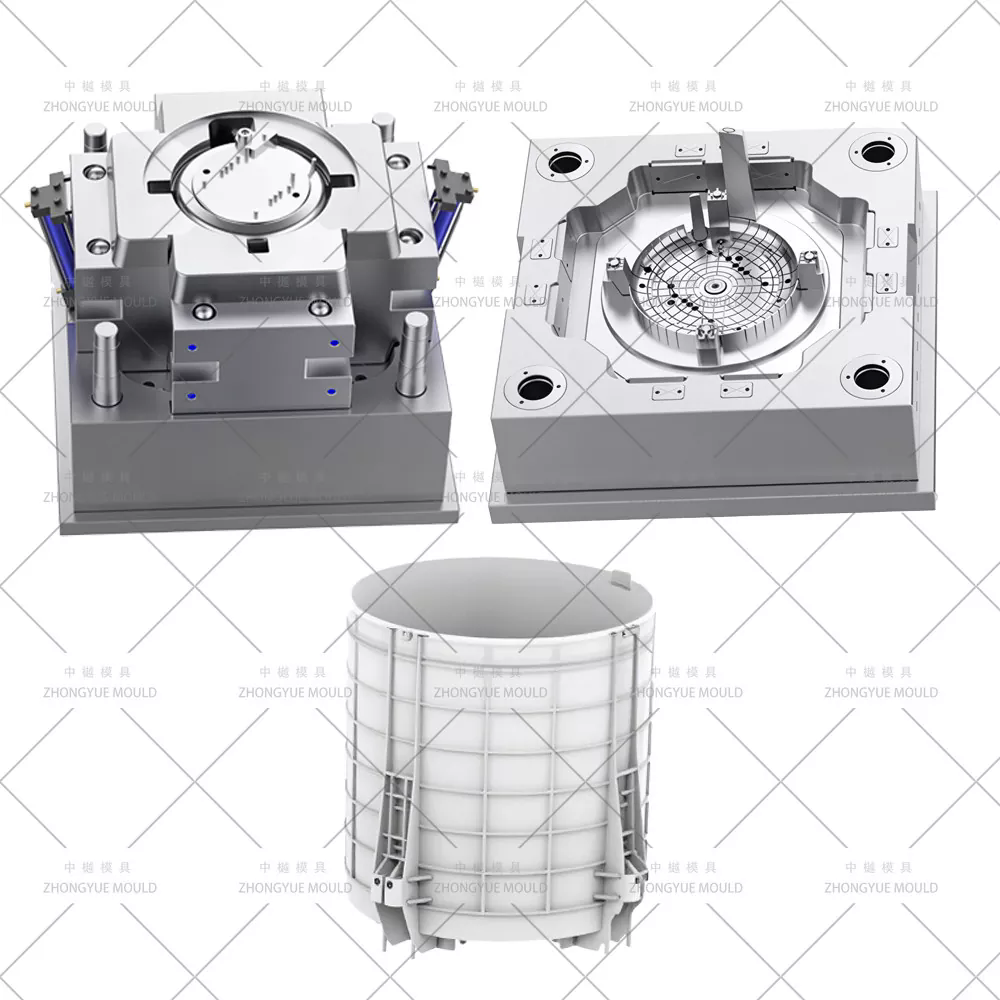
Table of Contents
- Article Outline
- 1. Introduction to Washing Machine Mould
- 2. Why Mould Quality Determines Product Performance
- 3. Core Design Principles of Washing Machine Mould
- 4. Material Selection and Engineering Considerations
- 5. Manufacturing Process and Workflow
- 6. Common Production Challenges and Solutions
- 7. Technical Comparison Table
- 8. Industry Applications and Use Cases
- 9. Frequently Asked Questions
- 10. Conclusion and Expert Recommendation
Article Outline
This article is structured to guide readers through the full lifecycle of washing machine mould development—from design principles to industrial application. It highlights how precision engineering ensures stable mass production and long-term reliability. It also introduces practical challenges and how professional suppliers like Zhongyue optimize solutions for global manufacturers.
1. Introduction to Washing Machine Mould
A washing machine mould is a specialized industrial tool used to shape plastic or metal components of washing machines through injection molding or stamping processes. These components include inner drums, outer casings, control panel housings, and structural supports.
In modern manufacturing, precision moulds are essential because even minor dimensional errors can lead to assembly failures, noise issues, vibration problems, or reduced machine lifespan. As consumer expectations for durability and energy efficiency rise, mould technology has become a core competitive factor.
2. Why Mould Quality Determines Product Performance
The quality of a washing machine is directly tied to the precision of its moulds. Poor mould design can result in inconsistent wall thickness, weak structural points, and poor sealing performance.
Key impacts of high-quality moulds include:
- Improved structural stability of machine components
- Reduced material waste during production
- Enhanced vibration resistance during operation
- Longer service life of washing machines
Manufacturers such as Zhongyue focus on optimizing mould geometry to ensure repeatable accuracy across high-volume production cycles.
3. Core Design Principles of Washing Machine Mould
The design phase is the foundation of mould performance. Engineers must consider mechanical stress, thermal expansion, and material flow behavior.
- Uniform Wall Thickness: Prevents deformation and sink marks.
- Efficient Cooling Channels: Ensures stable cycle times and avoids overheating.
- Precision Gate Design: Controls plastic flow for balanced filling.
- High-Durability Structure: Extends mould lifespan under continuous production.
Advanced simulation tools are commonly used to predict injection behavior before physical manufacturing begins, reducing trial-and-error costs.
4. Material Selection and Engineering Considerations
Material selection for washing machine moulds is crucial for durability and performance. The mould must withstand high pressure, friction, and repeated thermal cycles.
Common materials include:
- P20 Steel: Suitable for medium production volumes
- H13 Steel: High heat resistance for long production cycles
- S136 Stainless Steel: Excellent corrosion resistance and polishing ability
Zhongyue often recommends material selection based on production scale, expected lifespan, and cost optimization requirements.
5. Manufacturing Process and Workflow
The production of washing machine moulds involves multiple precision engineering steps:
- Product design analysis and feasibility study
- Mould structure design using CAD software
- CNC machining and rough shaping
- Heat treatment for hardness enhancement
- Precision polishing and surface finishing
- Assembly and testing trials
Each stage requires strict tolerance control to ensure the final mould meets industrial standards.
6. Common Production Challenges and Solutions
Despite advanced technology, manufacturers still face several challenges in washing machine mould production.
- Dimensional Deformation: Solved through optimized heat treatment processes
- Uneven Filling: Improved by redesigning gating systems
- Surface Defects: Reduced through advanced polishing techniques
- Short Mould Lifespan: Addressed by using high-grade steel materials
Professional suppliers like Zhongyue apply engineering adjustments at early design stages to prevent costly production issues later.
7. Technical Comparison Table
| Feature | Standard Mould | High-Precision Washing Machine Mould |
|---|---|---|
| Material Quality | Basic steel | High-grade alloy steel (H13/S136) |
| Durability | Moderate lifespan | Extended high-cycle lifespan |
| Precision | ±0.1 mm tolerance | ±0.01 mm tolerance |
| Cooling System | Basic channels | Optimized conformal cooling |
| Production Efficiency | Medium | High and stable output |
8. Industry Applications and Use Cases
Washing machine moulds are widely used in multiple industrial applications beyond household appliances.
- Residential washing machine manufacturing
- Commercial laundry equipment production
- Industrial cleaning systems
- Smart home appliance integration systems
Manufacturers rely on advanced mould systems to ensure scalability while maintaining consistent quality across global supply chains.
9. Frequently Asked Questions
Q1: What is the lifespan of a washing machine mould?
A high-quality mould can last hundreds of thousands to over a million cycles depending on material and maintenance.
Q2: Why is precision so important in mould design?
Precision ensures proper assembly, reduces vibration, and improves product durability and performance.
Q3: Can moulds be customized for different washing machine models?
Yes, moulds are fully customizable based on product design, capacity, and structural requirements.
Q4: How does Zhongyue support manufacturing projects?
Zhongyue provides end-to-end mould engineering support, including design optimization, material selection, and production testing.
10. Conclusion and Expert Recommendation
Washing machine mould technology is a fundamental pillar of modern appliance manufacturing. High-quality moulds ensure efficiency, precision, and durability while reducing production risks and operational costs.
Companies like Zhongyue continue to enhance mould engineering standards by integrating advanced materials, precision machining, and intelligent design systems. For manufacturers aiming to improve product quality and production stability, investing in high-performance mould solutions is a strategic necessity.
For customized solutions, technical consultation, and professional mould manufacturing support, contact us today at Zhongyue and discover how we can optimize your production efficiency and product quality.
