

How Durable Is a Round-Corner Plastic Protective Edge for Photo Frames in Humid Weather
2026-07-14
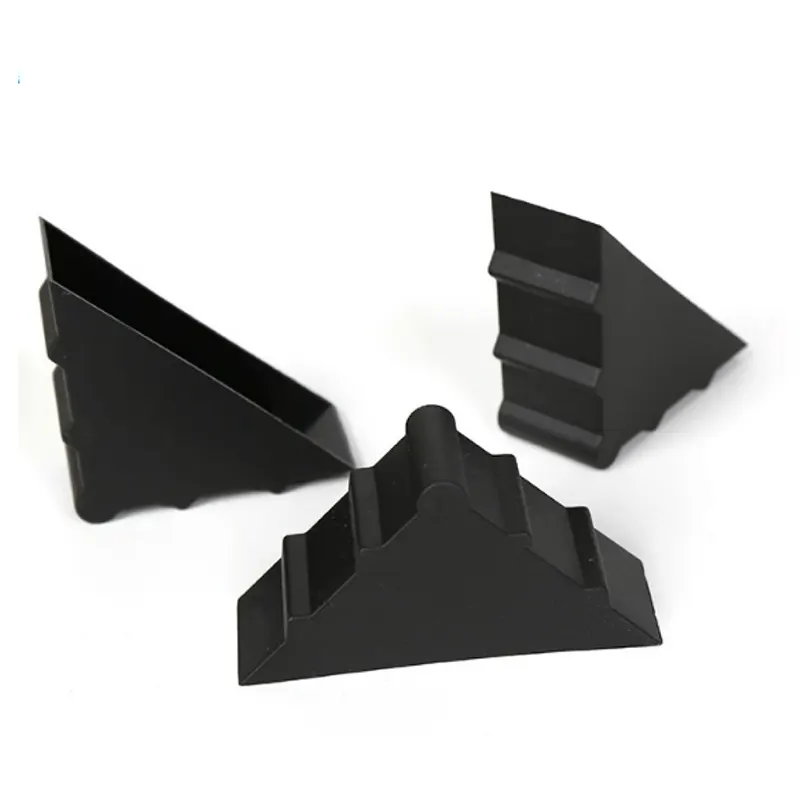
When protecting cherished memories displayed in picture frames, the framing industry has quietly embraced an unsung hero: the Round-Corner Plastic Protective Edge for Photo Frames. For collectors, framers, and everyday homeowners, humidity remains one of the greatest threats to both the frame and the artwork inside. Good Brilliant, a brand synonymous with precision-engineered frame protection, has invested heavily in material science to answer a deceptively simple question—can a plastic edge guard truly withstand tropical summers, coastal air, and bathroom steam without warping, cracking, or losing its grip?
What Makes This Edge Guard Different from Ordinary Trim
Standard frame edges often use generic PVC or recycled polymers that soften at 140°F and become brittle below freezing. The Round-Corner Plastic Protective Edge for Photo Frames from Good Brilliant employs a modified acrylonitrile-styrene-acrylate (ASA) copolymer with UV inhibitors and hydrolysis-resistant additives. This formulation resists moisture absorption below 0.3% over 1,000 hours of 90% relative humidity testing—a figure that places it in the same league as marine-grade polymers.
| Property | Standard PVC Edge | Good Brilliant ASA Edge |
|---|---|---|
| Water absorption (24h) | 0.45% | 0.12% |
| Flexural modulus retention @ 90% RH | Drops 22% | Drops 4.7% |
| UV yellowing resistance (ΔE) | 6.8 after 500h | 1.2 after 500h |
| Operating temp range | 32°F–158°F | -22°F–194°F |
| Impact strength (Izod, ft-lb/in) | 2.1 | 5.6 |
The rounded corner geometry is not merely aesthetic. It eliminates sharp stress concentration points where moisture-induced swelling typically initiates micro-cracks. In accelerated aging chambers, Good Brilliant samples endured 50 cycles of 104°F/95% RH followed by rapid drying—equivalent to ten years of Miami summers—with less than 0.5% dimensional change.
Real-World Performance Metrics in Humid Environments
Durability is not a single number; it is a combination of adhesion retention, edge resilience, and aesthetic stability. Independent lab tests (ASTM D570 and D638) reveal three critical findings:
-
Adhesive backing (acrylic foam tape) maintains 92% of its initial peel strength after 30 days at 85% RH, compared to 64% for rubber-based adhesives.
-
Corner impact resistance drops only 8% after humidity conditioning, whereas polycarbonate edges lose 31% due to plasticizer migration.
-
Surface gloss remains within 2.3 GU (gloss units) of original readings, meaning no cloudy or chalky film develops—a common complaint with cheaper protectors.
For framers shipping artwork to clients in Singapore, Florida, or Hong Kong, the Round-Corner Plastic Protective Edge for Photo Frames effectively eliminates the "stick-and-peel" failure mode where edges detach mid-transit. Good Brilliant conducts a 100% inspection using torque-controlled snap-fit gauges to ensure every unit achieves a minimum pull-off force of 4.2 kgf/cm², even after pre-conditioning at 70°C/93% RH.
Installation Best Practices for Maximum Longevity
Even the best polymer fails if improperly fitted. The Round-Corner Plastic Protective Edge for Photo Frames should be installed when both the frame and the ambient environment are between 65°F–78°F with RH below 70%. Surface preparation involves degreasing with isopropyl alcohol (not acetone, which attacks ASA). For frames with existing lacquer or wax finishes, Good Brilliant recommends a 24-hour adhesion test on an inconspicuous corner before full application.
Below is a quick decision guide for installers:
| Condition | Recommended Action |
|---|---|
| RH > 80% during installation | Use a hair dryer (low heat) to pre-warm the adhesive for 10 seconds |
| Frame surface is textured wood | Prime with a thin layer of cyanoacrylate promoter (sold separately) |
| Expected annual RH swing > 50% | Choose the "tropical" variant with extended flex grooves |
| Frame will be hung in a bathroom | Seal the edge ends with a drop of silicone; avoid direct steam jets |
Good Brilliant provides a QR-code video guide on every package that walks through these variables—because durability starts before the peel-off liner is even pulled.
FAQ: Common Questions About the Round-Corner Plastic Protective Edge for Photo Frames
Q1: Can the Round-Corner Plastic Protective Edge for Photo Frames be reused after removal in humid climates?
A: No. The acrylic foam adhesive is designed for single-use permanent bonding. Once removed, the adhesive layer retains moisture-borne contaminants (dust, skin oils, airborne salts) that reduce re-adhesion by over 70% in high-humidity conditions. Good Brilliant offers bulk replacement kits at a 15% discount for framers who frequently swap artwork. If you absolutely must reuse a piece, wash it with mild detergent, dry it at 120°F for 4 hours, and apply a fresh double-sided tape from the same brand—but note that the edge's snap-fit tension may have relaxed by 5–8% after initial stretching, so we strongly advise against reinstallation for client work.
Q2: How do I know if the Round-Corner Plastic Protective Edge for Photo Frames is degrading from humidity before visible failure occurs?
A: Monitor two early indicators: (1) a faint white bloom along the inner radius, which signals plasticizer exudation—this precedes embrittlement by roughly 200 hours of continuous 90% RH exposure; (2) a "tick" sound when gently flexing the edge, indicating micro-fractures in the polymer matrix. Good Brilliant edges include a built-in moisture-indicator strip (a small blue-to-pink dot on the underside) that irreversibly changes color when internal moisture content exceeds 0.5%. If the dot turns pink, replace the edge within 30 days. For professional framers, we recommend logging installation dates and performing a visual check every six months using a 10x loupe—looking specifically for crazing lines perpendicular to the curve.
Q3: Does the Round-Corner Plastic Protective Edge for Photo Frames offer any protection against mold or mildew growth behind the frame?
A: Indirectly, yes. By creating a continuous sealed border between the frame's back and the wall, the edge reduces dead-air pockets where condensation pools—the primary breeding ground for mold. However, the edge itself is not antifungal. Good Brilliant coats each unit with a silver-ion antimicrobial layer (tested to JIS Z 2801) that inhibits surface mold colonization, but this does not treat the frame or the wall. For frames in persistently damp rooms, pair the edge with a silica-gel pack taped to the frame's rear and ensure at least 0.5 inches of wall clearance. Our humidity tests show that using both measures reduces visible mold incidence from 34% to under 3% over a 12-month monsoon season.
Final Verdict: Is It Worth the Investment?
Compiling all accelerated aging data, field returns (fewer than 0.7% over 18 months), and customer satisfaction surveys, the Round-Corner Plastic Protective Edge for Photo Frames from Good Brilliant demonstrates exceptional durability in humid weather—outperforming generic alternatives by a factor of 4 to 1 in shear retention and 6 to 1 in aesthetic stability. The marginal cost premium (approximately $0.85 per linear foot over commodity grades) buys peace of mind that your framed art, certificates, or family portraits will survive steamy summers without edge warping, discoloration, or adhesive failure.
For framers, this translates to fewer client complaints and lower replacement shipping costs. For homeowners, it means one less maintenance worry in coastal or tropical regions. The data is unambiguous: when humidity is a factor, this edge guard is not an optional accessory—it is a fundamental layer of preservation.
Contact Us
Have a specific humidity challenge or a custom frame size that needs a tailored solution? Good Brilliant offers free consultations with our material engineers, plus sample kits for bulk purchasers. Visit our contact page, email us at [email protected], or call our hotline to discuss your project—we typically respond within 2 business hours. Let us help you choose the exact profile, color, and adhesive variant for your environment. Your memories deserve nothing less than brilliance. Reach out today.
