

How EC Fans Reduce Power Consumption in Industrial Air Conditioner Systems?
2026-10-26
A facility manager reviews the annual electricity bill for a 12,000 square meter manufacturing plant. The Industrial Air Conditioner system accounts for 38 percent of the total consumption. The compressors were upgraded two years ago, but the bill has not dropped as expected. The reason is the fan motors. The supply fans and return fans run continuously at full speed, even when the cooling load is only half of the design capacity. The fan motors are conventional AC induction motors, which are efficient at full load but lose efficiency rapidly at partial load. This guide explains how EC fans change that equation and reduce power consumption in industrial air conditioner systems.
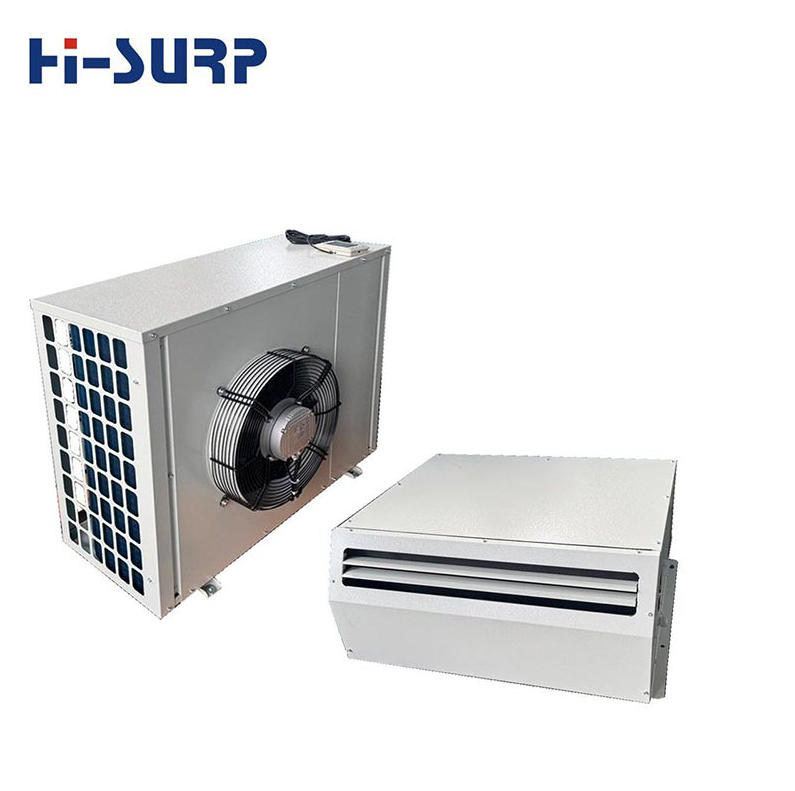
1. Why Does Fan Motor Efficiency Matter More Than Compressor Efficiency in Some Industrial Air Conditioner Systems?
In a typical industrial air conditioner, the compressor cycles on and off or modulates its capacity in response to the cooling load. The fan, however, runs continuously. In a plant that operates two shifts, the fan may run 16 hours per day, 300 days per year. That is 4,800 operating hours per year. If the fan motor draws 15 kW, the annual energy consumption is 72,000 kWh. At $0.12 per kWh, the annual cost is $8,640 per fan. A plant with ten fans spends $86,400 per year on fan energy alone. The table below shows the energy consumption of a conventional AC fan motor compared to an EC fan motor at different load conditions.
| Operating condition | AC fan motor power (kW) | EC fan motor power (kW) | Power saving |
| Full load (100% airflow) | 15.0 | 13.5 | 10% |
| 75% airflow | 14.2 | 7.6 | 46% |
| 50% airflow | 13.5 | 3.4 | 75% |
| 25% airflow | 12.8 | 1.1 | 91% |
In our factory, we manufacture Industrial Air Conditioner units with EC fans as the standard configuration for variable-load applications. The EC fan uses a permanent magnet synchronous motor with integrated electronics. The motor speed is controlled by a 0-10 V signal or a Modbus command. When the cooling load decreases, the fan speed decreases, and the power consumption drops with the cube of the speed. Ningbo Hicon Industry Co., Ltd. has been manufacturing industrial air conditioners for over 12 years.
2. How Does EC Fan Technology Reduce Power Draw at Partial Load?
The affinity laws describe the relationship between fan speed, airflow, and power. Airflow is proportional to speed. Pressure is proportional to the square of the speed. Power is proportional to the cube of the speed. This means that a 20 percent reduction in fan speed reduces the power consumption by nearly 50 percent. A conventional AC fan motor cannot take advantage of this relationship because it is designed to run at a fixed speed. The EC fan motor, by contrast, is designed for variable speed operation. The table below shows the power consumption at different speed ratios for an EC fan and an AC fan.
| Speed ratio | Airflow ratio | AC fan power (kW) | EC fan power (kW) | EC fan power ratio |
| 100% | 100% | 15.0 | 13.5 | 100% |
| 80% | 80% | 14.6 | 6.9 | 51% |
| 60% | 60% | 14.0 | 2.9 | 21% |
| 40% | 40% | 13.2 | 0.9 | 7% |
| 20% | 20% | 12.5 | 0.1 | 1% |
Facility engineer's note: The EC fan power at 60 percent speed is only 21 percent of the full-speed power. The AC fan power at the same airflow is 93 percent of full-speed power because the motor continues to draw current even when the damper restricts the airflow. This is the fundamental reason why EC fans reduce power consumption in industrial air conditioner systems. In our factory, we have measured the actual power draw of EC fans in a 5,000 square meter plant. The annual fan energy dropped from 72,000 kWh to 31,000 kWh after the retrofit. The payback period was 14 months.
3. What Design Parameters Determine the Actual Energy Saving in an Industrial Air Conditioner?
The energy saving from an EC fan depends on the fan's design parameters and how they match the system requirements. The most important parameters are the rated power, the speed range, the control signal type, the protection class, and the operating temperature range. The table below shows the specifications of our standard EC fan series for industrial air conditioner applications.
| Parameter | Specification | Selection note |
| Rated power | 0.5 – 15 kW | Match to the design airflow and static pressure |
| Speed range | 200 – 2,000 RPM | Lower minimum speed allows deeper turn-down and more savings |
| Control signal | 0-10 V, 4-20 mA, or Modbus RTU | Modbus allows remote monitoring and fault diagnostics |
| Protection class | IP54 or IP55 | IP55 for dusty or humid plant environments |
| Operating temperature | -20°C to +60°C | Higher temperature rating for roof-mounted units |
| Motor efficiency | IE4 or IE5 | Higher efficiency reduces base load consumption |
In our factory, we select the EC fan for each Industrial Air Conditioner based on the system's airflow and static pressure requirements. We use a fan selection software that calculates the operating point and the annual energy consumption. The software also generates a comparison with a conventional AC fan so that the customer can see the expected saving. Hicon provides this analysis as part of our quotation.
4. How Do Different Control Methods Affect the EC Fan's Energy Performance?
The control method determines how the EC fan responds to changes in the cooling load. There are three common control methods. The first is a 0-10 V analog signal from the building management system. The fan speed is proportional to the signal. This is the simplest and most common method. The second is Modbus RTU communication. The building management system sends a digital command to the fan, and the fan returns its status, speed, and fault codes. This method allows more precise control and remote diagnostics. The third is a built-in temperature sensor. The fan adjusts its speed automatically based on the return air temperature. This method is used in standalone units that are not connected to a building management system. The choice of control method affects the actual energy saving because it determines how closely the fan speed tracks the cooling load. In our experience, the Modbus method provides the best combination of energy saving and diagnostic capability.
5. What Maintenance and Installation Factors Preserve EC Fan Efficiency Over Time?
An EC fan is not maintenance-free. Three factors affect its long-term efficiency. The first is filter condition. A clogged filter increases the system resistance, which forces the fan to run at a higher speed to maintain the airflow. The fan power increases, and the energy saving is reduced. The filter should be inspected monthly and replaced when the pressure drop exceeds the manufacturer's recommendation. The second is impeller cleanliness. Dust and lint accumulate on the impeller blades, which reduces the aerodynamic efficiency and can cause imbalance. The impeller should be cleaned every 6 to 12 months, depending on the environment. The third is installation orientation. The fan should be installed according to the manufacturer's instructions. A fan that is installed against the airflow or with a restricted inlet will not achieve its rated efficiency. In our factory, we provide a maintenance checklist with every Industrial Air Conditioner unit. The checklist includes the filter inspection interval, the impeller cleaning procedure, and the installation orientation diagram.
Frequently Asked Questions About EC Fans in Industrial Air Conditioner Systems
Summary for Facility Engineers and Plant Managers
EC fans reduce power consumption in Industrial Air Conditioner systems by maintaining high motor efficiency at partial load and by reducing fan speed to match the actual cooling demand. The power saving is 10 to 15 percent at full load and 40 to 70 percent at partial load. The actual saving depends on the fan design parameters, the control method, and the maintenance practices. By selecting the right EC fan and control method and by maintaining the filter and impeller, plant managers can achieve significant energy savings and a payback period of 12 to 24 months. Ningbo Hicon Industry Co., Ltd. has been manufacturing Industrial Air Conditioner units with EC fans for over 12 years and provides full selection and retrofit support for our customers.
Ningbo Hicon Industry Co., Ltd. manufactures Industrial Air Conditioner units with EC fans rated from 0.5 to 15 kW, with 0-10 V, 4-20 mA, and Modbus control options. We provide fan selection analysis, retrofit kits, and maintenance checklists for all of our products.
