

How Is a Gun Cleaning Jag Defined in Contemporary Firearm Care?
2025-12-15
A Gun Cleaning Jag is a precision-machined firearm maintenance component designed to securely hold a cleaning patch and guide it through the bore with consistent surface contact. In professional firearm care, the jag plays a critical role in maintaining bore hygiene by ensuring that solvents, oils, and debris are evenly distributed and removed without compromising rifling integrity.
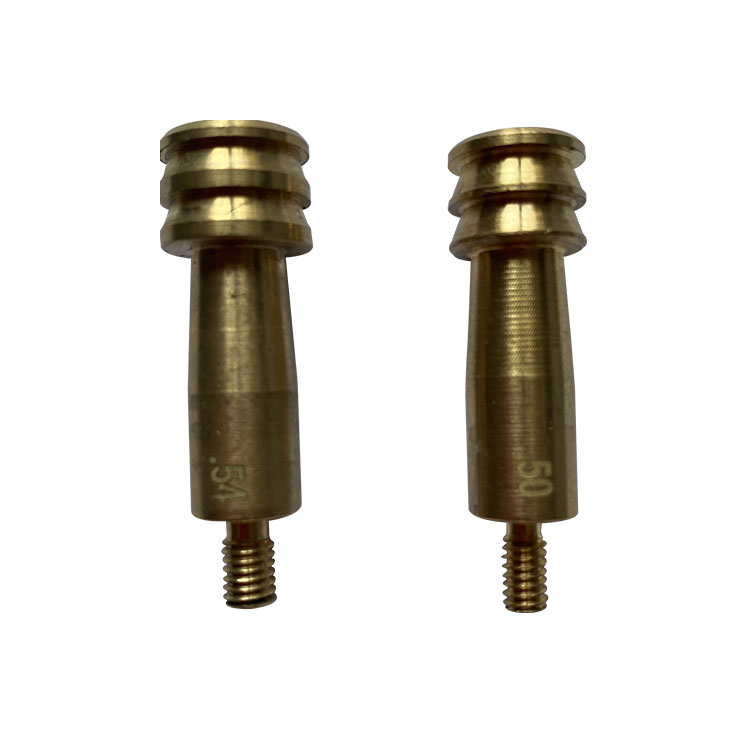
Unlike loosely fitted patch holders, a properly engineered Gun Cleaning Jag creates uniform radial pressure between the patch and the bore walls. This controlled engagement allows residue removal to follow the natural geometry of the rifling rather than cutting across it. As a result, maintenance routines become more repeatable, measurable, and aligned with professional firearm service standards. The jag is not an accessory used in isolation; it functions as part of a broader cleaning system that includes rods, patches, solvents, and bore protection protocols.
From an engineering perspective, the Gun Cleaning Jag is defined by caliber-specific tolerances, material selection, and surface finish. These attributes collectively determine how the jag interacts with both the patch and the bore. Precision in these parameters is essential because even minor dimensional deviations can result in uneven patch compression, reduced cleaning consistency, or unnecessary friction. In markets where firearm accuracy, longevity, and safety are prioritized, the jag has become a standard rather than an optional tool.
Typical Product Parameters of a Gun Cleaning Jag
| Parameter Category | Common Specification Range |
|---|---|
| Caliber Compatibility | .17 / .22 / .243 / .30 / 9mm / .45 and custom calibers |
| Material Options | Brass, Aluminum, Stainless Steel |
| Thread Standard | 8-32 (rifle), 5-40 (pistol), custom threads |
| Surface Finish | CNC polished, deburred, corrosion-resistant |
| Patch Retention Design | Pointed tip, slotted tip, or spiral cut |
| Manufacturing Process | CNC turning with tolerance control |
| Application Scope | Rifled barrels, controlled bore cleaning |
These parameters are not cosmetic distinctions; they directly influence operational stability during cleaning cycles. Brass jags, for example, are frequently selected for their balance of rigidity and bore safety, while stainless steel variants are often specified for high-frequency or institutional maintenance environments. Thread standards must align precisely with cleaning rods to prevent wobble or misalignment during insertion and extraction.
By establishing clear technical definitions, the Gun Cleaning Jag can be evaluated as a precision maintenance component rather than a generic accessory. This perspective aligns with how professionals assess cleaning systems in competitive shooting, law enforcement training, and regulated firearm servicing environments.
How Manufacturing Standards Shape Jag Consistency and Fit
The manufacturing quality of a Gun Cleaning Jag determines whether it performs predictably across repeated cleaning cycles. Precision machining is the baseline requirement, but consistency in tolerance, finish, and material integrity distinguishes a professional-grade jag from mass-market alternatives. The most critical manufacturing consideration is concentricity, which ensures that the jag remains centered within the bore when mounted on a straight cleaning rod.
CNC machining is widely adopted because it allows repeatable control over diameter and profile across large production runs. During production, each caliber-specific jag must account for patch thickness variability while still maintaining sufficient engagement with the bore walls. This balance is achieved through iterative prototyping and tolerance validation rather than generalized sizing. As a result, caliber-specific jags are not interchangeable without compromising cleaning uniformity.
Surface finishing is another defining factor. A properly polished jag minimizes micro-abrasions and reduces solvent retention points where residue could accumulate. Deburring processes remove sharp edges around the tip and patch retention grooves, ensuring smooth entry into the bore. Inconsistent finishing can lead to patch tearing or uneven solvent distribution, both of which reduce maintenance efficiency.
Material selection also intersects with manufacturing discipline. Brass jags require controlled alloy composition to maintain structural integrity while remaining softer than barrel steel. Aluminum jags prioritize lightweight handling but must be anodized or treated to resist wear. Stainless steel jags demand precise polishing to avoid galling or unnecessary friction. Each material introduces different machining challenges, reinforcing the importance of specialized production expertise.
Thread cutting and inspection represent another overlooked area of quality control. Threads must align axially with the jag body to prevent eccentric rotation. Cross-threading risks increase when thread tolerances are poorly managed, especially in high-volume cleaning scenarios. Professional manufacturers typically perform thread gauging and fit tests with standard rods before final packaging.
In regulated markets, traceability and batch consistency are increasingly relevant. Manufacturers that document material sourcing, machining parameters, and inspection checkpoints can provide a higher level of confidence to distributors and end users. This approach positions the Gun Cleaning Jag as a controlled component within a maintenance system rather than a disposable item.
How a Gun Cleaning Jag Is Applied in Structured Cleaning Procedures
The practical application of a Gun Cleaning Jag follows a defined sequence within firearm maintenance protocols. The jag is mounted onto a compatible cleaning rod, fitted with a caliber-appropriate patch, and introduced into the bore from the chamber end whenever possible. This directionality aligns with best practices designed to protect the crown and maintain barrel geometry.
Patch selection directly affects jag performance. A patch that is too thin may fail to engage rifling grooves effectively, while an overly thick patch can generate excessive resistance. The jag’s profile compensates for these variables by maintaining consistent pressure distribution as the patch moves through the bore. This interaction allows solvents to contact fouling residues evenly, improving cleaning repeatability.
During solvent application, the jag ensures that liquid media is not merely pooled but actively carried along the rifling. This controlled transfer reduces the number of passes required to achieve a clean bore, which in turn limits mechanical wear. In professional maintenance settings, reducing unnecessary passes is considered a measurable benefit because it preserves barrel life over extended service periods.
After solvent dwell time, dry patches are commonly used with the same jag to remove loosened debris. The jag’s retention design prevents patch slippage, ensuring that contaminants are extracted rather than redistributed. In oiling stages, a lightly saturated patch applied via the jag provides a uniform protective film without oversaturation.
Cleaning frequency and procedure depth vary by firearm usage, ammunition type, and operating environment. However, the jag’s role remains consistent: to provide predictable patch-to-bore contact. This predictability is why jags are favored in competitive shooting and training facilities where maintenance outcomes must be standardized across multiple firearms.
Common Questions About Gun Cleaning Jags
Q: How does a Gun Cleaning Jag differ from a slotted patch holder in professional maintenance routines?
A: A Gun Cleaning Jag applies uniform radial pressure that follows rifling contours, whereas slotted holders rely on patch folding that often results in uneven contact and reduced cleaning consistency, particularly in precision barrels.
Q: How is the correct jag size determined for a specific firearm caliber?
A: The correct jag size is determined by matching the jag’s calibrated diameter to the nominal bore size of the firearm while accounting for standard patch thickness, ensuring firm engagement without excessive resistance during bore passage.
These clarifications address common uncertainties while reinforcing the jag’s role as a precision-guided maintenance component rather than a general-purpose accessory.
Market Alignment, Specification Trends, and Supplier Considerations
In global firearm accessory markets, demand for standardized cleaning components continues to rise alongside increased attention to firearm care education. Distributors and OEM buyers increasingly evaluate Gun Cleaning Jags based on dimensional accuracy, material transparency, and compatibility with established rod systems. This evaluation reflects a broader shift toward system-based procurement rather than isolated product selection.
Caliber diversification has expanded significantly, requiring suppliers to maintain comprehensive SKU ranges. Beyond common calibers, niche and regional specifications are gaining relevance, particularly in competitive and tactical shooting segments. Manufacturers that can respond with precise tooling adjustments and short production lead times are better positioned to meet these requirements.
Packaging and labeling also play a role in market acceptance. Clear caliber markings, thread specifications, and material identification reduce user error and improve downstream satisfaction. In professional supply chains, such clarity minimizes returns and enhances brand credibility.
From a compliance standpoint, material safety and corrosion resistance are increasingly scrutinized. While the Gun Cleaning Jag is a non-firing component, its interaction with solvents and oils necessitates chemical stability. Suppliers that validate material performance under repeated exposure conditions can support higher-value distribution channels.
Shanghai Hunting Speed Industry&Trade Co., Ltd. operates within this professional framework by supplying Gun Cleaning Jags manufactured with controlled tolerances, consistent material standards, and application-focused specifications. The company’s approach emphasizes alignment with international cleaning rod standards and caliber requirements, supporting distributors and brand owners seeking reliable firearm maintenance components.
For organizations evaluating long-term sourcing or customization options, engaging directly with a qualified supplier is an efficient way to align product specifications with market needs. To discuss technical details, material options, or private-label opportunities related to Gun Cleaning Jags, interested parties are encouraged to contact us through established business communication channels for detailed consultation and support.
