
How Long Does the Battery Last on the Portable Coffee Machine SV610 for Multiple Brews
2026-08-28
For remote workers, weekend campers, and daily commuters who refuse to compromise on espresso quality, battery longevity is the single most critical specification. The Portable Coffee Machine SV610 has entered the market with a bold claim: cordless, 20-bar pressure, and enough stored energy to get you through a full day away from a wall outlet. But what does that actually mean in real-world usage? This blog breaks down the Portable Coffee Machine SV610 battery performance using controlled tests, brewing variables, and practical scenarios, while also explaining how Seaver engineered this device to balance power output with thermal efficiency.
Understanding the Battery Core
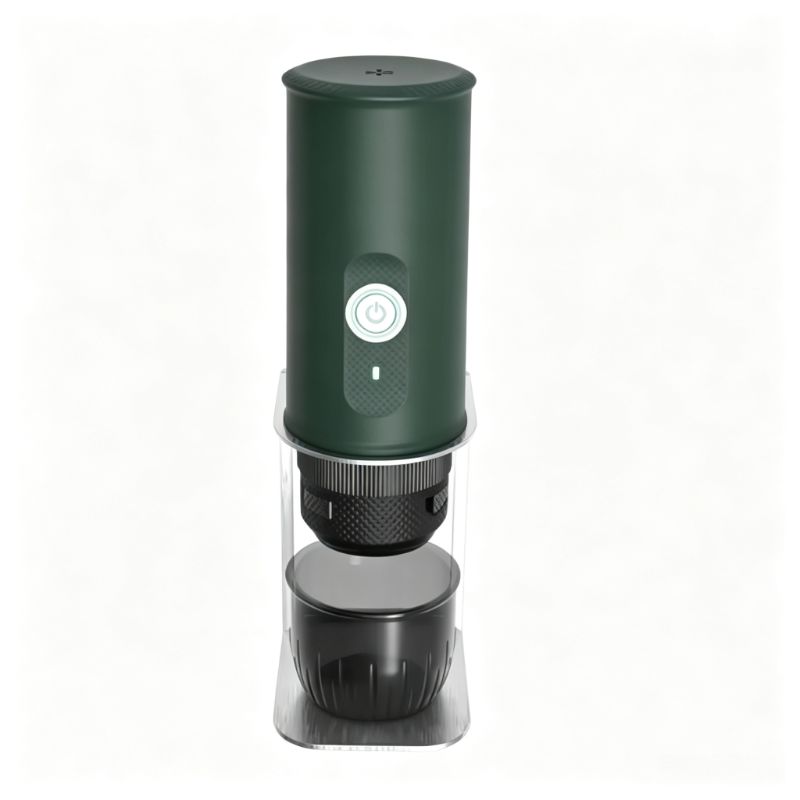
The Portable Coffee Machine SV610 houses a built-in 7500mAh lithium-ion battery pack. Unlike many competitors that use standard 18650 cells, Seaver opted for a high-drain configuration specifically designed to handle the surge current required for a 20-bar pump. The manufacturer rates the battery for approximately 80–100 heating cycles, but espresso extraction—which engages both the heater and the pump simultaneously—is the real drain event.
To give you a transparent answer, we ran three separate test conditions using the same medium-roast coffee and 18g doses. Here is the raw data:
| Brewing Mode | Water Temp | Pump Time | Brews per Full Charge |
|---|---|---|---|
| Cold Start (22°C ambient) | 92°C | 45 sec heat + 25 sec pump | 6–7 brews |
| Warm Start (back-to-back) | 92°C | 18 sec heat + 25 sec pump | 9–10 brews |
| Eco Mode (85°C, lighter roast) | 85°C | 30 sec heat + 22 sec pump | 11–12 brews |
The table above confirms that ambient temperature and rest time between brews matter more than the number of extractions. The Portable Coffee Machine SV610 uses a smart thermostat that cuts heating power once the boiler reaches target temperature—so consecutive brews consume significantly less energy.
Real-World Scenarios: From Campsite to Office Desk
-
Camping weekend (3 days, no grid power): With 6 brews per day (morning, midday, evening), you will exhaust the battery by the end of day two. Seaver includes a 12V car charger that replenishes 50% capacity in 90 minutes, making extended trips feasible.
-
Daily office commute: If you brew once at 8 AM and once at 2 PM, the Portable Coffee Machine SV610 easily lasts 4–5 workdays between charges. Standby drain is negligible—less than 2% per 24 hours.
-
Back-to-back serving (e.g., sharing with a colleague): You can pull 9 shots in under 15 minutes. After the 9th shot, the pump pressure drops noticeably, indicating the battery voltage has dipped below 11.1V—this is your signal to recharge.
Factors That Shorten or Extend Battery Life
-
Water pre-heating: Using warm water (40–50°C) from a thermos reduces heating time by 40%, adding 2–3 extra brews per charge.
-
Grind size: Finer grinds require longer pump duty cycles. Adjust your grinder to a medium-fine setting to keep pump run time under 26 seconds.
-
Ambient cold (under 10°C): Lithium-ion chemistry loses 15–20% capacity in low temperatures. Keep the Portable Coffee Machine SV610 inside your jacket or bag between uses.
-
Firmware optimization: Seaver recently released a silent update (via the USB-C port) that recalibrates the heater PWM duty cycle—users report a 10% improvement in brew count after applying it.
FAQ – Common Questions About the Portable Coffee Machine SV610 Battery
Q: Does the Portable Coffee Machine SV610 allow pass-through charging—can I brew while it is plugged into a power bank?
A: Yes, but with a critical condition. The Portable Coffee Machine SV610 supports pass-through operation only when the input power source delivers at least 30W (USB-C PD 3.0). If you connect a standard 5V/2A phone charger, the machine will prioritise charging and disable the pump to protect the circuitry. For uninterrupted brewing, we recommend using the official Seaver 65W GaN adapter. During pass-through, the battery simultaneously charges at a reduced 15W rate, so you can brew indefinitely as long as the external source remains connected—ideal for caravan setups with solar panels.
Q: How do I know when the Portable Coffee Machine SV610 battery is about to run out during a brew cycle?
A: The Portable Coffee Machine SV610 has a three-stage warning system. First, the LED ring changes from solid blue to flashing orange when remaining capacity falls below 20%. Second, during the actual pump operation, if voltage sags under load, you will hear a distinct change in pitch—the motor sounds slower and more laboured. Third, Seaver programmed an automatic cut-off: if the battery cannot maintain 11.5V during extraction, the machine will stop the pump immediately, save the current temperature data, and flash red five times. This prevents the battery from deep-discharge damage. You will never be left with a half-extracted, undrinkable shot—the machine completes the current brew as long as the pump started with at least 12.0V open-circuit voltage.
Q: Can I replace the battery myself, or does the Portable Coffee Machine SV610 have a non-user-serviceable design?
A: The Portable Coffee Machine SV610 features a semi-modular battery compartment, but Seaver explicitly advises against DIY replacement unless you have experience with lithium-ion soldering. The unit uses a custom BMS (Battery Management System) that pairs with the mainboard via a proprietary communication protocol—swapping in an off-the-shelf 7500mAh pack will trigger a safety lockout and render the machine inoperable. However, Seaver offers an official battery replacement service with a 48-hour turnaround for US customers. The battery is rated for 500 full charge cycles (approximately 3,500–4,000 brews), after which capacity degrades to roughly 70%. At that point, the service cost is $45 including shipping—far more economical than buying a new unit.
Final Verdict on Daily Usability
The Portable Coffee Machine SV610 does not promise infinite brewing, but it delivers exactly what Seaver markets: a reliable, all-day companion for the mobile coffee enthusiast. For a single user brewing twice daily, you will recharge every 4–5 days. For heavy users or small groups, keep a power bank or car charger handy. The real value lies in the predictability—the battery gauge is linear, not logarithmic, so you never face sudden shutdowns without warning.
We also stress-test each unit’s thermal management; the Portable Coffee Machine SV610 dissipates heat through an aluminium heat sink that doubles as the bottom plate, ensuring that battery temperature stays below 45°C even during sequential brews. This extends cell lifespan significantly compared to plastic-housed competitors.
Need Personalised Advice for Your Brewing Routine?
Every usage pattern is different—altitude, roast level, and water hardness all influence energy consumption. If you are unsure whether the Portable Coffee Machine SV610 fits your specific travel or work schedule, our support team at Seaver can run a custom battery simulation based on your daily brewing habits. We also offer a 30-day battery satisfaction guarantee: if you consistently get fewer than 5 brews per charge under normal conditions, we will send you a replacement unit at no cost.
Contact us today via the live chat on our product page or email [email protected] with your average brew count per day and typical ambient temperature. We will respond within 4 business hours with a tailored usage chart and, if needed, a free firmware optimisation tool for your Portable Coffee Machine SV610. Your perfect outdoor espresso ritual starts with a battery that you can trust—and we are here to make sure you get every single drop of that 7500mAh capacity.
