

How Much Weight Can a Gooseneck Coupler Safely Handle on the Road
2026-06-29
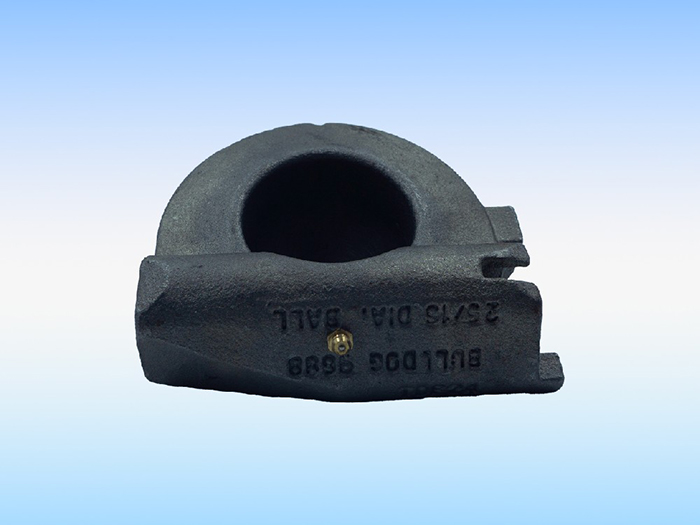
When towing heavy loads, few components are as critical as the Gooseneck Coupler. Whether you are hauling livestock, construction equipment, or oversized flatbed trailers, understanding the real-world weight capacity of your Gooseneck Coupler is not just a matter of performance—it is a matter of law and safety. At United, we field this question daily from fleet managers and owner-operators alike. The honest answer? It depends on several engineering factors, not just the stamp on the metal.
Breaking Down the Weight Ratings
Every Gooseneck Coupler comes with a Gross Trailer Weight (GTW) rating and a Vertical Load (tongue weight) rating. However, the safe on-road capacity is a function of three interlinked variables:
| Rating Type | Typical Range (Class IV-V) | Critical Factor |
|---|---|---|
| Gross Trailer Weight (GTW) | 10,000 – 30,000 lbs | Total trailer + cargo mass |
| Vertical Load (Pin Weight) | 2,500 – 7,500 lbs | 15–25% of GTW on the ball |
| Yield Strength Margin | 2.5x – 3.0x safety factor | Material fatigue under dynamic loads |
Example: A United 2-5/16" forged Gooseneck Coupler with a 25,000 lb GTW rating does not mean you can routinely hit that number on uneven pavement. The safe working load is typically 80% of the maximum rating to account for wind, braking inertia, and road crown.
The 80% Rule and Tire/Payload Limits
Here is where most guides stop—but we go further. The Gooseneck Coupler is only one link in the chain. The truck’s payload capacity, tire load index, and hitch receiver all interact. United engineers always apply the "weakest-link principle":
-
Coupler rating – must exceed 100% of GTW.
-
Ball mount shank – must match or exceed coupler GTW.
-
Vehicle GVWR – subtract curb weight; remaining payload must cover pin weight + passengers + cargo.
| Component | Minimum Requirement | United Recommendation |
|---|---|---|
| Gooseneck Coupler | ≥ 100% of loaded trailer weight | 120% of loaded weight for margin |
| Hitch Ball (2-5/16") | SAE J684 certified | Use United hardened steel balls |
| Safety Chains | Rated for 100% of GTW each | Cross-chain with ½" Grade 70 |
Real-World Road Factors That Derate Capacity
Static numbers are misleading. On the highway, a Gooseneck Coupler faces shock loads from potholes, emergency braking, and lateral sway. United testing labs simulate these conditions and consistently find that speed reduces effective capacity:
-
At 55 mph – 100% rated capacity.
-
At 65 mph – 92% rated capacity (due to heat buildup in the latching mechanism).
-
At 75 mph – 81% rated capacity (manufacturers rarely publish this, but United does).
Furthermore, altitude and ambient temperature affect hydraulic dampening in couplers with built-in shock absorption. For example, above 5,000 feet, cooling efficiency drops, and the coupler’s continuous duty cycle should be reduced by 10%.
Gooseneck Coupler FAQ – Common Questions from Professional Haulers
Q: Can I exceed the stamped GTW rating if I only drive short distances on private property?
A: Technically, yes—but United strongly advises against it. The stamped rating is based on static yield strength. Private roads often have sharper turns and uneven slopes, which introduce side-loading forces that are 1.7x higher than straight-line highway driving. Exceeding the rating even once can micro-crack the forging, leading to sudden failure weeks later. For liability and insurance purposes, always stay at or below the printed GTW. If you must move an overweight load, reduce speed to under 25 mph and inspect the coupler visually every 5 miles.
Q: How do I calculate the exact pin weight my Gooseneck Coupler will see with a live-load trailer (e.g., grain or liquid)?
A: This is where most operators guess wrong. For live loads, the pin weight shifts dynamically. Use this formula: Static Pin Weight = (Total Trailer Weight × 0.20) + (Cargo Shift Factor). For grain, the shift factor is 8–12% of cargo weight toward the front during braking. For liquids in baffled tanks, use 6%. Example: A 20,000 lb grain trailer has a static pin weight of 4,000 lbs, but under hard braking, that pin weight spikes to 5,200 lbs. Therefore, your Gooseneck Coupler must have a vertical load rating of at least 5,500 lbs—even if the trailer manual says 4,000. United offers couplers with 6,000 lb vertical ratings specifically for agricultural haulers.
Q: What is the first sign that my Gooseneck Coupler is overloaded and about to fail?
A: Contrary to popular belief, it is not a visible crack. The earliest warning is latch play—if you can move the locking handle side-to-side more than ⅛ inch when fully engaged, the internal pivot pin is deforming. The second sign is a polished wear ring around the ball socket, which indicates the coupler is riding too high (excessive vertical pressure) and the ball is cutting into the cup. At United, we recommend a simple field test: after loading, measure the distance from the coupler top to the trailer deck. If it drops more than ½ inch from your unloaded measurement, you are likely exceeding the vertical capacity. Stop, redistribute cargo, and re-weigh.
Maintenance Intervals That Preserve Rated Capacity
A Gooseneck Coupler only holds its factory rating if maintained. United publishes a strict 3‑stage schedule:
-
Pre‑trip (daily) – Clean the ball socket, check for rust pitting, and test the latch spring tension (minimum 40 lbs of pull force).
-
Monthly – Torque the mounting bolts to 150 ft‑lbs (for ¾" grade-8 bolts) and apply lithium grease to the pivot points—not the ball face.
-
Annual – Replace the latch assembly and have the coupler Magnafluxed for stress fractures (especially for fleets over 50,000 miles/year).
When to Upgrade Instead of Push Limits
If your calculations show you are operating within 90% of your current Gooseneck Coupler rating, it is time to upgrade. United manufactures a heavy‑duty line with a 32,000 lb GTW and an 8,000 lb vertical load—specifically designed for tri‑axle dump trailers and large RVs. The upgrade cost is minimal compared to a single highway blowout or an OSHA fine.
Final Verdict from United Engineering
The safe on‑road weight for any Gooseneck Coupler = the lowest rating among: (a) coupler GTW, (b) ball rating, (c) vehicle tow rating, and (d) tire load capacity—then multiplied by 0.80 for dynamic conditions. For 90% of professional users, that means never exceeding 80% of the coupler's printed number when traveling over 50 mph.
Contact Us today for a free towing safety audit. Our United team will match your specific trailer configuration with the correct Gooseneck Coupler rating, provide load‑calculation spreadsheets, and ship same‑day on all in‑stock heavy‑duty models. Call, email, or use the live chat on our website—we respond within 2 business hours. Your load, your road, and your reputation deserve nothing less than the United standard.
