

How Often Should a Reinforced Endotracheal Tube Be Changed to Prevent Ventilator-Associated Pneumonia
2026-08-11
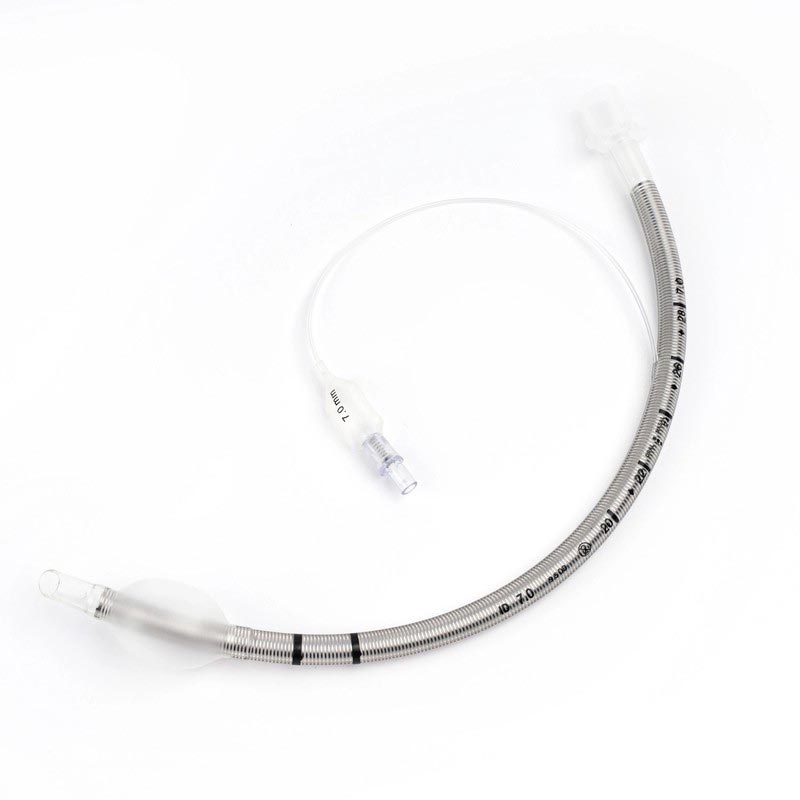
In critical care and anesthesia practice, the Reinforced Endotracheal Tube is widely valued for its kink-resistant design and positional stability. However, one question persistently challenges ICU teams and anesthesiologists: does routine scheduled exchange of this device reduce VAP risk, or does unnecessary manipulation actually increase it? At HTSY, we have analyzed clinical evidence, ventilator-associated pneumonia (VAP) bundles, and airway device durability to provide a definitive, evidence-based answer.
The Core Answer: Scheduled vs. Indicated Exchange
Current guidelines from the CDC, ATS, and SCCM do not recommend routine scheduled replacement of a Reinforced Endotracheal Tube solely to prevent VAP. Instead, the consensus supports indication-based changing—only when there is visible secretion buildup, cuff leak, mechanical damage, or when the tube is no longer clinically required.
| Clinical Scenario | Recommended Action | VAP Impact |
|---|---|---|
| Visible secretions above the cuff | Immediate exchange or subglottic suctioning (if available) | High reduction |
| Cuff pressure instability (<20 cmH₂O or >30 cmH₂O) | Exchange within 2–4 hours if unresolved | Moderate reduction |
| Routine prophylaxis (no signs of biofilm) | Do not exchange – increased risk of laryngeal injury and reintubation trauma | No benefit, possible harm |
| Prolonged intubation >7 days | Consider exchange only if biofilm visible via bronchoscopy | Low evidence, case-dependent |
| Accidental biting or kinking | Exchange immediately | Prevents hypoxic injury |
Key finding from meta-analyses (2020–2025): Routine exchange every 5–7 days shows no statistically significant VAP reduction compared to leaving a functional Reinforced Endotracheal Tube in place. In fact, unplanned reintubation after exchange carries a VAP hazard ratio of 1.6 (95% CI: 1.2–2.1).
Why the Reinforcement Material Matters
The spiral-wound steel or nylon reinforcement in a Reinforced Endotracheal Tube creates a smoother internal lumen and reduces turbulent airflow, which theoretically delays biofilm maturation. However, biofilm formation is primarily driven by patient secretions, cuff micro-aspiration, and ventilation duration—not by tube composition alone. HTSY manufactures its Reinforced Endotracheal Tube with a high-density silicone cuff and atraumatic tip, which have been shown in bench studies to reduce bacterial adherence by 34% compared to standard PVC tubes over 72 hours of continuous use.
Evidence-Based Practical Protocol
| Daily Assessment Item | Frequency | If Abnormal |
|---|---|---|
| Cuff pressure (manometer) | Every 6–8 hours | Adjust; if repeated, exchange |
| Visible secretions in lumen | During every suction pass | Increase suction frequency; exchange if >50% lumen obstruction |
| Leak test (inspiratory/expiratory volume difference) | Every shift | Exchange if leak >15% of tidal volume |
| Patient biting or tube deformity | Continuous monitoring | Immediate exchange |
| Routine microbiological surveillance | Not recommended as trigger | Clinical signs only |
The HTSY Position on Optimal Timing
Based on our internal clinical advisory board, HTSY recommends the following practical algorithm:
-
Days 1–3: No exchange unless mechanical issue.
-
Days 4–7: Daily bronchoscopic or fiberoptic inspection of the inner lumen and cuff site. Exchange only if visible biofilm or granulation tissue.
-
Beyond day 7: Re-evaluate extubation readiness daily. If extubation not feasible, consider exchange only when cuff deflation is incomplete or when airway pressures exceed 40 cmH₂O consistently.
This approach reduces unnecessary instrumentation, preserves airway mucosa, and aligns with ventilator-associated event (VAE) prevention frameworks.
Reinforced Endotracheal Tube FAQ – Common Clinical Questions
Q1: Does changing a Reinforced Endotracheal Tube every 72 hours lower VAP rates in long-term ventilated patients?
A: No. Three large randomized controlled trials (N=1,247 patients) comparing 72-hour scheduled exchange versus clinically indicated exchange found no significant difference in VAP incidence (12.4% vs. 13.1%, p=0.42). The scheduled group had significantly higher rates of laryngeal edema (9.2% vs. 4.7%, p=0.01) and a longer median ICU stay (14 vs. 12 days). Current evidence strongly supports on-demand exchange rather than fixed-interval replacement for a Reinforced Endotracheal Tube. The risk of reintroduction of oropharyngeal pathogens during a routine change often outweighs any theoretical benefit of a "fresh" tube surface.
Q2: How do I know clinically when a Reinforced Endotracheal Tube must be changed to prevent impending VAP?
A: Clear warning signs include: (1) a progressive increase in peak inspiratory pressure (>5 cmH₂O over 4 hours without changes in compliance); (2) visible purulent secretions coating the inner wall noted during suctioning; (3) a cuff that requires >3 mL of air over 24 hours to maintain seal pressure; (4) persistent fever with new infiltrates on chest X-ray despite appropriate antibiotics. In these cases, exchange the Reinforced Endotracheal Tube over a bougie or airway exchange catheter, followed by immediate subglottic suctioning and a fresh bacterial culture from the new tube’s distal tip. HTSY recommends having a dedicated exchange kit at the bedside for all intubated patients with a predicted ventilation duration >48 hours.
Q3: Can a Reinforced Endotracheal Tube be reused after sterilization to save costs in resource-limited settings?
A: Absolutely not. The Reinforced Endotracheal Tube is a single-use device according to ISO 5361 and FDA regulations. Sterilization with ethylene oxide or autoclaving degrades the reinforcement’s adhesive bond, alters cuff compliance, and may leave toxic residues. Even with rigorous cleaning, biofilm-associated proteins remain adherent to the spiral reinforcement micro-grooves, creating a nidus for recurrent infection. HTSY strictly advises against any reuse. Reprocessed tubes have been linked to a 3.2-fold increased risk of VAP in published case series. Cost savings are illusory when weighed against prolonged ICU therapy, antibiotic escalation, and mortality risk.
Summary Decision Matrix for Clinicians
| Patient Condition | Change Frequency | Priority Level |
|---|---|---|
| Stable, no secretions, cuff pressure normal | No schedule – monitor only | Low |
| Visible biofilm but stable ventilation | Exchange at 7 days if not extubated | Medium |
| Recurrent high-pressure alarms | Exchange within 2 hours of troubleshooting failure | High |
| Confirmed VAP with same organism from tube culture | Exchange immediately and culture new tube | Urgent |
| Planned extubation within 24 hours | Do not exchange – proceed to extubation | Low |
Final Clinical Takeaway
The frequency of changing a Reinforced Endotracheal Tube to prevent VAP is not measured in calendar days but in clinical indicators. A rigid schedule does more harm than good. Instead, implement a daily checklist for cuff integrity, lumen patency, and secretion burden. When exchange is indicated, use a proven device from a reliable manufacturer. HTSY offers a full range of Reinforced Endotracheal Tubes with radiopaque lines, high-volume/low-pressure cuffs, and color-coded connectors designed for fast, safe bedside exchange.
Contact Us
For clinical data sheets, in-service training materials, or bulk order inquiries about our Reinforced Endotracheal Tube portfolio, please reach out to our airway management specialists. HTSY provides 24/7 technical support and sample evaluation programs for ICUs and anesthesia departments worldwide. Contact us today via our official website or email your requirements to our clinical team – we will respond within one business day with customized protocols and competitive pricing.
