

How often should an AC Hipot Test Kit be calibrated to ensure accurate results
2026-05-26
Regular calibration of an AC Hipot Test Kit is not a recommendation but a necessity for any professional testing environment. Manufacturers like Weshine emphasize that calibration directly impacts the reliability of high-voltage insulation tests. Without routine calibration, an AC Hipot Test Kit may produce false pass or fail results, leading to undetected equipment weaknesses or unnecessary rework. In industries such as power utility, cable manufacturing, and transformer maintenance, calibration intervals determine the trustworthiness of every test.
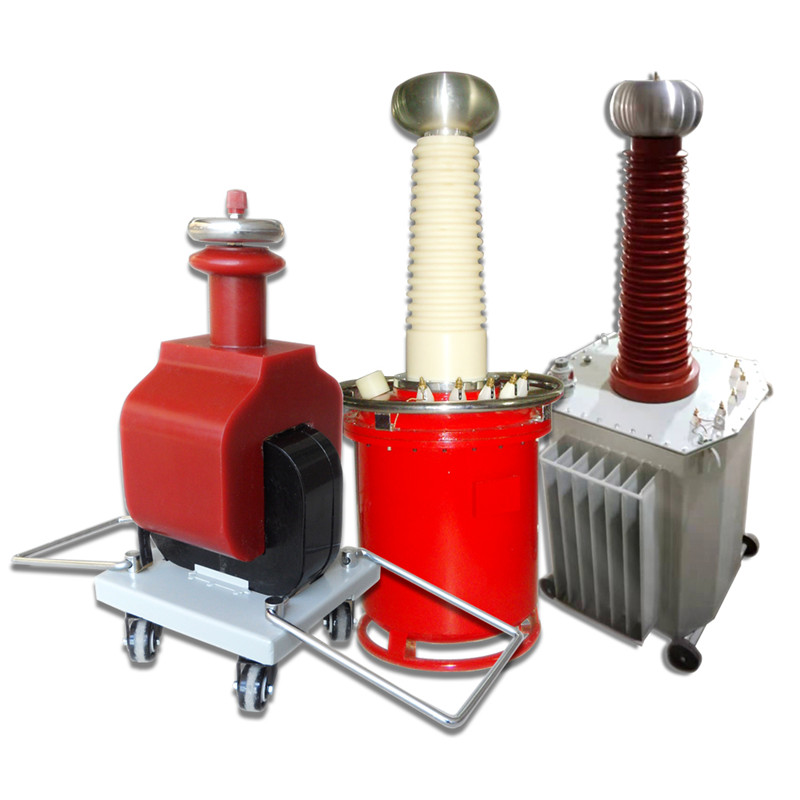
Recommended calibration frequency
The standard calibration interval for a AC Hipot Test Kit is every 12 months under normal operating conditions. However, more frequent calibration is advised in specific scenarios.
| Usage condition | Recommended calibration interval |
|---|---|
| Routine lab or factory use | 12 months |
| Heavy daily field testing | 6 months |
| After electrical shock or overvoltage event | Immediately |
| Newly purchased unit | Within first 3 months |
| Before critical project testing | 30 days prior |
Signs that your AC Hipot Test Kit needs calibration sooner
-
Unexpected leakage current readings compared to reference loads
-
Inconsistent breakdown voltage detection on known good samples
-
Physical damage or exposure to moisture
-
Any repair or component replacement inside the tester
Why calibration ensures accuracy
An AC Hipot Test Kit generates precise high voltages, often from 1 kV to 100 kV or more. Over time, internal voltage dividers, current sensors, and timing circuits drift. Calibration realigns these components to national or international standards, typically traceable to NIST or IEC. Weshine designs its calibration process to cover output voltage accuracy, cutoff current precision, and timer deviation – all factors that directly affect pass/fail criteria.
Frequently Asked Questions about AC Hipot Test Kit calibration
How long does a typical AC Hipot Test Kit calibration take?
A full calibration of an AC Hipot Test Kit usually takes between 2 to 4 hours. This includes warm-up time, output voltage verification at multiple setpoints (e.g., 20%, 50%, 75%, 100% of rated voltage), leakage current accuracy checks across at least four ranges, and timer validation. For a Weshine unit, the process also involves checking the ramp-up linearity and breakdown response speed. After calibration, a detailed certificate with as-found and as-left data is provided. For field service, some providers offer same-day calibration, but laboratory calibration is more accurate.
Can I perform a self-check on my AC Hipot Test Kit without sending it to a lab?
Yes, a limited self-check is possible with an AC Hipot Test Kit, but it does not replace full calibration. You can use a known good resistive load (e.g., 10 MΩ / 20 kV rated) to verify that the kit trips at the expected voltage and leakage current. For a Weshine tester, the internal self-diagnostic routine can detect basic sensor faults. However, self-checks cannot verify absolute voltage accuracy or traceability to standards. They only confirm repeatability. A full accredited calibration still requires a certified lab with reference standards at least four times more accurate than your AC Hipot Test Kit.
What happens if I use an AC Hipot Test Kit past its calibration due date
Using an AC Hipot Test Kit past its calibration due date introduces unquantified risk. The most common consequence is undetected voltage error – for example, the unit indicates 5 kV but actually outputs 4.5 kV, making the test less stringent than required. This can lead to field failures later. Alternatively, a shift in leakage current measurement might cause false failures, increasing downtime and retest costs. In regulated industries such as medical device or aerospace manufacturing, using an expired calibration on an AC Hipot Test Kit can result in audit non-conformances, rejected batches, or even product recalls. Weshine recommends tagging each unit with a calibration due date and scheduling service at least one month in advance.
Best practices for maintaining calibration accuracy
-
Store the AC Hipot Test Kit in a clean, dry environment between 0–40°C
-
Always allow a 10-minute warm-up before critical tests
-
Use the original Weshine cables and accessories to avoid parasitic effects
-
Record calibration data over time to detect drift trends
Contact us
Ensure every test you perform meets the highest standards of safety and compliance. Weshine provides accredited calibration services for all AC Hipot Test Kit models, including on-site and rush options. Contact us today to schedule your next calibration or to request a free calibration reminder program for your entire fleet of high-voltage testers.
