

How Often Should You Change the Oil in a Marine Generator Gearbox for Maximum Lifespan
2026-06-23
Proper lubrication is the single most critical factor in extending the service life of any Marine Generator Gearbox. Unlike propulsion gearboxes, which see variable loads and frequent shifting, a generator gearbox operates at a nearly constant speed and steady load for hours—sometimes days—on end. This unique duty cycle creates specific demands on the oil, including sustained thermal stress, continuous shear, and gradual contamination from microscopic wear particles. For fleet operators, engineers, and superintendents, the question isn't simply "when to change"—it's about optimizing intervals to balance maintenance costs, operational availability, and long-term asset health. At Cagon, we have analyzed thousands of operating hours across diverse vessel types to develop a data-driven approach to oil change scheduling that protects your investment without over-servicing.
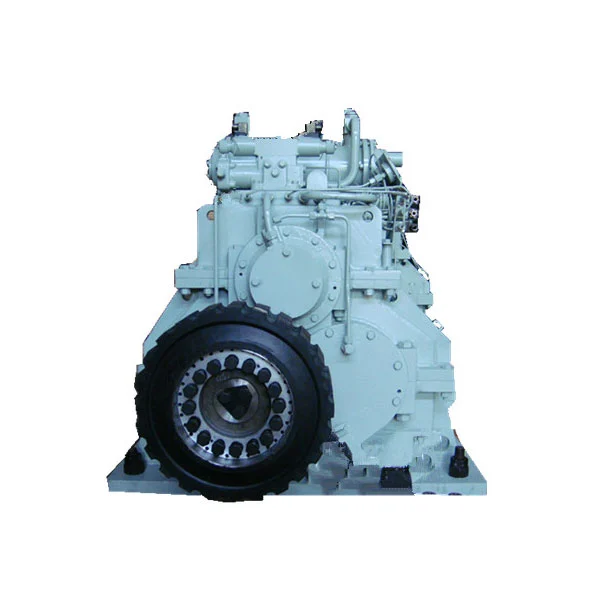
The Industry Baseline vs. Real-World Duty
Most OEMs recommend a 1,000–1,500 hour oil change interval for a Marine Generator Gearbox under standard operating conditions. However, this figure assumes ideal fuel quality, clean engine combustion (minimal soot carryover), moderate ambient temperatures, and consistent load factors between 70–85%. In practice, very few vessels operate under these laboratory conditions. The table below breaks down how actual service environments shift the recommended interval:
| Operating Condition | Load Factor | Soot/Contamination Risk | Recommended Interval (Hours) |
|---|---|---|---|
| Deep-sea cargo (steady 80% load) | 75–85% | Low | 1,500 |
| Harbor / tug (frequent start-stop, variable) | 40–70% | Moderate | 1,000–1,200 |
| Fishing / offshore supply (high vibration) | 60–80% | High (due to auxiliary loads) | 800–1,000 |
| Tropical / high ambient (>40°C) | Any | High (thermal degradation) | 700–900 |
| Emergency / standby (rarely run) | <30% | Low but acidic | Time-based: 12 months |
Critical note: Hours are a guide—oil condition is the final authority. Cagon strongly recommends complementing hour-based schedules with periodic oil analysis.
The Science Behind the Interval: Why Oil Degrades Faster Than You Think
A Marine Generator Gearbox subjects its lubricant to three primary degradation mechanisms:
-
Thermal breakdown – Constant high load keeps oil temperatures at 85–95°C, accelerating oxidation and thickening the oil, which reduces film strength.
-
Mechanical shearing – The gear tooth mesh and bearing rolling elements mechanically chop long polymer chains (viscosity index improvers), causing a permanent drop in viscosity.
-
Contamination ingress – Even with good seals, fine dust, combustion soot (via crankcase blow-by in older engines), and water condensation accumulate over time.
These factors are multiplicative, not additive. At 1,200 hours, a typical mineral-based ISO VG 320 oil in a Marine Generator Gearbox has lost approximately 15–20% of its original TBN (Total Base Number) and shows a 10% viscosity reduction. By 1,800 hours, the risk of micro-pitting and bearing scuffing increases exponentially. Cagon engineered its synthetic gearbox oils to resist these effects, extending safe drain intervals by up to 30% in controlled trials, but we still advise oil sampling every 500 hours to validate actual condition.
How to Determine Your Exact Change Interval (Step-by-Step)
Rather than guessing, follow this three-tier decision framework:
-
Tier 1 – OEM minimum: Never exceed the manufacturer's absolute maximum hour limit (typically 2,000 hours for most gearboxes).
-
Tier 2 – Load-adjusted baseline: Use the table above to set a conservative starting point based on your duty cycle.
-
Tier 3 – Oil analysis confirmation: Draw a sample at 75% of your chosen interval. If viscosity, water content, and particle count (ISO 4406) are within acceptable limits, extend the next interval by 10–15%. If any parameter exceeds the alarm threshold, reduce the interval and investigate root cause.
For vessels operating multiple generator sets, stagger the oil changes so that no more than one Marine Generator Gearbox is out of service at a time—this is where Cagon’s condition-monitoring kits and scheduled maintenance planning tools provide tangible operational value.
Frequently Asked Questions About Marine Generator Gearbox Oil Changes
Q1: Can I use the same oil for my main propulsion gearbox and my Marine Generator Gearbox?
A: Not ideally. Propulsion gearboxes experience shock loads, reversing torque, and frequent clutch engagement, which demand high extreme-pressure (EP) additives. Generator gearboxes run at steady torque and benefit more from oxidation stability and demulsibility. Using a propulsion-grade EP oil in a generator gearbox can lead to copper corrosion on synchronizers and unnecessary additive depletion. Cagon offers dedicated formulations for each application—always check your OEM approval and consult our technical team for cross-reference guidance.
Q2: What happens if I change the oil too early—does it cause any harm?
A: Financially, early changes waste lubricant and labor, increasing your cost per operating hour. Technically, fresh oil contains detergents and dispersants that can temporarily lift accumulated sludge from surfaces, potentially clogging fine-mesh filters or strainers within the first 50–100 hours of a Marine Generator Gearbox service. This is not damaging if you monitor filter differential pressure, but it does create unnecessary maintenance events. The real downside is opportunity cost—your crew could have spent that time on more critical inspections. Use oil analysis to avoid premature changes, and trust Cagon’s extended-life products to safely bridge longer intervals when validated by data.
Q3: How should I dispose of old oil from a Marine Generator Gearbox and what about flushing?
A: Used gear oil is classified as hazardous waste under MARPOL Annex I (oil residues). It must be collected in dedicated slop tanks and disposed of via licensed shore reception facilities—never overboard. Flushing is only required if you find high insolubles, water contamination, or a change in oil chemistry (e.g., switching from mineral to synthetic). In that case, use a low-viscosity flushing fluid specifically approved for gearboxes, run the Marine Generator Gearbox at idle for 15–20 minutes under no load, drain completely, then fill with the service oil. Cagon provides detailed flushing protocols for each of our gearbox lubricants to prevent cross-contamination and filter clogging.
Practical Checklist for Every Oil Change
To maximize lifespan, each oil change on a Marine Generator Gearbox should include these non-negotiable actions:
-
Drain oil while warm (60–70°C) to suspend particulates.
-
Inspect the magnetic drain plug for metal debris—any large chips warrant a bore-scope inspection.
-
Replace the suction strainer and full-flow filter elements.
-
Check the breather cap for clogging—a blocked breather creates internal pressure that forces oil past seals.
-
Record the exact operating hours, oil brand, viscosity grade, and batch number in the logbook.
-
Send a post-change oil sample after 50 hours of run-time to establish a new baseline for future trend analysis.
Final Verdict: The Safe-and-Smart Interval
For the vast majority of commercial vessels, changing the oil in a Marine Generator Gearbox every 1,200 operating hours or 12 months (whichever comes first) is the sweet spot. It provides a generous safety margin below most OEM limits, accommodates typical load variability, and aligns with dry-docking cycles for many offshore and coastal fleets. If you operate with high-quality synthetic lubricants from Cagon and conduct regular oil analysis, you may safely stretch to 1,800–2,000 hours—but never without the data to support it.
Let’s Protect Your Gearbox Together
Every Marine Generator Gearbox has a unique history—load profiles, ambient conditions, maintenance culture, and oil quality all intersect to determine its true drain interval. Guessing is costly; measuring is precise. Cagon offers free oil sampling kits, rapid laboratory analysis (48-hour turnaround), and expert interpretation tailored to your vessel’s operating pattern. Our team of marine lubrication engineers is ready to review your current schedule, recommend a customized plan, and supply the right high-performance lubricants for your fleet.
Contact us today – send your vessel details and current oil brand to our technical support desk, and we will deliver a no-obligation interval optimization report within one business day. Your Marine Generator Gearbox deserves more than a calendar-based routine; it deserves a science-backed strategy. Reach out to Cagon now and keep your power plant running reliably for decades to come.
