

How Often Should You Inspect and Retest a Variable Spring Support for Pipeline to Ensure Code Compliance
2026-09-08
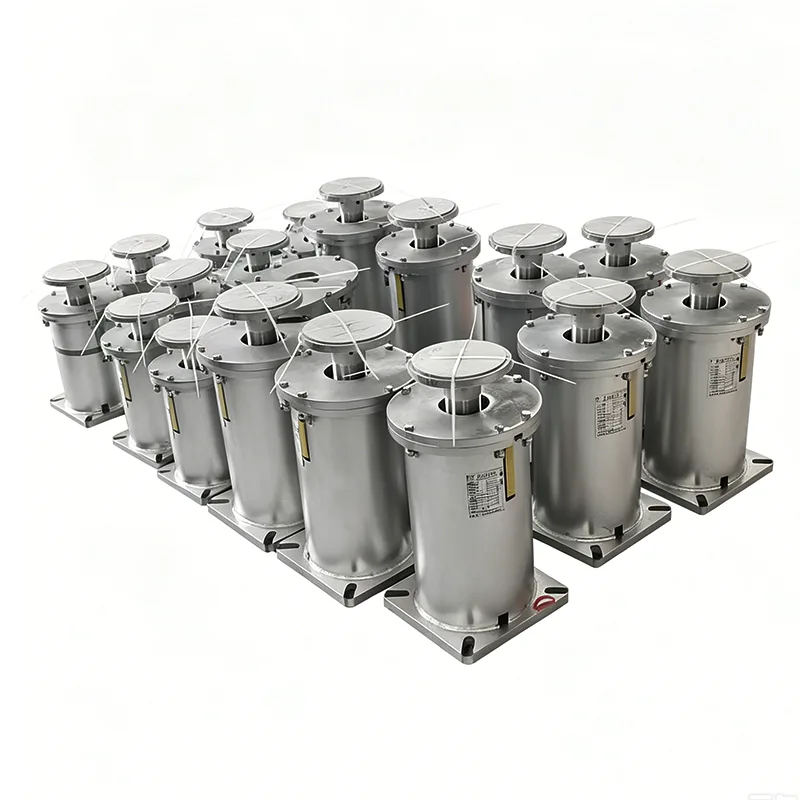
For piping engineers and maintenance managers, the reliability of a Variable Spring Support for Pipeline directly impacts system safety, nozzle stress, and operational uptime. At Tianshun, we have seen countless unplanned shutdowns trace back to neglected spring supports. While design and selection are critical, the real question that surfaces during audits and turnarounds is not about installation—it is about the ongoing verification of performance. This blog provides a code-driven inspection and retesting schedule for your Variable Spring Support for Pipeline, grounded in real-world practice and engineering standards.
Why Inspection Intervals Are Not One-Size-Fits-All
The frequency of inspection for a Variable Spring Support for Pipeline depends on three primary factors:
-
Service conditions (temperature cycling, vibration, corrosive atmosphere)
-
Criticality of the piping system (e.g., main steam lines vs. utility water)
-
Applicable code requirements (ASME B31.1, B31.3, or MSS SP-58)
Most international codes do not prescribe a fixed calendar date. Instead, they require that Variable Spring Support for Pipeline assemblies be inspected at intervals determined by the owner’s risk-based inspection (RBI) program. However, industry best practice—supported by Tianshun’s field data—suggests the following baseline schedule:
| Inspection Type | Frequency | Trigger Event |
|---|---|---|
| Visual condition check | Quarterly (every 3 months) | Routine plant walkdowns |
| Travel position reading | Monthly for critical lines; quarterly for non-critical | Before and after major temperature swings |
| Full load-retest (bench test) | Every 3 years or 8,000 operating hours | Major turnaround or outage |
| Post-upset inspection | Immediately after a pressure surge, fire, or seismic event | Unplanned event occurrence |
| Post-maintenance verification | After any line opening or support adjustment | Maintenance work order completion |
The Code-Compliant Retesting Procedure
To remain compliant with ASME and MSS guidelines, retesting a Variable Spring Support for Pipeline involves removing the unit, compressing it on a calibrated test stand, and verifying that the actual spring rate and load at the specified travel position fall within ±5 % of the nameplate values. Tianshun recommends that retesting be performed by an accredited facility using traceable weights and calibrated displacement gauges.
Critical note: If the measured load deviation exceeds 6 % of the design load, the Variable Spring Support for Pipeline must be either recalibrated, re-sprung, or replaced—depending on the remaining corrosion margin and spring fatigue history.
3 Frequently Asked Questions About Variable Spring Support for Pipeline
Q1: Can I perform an in-situ load test instead of removing the Variable Spring Support for Pipeline for bench retesting?
A1: In-situ testing using hydraulic jacks or load cells is possible, but it is not a substitute for a code-compliant bench retest. The primary limitation is that in-situ methods cannot isolate the support’s true spring rate from pipe friction, anchor movement, or adjacent hanger interactions. For formal code compliance (especially under ASME B31.1), the authority having jurisdiction typically requires a bench test with the Variable Spring Support for Pipeline removed from service, because only then can you measure zero-load reference points and hysteresis effects. In-situ checks are valuable for trending, but they should be treated as screening tools—not final verification.
Q2: What documentation must I retain after inspecting a Variable Spring Support for Pipeline to satisfy an auditor?
A2: Auditors expect a complete “birth-to-current” record for each Variable Spring Support for Pipeline. This includes: (1) original design data sheet with calculated hot/cold loads and travel, (2) installation travel setting records, (3) every quarterly travel reading with ambient temperature noted, (4) calibration certificates from each bench retest showing before/after load curves, and (5) any repair or modification logs. Tianshun advises that you also photograph the nameplate and the installed orientation for each inspection visit. Without these documents, even a perfectly performing support will be flagged as non-compliant during a third-party audit.
Q3: Does a Variable Spring Support for Pipeline need retesting if the pipeline has not been in operation for several years?
A3: Yes, and this is a commonly overlooked risk. A Variable Spring Support for Pipeline can experience stress relaxation, corrosion pitting on the spring coils, or sticking of sliding components even during idle periods—especially in humid or chemically aggressive environments. Before restarting any idle system, Tianshun strongly recommends a full visual inspection plus a travel-position check. If the support has been idle for more than 18 months, we advise a bench retest, because the spring’s free height may have changed due to creep or permanent set, which directly alters the load applied to the pipe nozzle upon restart.
Practical Checklist for Your Next Turnaround
| Step | Action Item | Responsible Party |
|---|---|---|
| 1 | Collect all nameplate data and previous test certificates | Piping inspector |
| 2 | Measure current travel indicator reading (record with photo) | Field technician |
| 3 | Compare travel to original cold-setting mark—if deviation >10 %, flag for removal | Stress engineer |
| 4 | Remove and tag the Variable Spring Support for Pipeline for bench transport | Rigging crew |
| 5 | Execute bench retest per MSS SP-58, recording load at 4 travel points | Certified test lab |
| 6 | Evaluate results against acceptance criteria (±5 % of design load) | Quality engineer |
| 7 | Reinstall with new travel setting based on current pipe position | Piping supervisor |
| 8 | Update the maintenance management system with new test date and next due date | Document controller |
When to Shorten the Inspection Cycle
Tianshun recommends doubling the inspection frequency (e.g., retest every 18 months instead of 3 years) if any of these conditions exist:
-
Operating temperature exceeds 400 °C (752 °F) on a continuous basis
-
Cyclic thermal transients occur more than once per shift
-
The Variable Spring Support for Pipeline is located in a high-vibration area (e.g., near compressors or turbines)
-
Previous retests showed a load drift greater than 3 % between intervals
Final Verdict: Align Intervals with Risk, Not Calendars
A rigid 36‑month retest cycle is a starting point, not a rule. The defensible approach is to establish a baseline frequency, then adjust it upward or downward based on actual travel readings and operating severity. Tianshun’s global service records show that plants using condition-based intervals reduce unexpected support failures by over 40 % compared to those using fixed schedules alone. Always document your rationale for any interval change—that documentation becomes your strongest compliance evidence.
Contact us today for a complimentary review of your current inspection program for Variable Spring Support for Pipeline systems. Our Tianshun engineering team provides on-site travel audits, certified bench retesting, and complete replacement solutions with full traceability. Reach out via our website or call your regional Tianshun representative to schedule a support health check—because compliance is not a one-time event, it is a continuous partnership.
