

How Often Should You Replace the Kleanpro Mini PES Membrane Capsule Filter in Biopharma Processing
2026-09-07
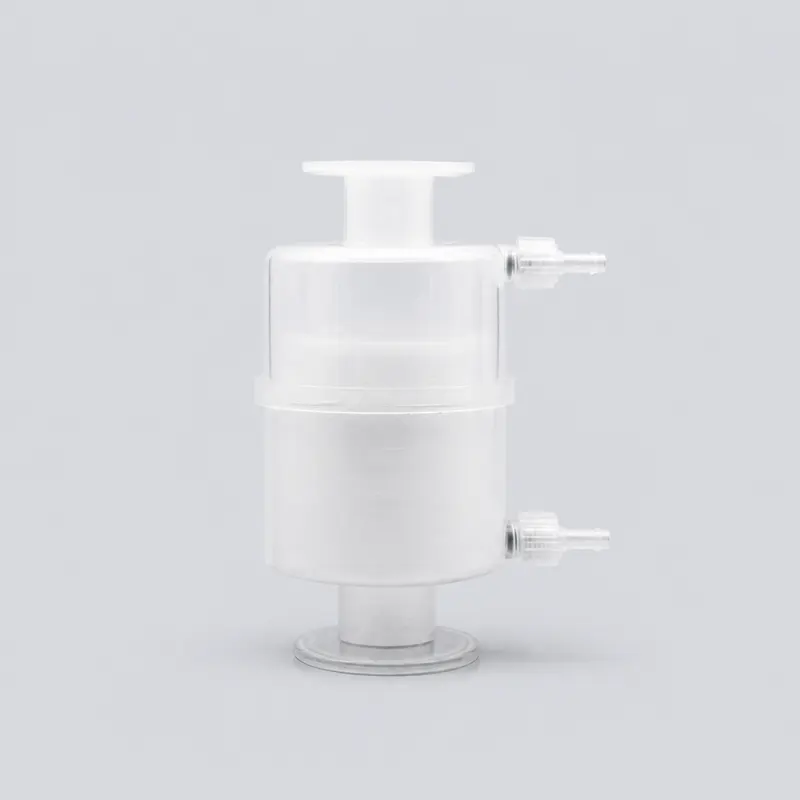
In biopharmaceutical manufacturing, filtration integrity directly impacts product yield, safety, and regulatory compliance. The Kleanpro Mini PES Membrane Capsule Filter has become a preferred choice for sterile filtration, buffer preparation, and intermediate product clarification due to its low protein binding and high flow rates. However, one question consistently arises among process engineers and quality assurance teams: what is the optimal replacement interval for this critical single-use component?
Understanding Replacement Drivers
Replacement frequency is not a fixed number. It depends on several process-specific variables. Below is a breakdown of the primary factors that determine when a Kleanpro Mini PES Membrane Capsule Filter should be removed from service.
| Factor | Impact on Replacement | Typical Threshold |
|---|---|---|
| Total throughput volume | Cumulative particle loading reduces flow rate | 80–90% of maximum rated capacity |
| Operating pressure rise | Increased differential pressure indicates fouling | > 2.5 bar (forward) |
| Process fluid viscosity | Higher viscosity accelerates membrane clogging | Monitor ΔP per batch |
| Bioburden level | High microbial load shortens useful life | Post-use bioburden test failure |
| Sanitization cycles | Repeated autoclaving or chemical exposure degrades PES | Max 3–5 cycles (per manufacturer) |
General Replacement Guidelines by Application
Based on industry practices and manufacturer recommendations, the table below provides application-specific replacement intervals for the Kleanpro Mini PES Membrane Capsule Filter.
| Application | Recommended Replacement Frequency | Key Monitoring Parameter |
|---|---|---|
| Sterile media filtration | Every batch (single-use) | Post-use integrity test |
| Buffer filtration | After 8–12 hours of continuous use | Flow rate decay |
| Clarification of cell culture harvest | Per harvest lot (≤ 50 L) | Turbidity reduction |
| Final fill for parenterals | Single-use per filling session | Bubble point or diffusion test |
| Small-scale R&D prototyping | Up to 5 cycles if sanitized properly | Visual inspection + pressure hold |
Note: MS recommends documenting each filter’s service history, including total run time, cumulative volume, and pressure readings, to build a site-specific replacement schedule.
Practical Signs That Replacement Is Overdue
Beyond scheduled intervals, operators should watch for these real-time indicators:
-
ΔP increase exceeding 70% of the baseline clean-water value.
-
Effluent turbidity or visible particles downstream.
-
Failed bubble point or forward flow integrity test after use.
-
Extended filtration time beyond 150% of the initial batch duration.
If any of these conditions occur before the planned replacement point, the Kleanpro Mini PES Membrane Capsule Filter should be discarded immediately to avoid compromising product quality.
Frequently Asked Questions
Q1: Can the Kleanpro Mini PES Membrane Capsule Filter be reused after autoclaving, and how does that affect replacement frequency?
A1: The Kleanpro Mini PES Membrane Capsule Filter is designed primarily for single-use applications, but it can withstand up to 3 autoclave cycles at 121°C for 30 minutes without significant membrane degradation, provided proper cooling and drying protocols are followed. However, each autoclave cycle reduces the membrane’s mechanical strength and hydrophilicity. For biopharma processing with critical sterile endpoints, MS strongly advises against reusing this filter beyond 3 cycles, and even then, only for non-critical buffers or upstream processes. For final sterile filtration, a fresh filter per batch is the industry standard to ensure regulatory compliance and minimize risk.
Q2: What integrity test methods are recommended to determine if the Kleanpro Mini PES Membrane Capsule Filter is still functional before replacement?
A2: The two most reliable in-process integrity tests for the Kleanpro Mini PES Membrane Capsule Filter are the bubble point test and the diffusion (forward flow) test. For a 0.22 µm PES membrane, the typical minimum bubble point is > 3.45 bar (50 psi) when wetted with water. If the measured bubble point falls below this value, the filter’s pore structure has been compromised, and immediate replacement is mandatory. Additionally, a diffusion flow rate exceeding the manufacturer’s specified limit (usually < 15 mL/min for this mini format) indicates membrane damage or O-ring failure. MS provides validated integrity test parameters for each filter lot; always reference the certificate of testing supplied with the product.
Q3: How does the type of process fluid influence the replacement schedule for the Kleanpro Mini PES Membrane Capsule Filter?
A3: Process fluid characteristics are among the most significant variables. For aqueous buffers with low particulate content (e.g., PBS, saline), the Kleanpro Mini PES Membrane Capsule Filter can often process 50–100 liters per 10-inch equivalent before showing signs of clogging. However, for protein-rich solutions (e.g., monoclonal antibody harvests) or viscous formulations containing surfactants, the filtration capacity may drop to 10–20 liters per filter due to concentration polarization and fouling. Similarly, fluids with high bioburden (> 10⁶ CFU/mL) can rapidly blind the membrane within 2–4 hours. MS recommends performing a small-scale scalability study with your specific fluid matrix to determine the actual throughput limit, then applying a safety factor of 0.8 to set your replacement trigger point.
Building a Compliant Replacement Protocol
To align with GMP and FDA expectations, every biopharma facility should establish a written Standard Operating Procedure for Kleanpro Mini PES Membrane Capsule Filter replacement. This SOP must include:
-
Pre-use and post-use integrity test records.
-
Batch-specific pressure and flow monitoring logs.
-
Clear decision trees for early replacement based on ΔP spikes.
-
Traceability linking each filter serial number to the product batch.
MS offers technical support to help clients validate these protocols, ensuring that replacement intervals are both scientifically justified and audit-ready.
Final Recommendation from MS
There is no universal “every X months” rule for the Kleanpro Mini PES Membrane Capsule Filter. The safest and most cost-effective strategy is performance-based replacement—monitor pressure, flow, and integrity per batch, and replace when any parameter deviates beyond your validated limits. For critical sterile applications, adopt a single-use per batch policy. For upstream or buffer duties, define a maximum of 3 autoclave cycles or 5 total uses, whichever comes first.
Contact Us
Optimizing your filtration replacement strategy directly impacts your bottom line and regulatory standing. If you need assistance validating a customized replacement schedule, performing compatibility testing, or selecting the right pore size and configuration for your process, the MS technical team is ready to help. Contact us today for a complimentary consultation and access to our application development resources—your process reliability is our priority.
