

How Plastic Industrial Crate Moulds Improve Manufacturing Efficiency
2026-05-19
Summary: Plastic industrial crate moulds play a critical role in modern manufacturing, offering durable, reusable, and cost-effective solutions for producing crates. This article explores how these moulds function, their benefits, key considerations for selection, and how companies like KSHOW provide high-quality solutions to meet diverse industrial needs.
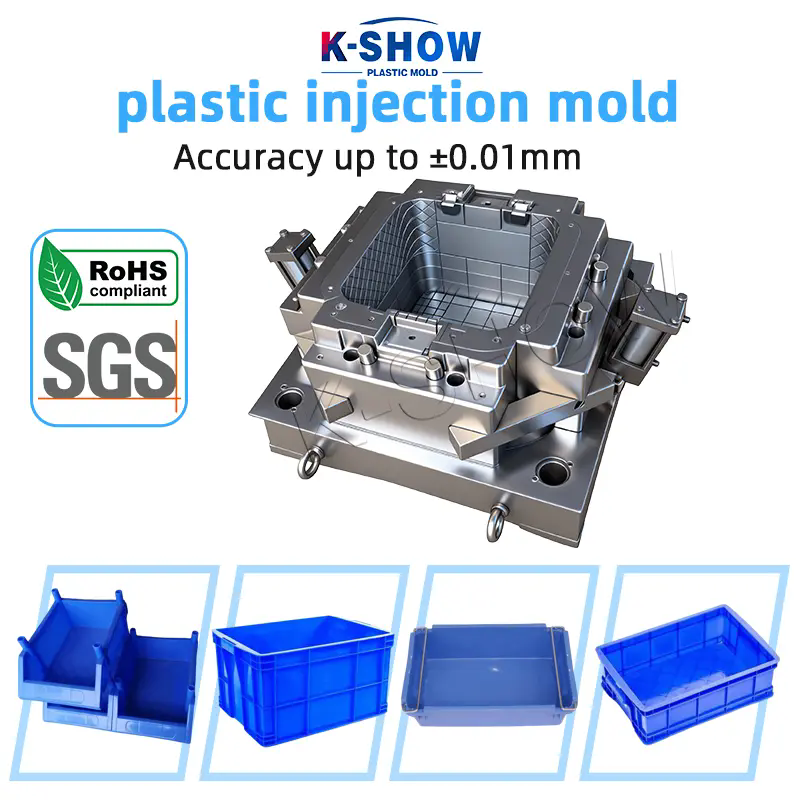
Table of Contents
- What is a Plastic Industrial Crate Mould?
- Benefits of Using Plastic Industrial Crate Moulds
- Key Design Considerations
- Production Process Overview
- Maintenance and Longevity
- Common Issues and Solutions
- Frequently Asked Questions (FAQ)
What is a Plastic Industrial Crate Mould?
A plastic industrial crate mould is a specialized tool used in injection moulding or blow moulding processes to shape molten plastic into sturdy crates suitable for industrial and commercial applications. These crates are widely used in logistics, agriculture, warehousing, and manufacturing sectors due to their durability and reusability.
Companies like KSHOW design and manufacture precision crate moulds tailored to meet specific client requirements, ensuring high production efficiency and consistent crate quality.
Benefits of Using Plastic Industrial Crate Moulds
Plastic crate moulds offer a wide range of benefits for industrial applications:
- Cost Efficiency: Moulds allow high-volume production, reducing per-unit cost significantly.
- Durability: Crates produced are robust and can withstand heavy loads, making them suitable for repeated use.
- Consistency: Moulds ensure uniform crate sizes and shapes, crucial for automated stacking and storage systems.
- Customization: Moulds can be tailored to client specifications, including size, color, and material properties.
- Environmental Benefits: Reusable plastic crates reduce waste and minimize environmental impact compared to single-use alternatives.
Key Design Considerations
Choosing the right crate mould requires attention to several factors to optimize performance:
| Design Factor | Importance | Impact on Production |
|---|---|---|
| Mould Material | High-quality steel or aluminum | Ensures durability and long lifespan |
| Crate Size | Customizable per industry requirements | Optimizes storage and logistics efficiency |
| Wall Thickness | Adjustable based on load requirements | Balances material cost and structural strength |
| Surface Finish | Polished or textured | Improves appearance and prevents sticking |
| Cooling System | Integrated channels for rapid cooling | Reduces cycle time and increases output |
Production Process Overview
The process of manufacturing plastic crates using industrial moulds involves several critical steps:
- Material Preparation: Plastic pellets or granules are dried and prepared for injection.
- Injection or Blow Moulding: Molten plastic is injected or blown into the crate mould.
- Cooling: The mould is cooled using integrated water channels or other cooling mechanisms.
- Crate Ejection: After solidification, the crate is ejected from the mould.
- Inspection and Finishing: Crates are checked for defects and edges are trimmed if necessary.
KSHOW offers precision moulds designed to maximize production efficiency while minimizing material waste and defects, ensuring a smooth manufacturing workflow.
Maintenance and Longevity
Proper maintenance of industrial crate moulds is essential for long-term performance:
- Regular cleaning to remove plastic residue and prevent corrosion.
- Lubrication of moving parts such as ejector pins and slides.
- Routine inspection for wear and damage to maintain crate quality.
- Replacement of worn components to prevent production downtime.
Well-maintained moulds from KSHOW can produce tens of thousands of crates before requiring significant refurbishment.
Common Issues and Solutions
Despite the efficiency of crate moulds, some issues may arise during production:
| Issue | Cause | Solution |
|---|---|---|
| Warped Crates | Uneven cooling or incorrect wall thickness | Adjust cooling channels and review design |
| Flash or Excess Plastic | Improper mould clamping or worn mould edges | Check mould alignment and replace worn parts |
| Surface Imperfections | Contaminated material or inadequate mould finish | Ensure clean material and polish mould surfaces |
Frequently Asked Questions (FAQ)
Q1: Can I customize the size of the crates?
A1: Yes, moulds can be designed to produce crates in various sizes to meet specific industrial needs. KSHOW provides tailored solutions for different applications.
Q2: How long does a plastic crate mould last?
A2: With proper maintenance, high-quality moulds can last for tens of thousands of production cycles.
Q3: What materials are used for the crates?
A3: Typically, durable thermoplastics like polypropylene (PP) or high-density polyethylene (HDPE) are used to ensure strength and reusability.
Q4: Can the mould be adjusted for different crate designs?
A4: Yes, modern moulds from KSHOW can be customized and upgraded for different crate configurations, thicknesses, and features.
Plastic industrial crate moulds are indispensable tools for efficient manufacturing, offering consistency, durability, and cost-effectiveness. By partnering with reliable providers like KSHOW, companies can optimize their production process and achieve high-quality crate output.
For more information about our products and how we can help improve your manufacturing efficiency, contact us today.
