

How to Select Silicon Carbide Ceramic for High-Temperature Seals and Linings?
2025-12-15
When dealing with high-temperature seals and linings, selecting the correct silicon carbide ceramic is crucial for ensuring operational stability and longevity. In our factory, we have observed that the choice of material affects wear resistance, thermal stability, and chemical durability. Shandong Qishuai Wear Resistant Equipment Co., Ltd. has focused on developing high-performance ceramics that meet the demanding conditions of industrial furnaces, kilns, and chemical reactors. Our team works closely with clients to determine the optimal combination of physical properties and operational suitability for each application.
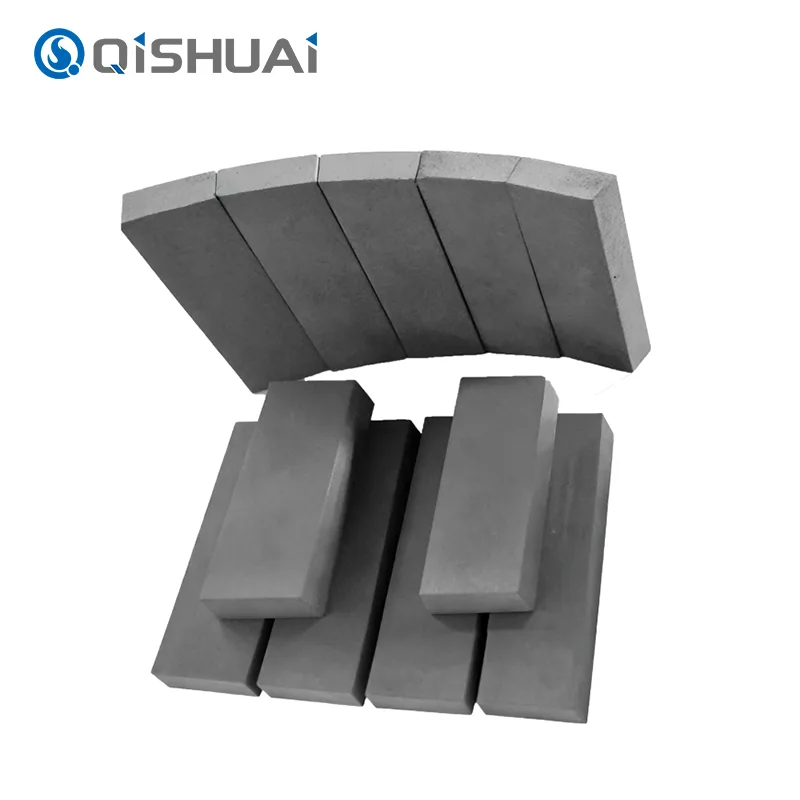
What Physical Properties Should Be Prioritized in Silicon Carbide Ceramic?
The mechanical characteristics of Silicon Carbide Ceramic directly influence its performance under high temperature. Hardness, fracture toughness, and density are key factors. Our engineers typically examine the relationship between these parameters and the expected operational load. Higher hardness improves abrasion resistance, while adequate toughness prevents catastrophic failure during thermal cycling. In our factory, we provide a range of ceramics designed to balance these properties based on customer requirements.
The following table summarizes typical specifications for silicon carbide ceramic used in high-temperature seals and linings.
| Property | Typical Range | Impact on Performance | Recommended Application |
| Hardness (Mohs) | 9–9.5 | High abrasion resistance | Wear-intensive environments |
| Fracture Toughness (MPa·m1/2) | 3–5 | Prevents crack propagation | Thermal cycling applications |
| Density (g/cm³) | 3.1–3.2 | Improves structural integrity | High-pressure sealing |
How Does Thermal Stability Influence the Choice of Silicon Carbide Ceramic?
Thermal stability is another critical factor for high-temperature linings. Silicon Carbide Ceramic maintains dimensional stability up to temperatures exceeding 1600°C, making it suitable for industrial furnaces and kilns. Our engineers assess thermal conductivity, expansion coefficient, and maximum operating temperature when recommending material types. Selecting the right grade ensures that seals remain tight and linings do not deform under extreme heat.
Shandong Qishuai Wear Resistant Equipment Co., Ltd. has developed several grades of Silicon Carbide Ceramic optimized for thermal stability without compromising mechanical performance. Our technical team frequently advises customers on the optimal grade for specific thermal cycles and operational loads.
What Role Does Chemical Resistance Play in Selecting Silicon Carbide Ceramic?
High-temperature environments often involve corrosive gases, molten salts, or chemical byproducts that can degrade ordinary ceramics. Silicon Carbide Ceramic offers exceptional resistance to oxidation and chemical attack. Our factory tests each batch under controlled chemical exposure to ensure long-term performance. For clients requiring high chemical stability, we provide data on corrosion rates, surface integrity, and lifespan under realistic operating conditions.
When evaluating Water Filtration Consumables or related ceramic components, chemical compatibility must be considered alongside temperature and mechanical requirements. Choosing an incompatible grade may reduce service life and increase maintenance frequency.
How Do Dimensional Accuracy and Machining Precision Affect Performance?
The installation of high-temperature seals and linings demands precise dimensions and surface finishes. Even minor deviations can lead to leaks, uneven wear, or premature failure. Our team emphasizes machining tolerances and flatness to ensure that Silicon Carbide Ceramic components fit seamlessly into industrial assemblies. Using our factory services, clients benefit from highly controlled tolerances that maintain performance under thermal cycling and mechanical stress.
Dimensional precision also impacts sealing efficiency and minimizes differential expansion issues. Shandong Qishuai Wear Resistant Equipment Co., Ltd. implements quality control measures that verify tolerances before shipment, reducing installation problems for clients.
What Considerations Are Important for Abrasion Resistance and Longevity?
Silicon Carbide Ceramic is prized for its high abrasion resistance, making it ideal for linings in rotary kilns, piping systems, and high-wear applications. Our engineers evaluate the expected particle load, flow velocity, and impact energy to determine the appropriate grade. Water Filtration Consumables and related components benefit from similar wear-resistant properties, ensuring consistent performance over time.
In our factory, we conduct simulations and field tests to validate the performance of each material grade. This process allows us to predict service life and recommend the best solutions for clients requiring minimal downtime and maximum operational reliability.
How to Balance Cost and Performance When Selecting Silicon Carbide Ceramic?
While high-performance grades offer superior durability, the initial cost may be higher. Our team works with clients to identify the most cost-effective solution that meets operational requirements. By analyzing expected service life, maintenance intervals, and environmental conditions, we can recommend a grade of Silicon Carbide Ceramic that provides optimal value. Our factory supports this process with technical documentation, performance data, and comparative analysis.
The following table illustrates typical trade-offs between performance parameters and cost considerations.
| Grade | Hardness | Thermal Stability | Typical Cost Consideration |
| Standard | 9 | Up to 1500°C | Cost-effective for general applications |
| Enhanced | 9.2 | Up to 1600°C | Balanced performance for medium-duty seals |
| Premium | 9.5 | Above 1600°C | Long-term durability for critical high-temperature operations |
FAQ: How to Select Silicon Carbide Ceramic for High-Temperature Seals and Linings?
Q1: What factors determine the optimal grade of Silicon Carbide Ceramic?
The optimal grade depends on mechanical load, thermal exposure, chemical environment, and expected service life. Considering all these factors ensures that seals and linings remain stable and wear-resistant over extended operation.
Q2: How important is thermal expansion compatibility with adjoining materials?
Matching thermal expansion reduces stress between components during heating and cooling. Incorrect selection can lead to cracks, gaps, or premature failure. Our engineers analyze both the ceramic and the surrounding materials to ensure reliable operation.
Q3: Can abrasive environments affect the choice of Silicon Carbide Ceramic?
Yes, areas with high particulate flow or impact wear require higher hardness and optimized microstructure. Selecting the correct grade minimizes erosion, extends service life, and reduces maintenance frequency.
Conclusion
Selecting the right Silicon Carbide Ceramic for high-temperature seals and linings requires a careful balance of mechanical properties, thermal stability, chemical resistance, and dimensional precision. Shandong Qishuai Wear Resistant Equipment Co., Ltd. provides high-quality ceramics tailored to industrial requirements, ensuring durability and reliable operation. Our team collaborates closely with clients to recommend the best grade for their specific conditions. For professional guidance or to explore our full range of Silicon Carbide Ceramic components, contact our technical department today and let us support your high-temperature operations.
