

How to Test a 12kV Outdoor Disconnecting Switch Before Commissioning
2026-10-13
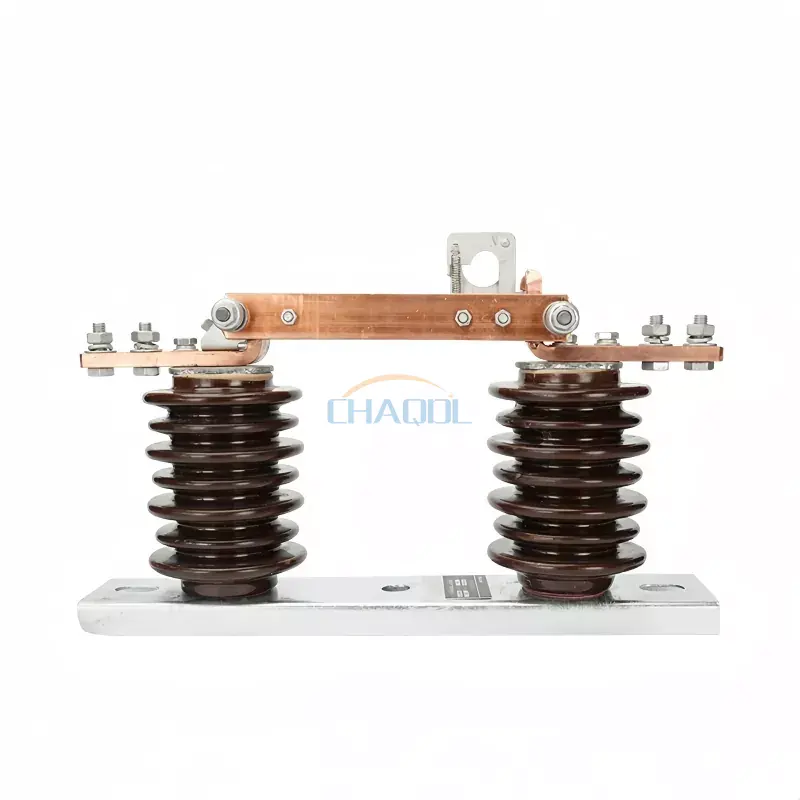
Before energizing any new substation or line section, field engineers must verify that a 12kV Outdoor Disconnecting Switch operates safely and reliably under real conditions. Anqiang Power has supplied and commissioned thousands of these units across distribution networks, and the pre-commissioning test sequence below reflects the checks our engineers perform on every project.
Why Pre-Commissioning Testing Matters
A 12kV Outdoor Disconnecting Switch isolates circuits for maintenance and provides a visible break for safety. Faulty contacts, misaligned blades, or degraded insulation can cause overheating, arc flash, or complete failure after energization. Testing before commissioning confirms mechanical integrity, electrical continuity, and insulation strength.
Pre-Test Inspection Checklist
| Item | What to Check | Acceptance Criteria |
|---|---|---|
| Nameplate | Voltage, current, ID | Matches 12kV Outdoor Disconnecting Switch spec |
| Insulators | Cracks, contamination | No damage, clean surface |
| Blade contacts | Alignment, pressure | Full engagement, even contact |
| Operating mechanism | Manual/electric operation | Smooth, no jamming |
| Grounding | Ground continuity | Resistance ≤ 0.1 Ω |
| Interlocks | Mechanical/electrical | Correct sequence, no bypass |
Core Test Procedures
1. Insulation Resistance Test
Use a 5 kV megohmmeter between live parts and ground. For a 12kV Outdoor Disconnecting Switch, the reading should typically exceed 1,000 MΩ at ambient temperature. Record values for each phase.
2. Contact Resistance Measurement
Inject 100 A DC through the closed blade and measure the voltage drop. Contact resistance above 100 µΩ suggests oxidation or poor alignment and requires cleaning or adjustment.
3. Mechanical Operation Test
Operate the 12kV Outdoor Disconnecting Switch five times manually and five times electrically. Confirm open/close positions, blade travel, and auxiliary contact signals.
4. Dielectric Withstand Test
Apply power frequency voltage (28 kV rms for 12 kV class) for one minute across open contacts and to ground. No flashover or breakdown is acceptable.
5. Grounding Switch Verification
If equipped, verify the grounding blade closes only when the main blade is open. This interlock is critical for personnel safety.
Test Sequence Summary
| Step | Test | Instrument |
|---|---|---|
| 1 | Visual inspection | Eyes, torque wrench |
| 2 | Insulation resistance | 5 kV megohmmeter |
| 3 | Contact resistance | Micro-ohmmeter |
| 4 | Mechanical operation | Manual handle, control panel |
| 5 | Dielectric withstand | AC hipot tester |
| 6 | Grounding check | Multimeter |
Frequently Asked Questions
What is the acceptable contact resistance for a 12kV Outdoor Disconnecting Switch?
Contact resistance should generally be below 100 µΩ; values above this indicate poor contact and require inspection.
How often should a 12kV Outdoor Disconnecting Switch be tested after commissioning?
Routine testing is recommended every 12 to 24 months, or after any fault or severe weather event.
Can a 12kV Outdoor Disconnecting Switch be tested without de-energizing the line?
No, pre-commissioning tests require the circuit to be de-energized and properly grounded for safety.
What causes a 12kV Outdoor Disconnecting Switch to fail dielectric testing?
Contaminated insulators, moisture ingress, or damaged insulation are the most common causes of failure.
Does Anqiang Power provide factory test reports for each 12kV Outdoor Disconnecting Switch?
Yes, Anqiang Power supplies routine and type test reports with every unit, and our engineers can support on-site verification.
Conclusion
Thorough pre-commissioning testing protects equipment, extends service life, and ensures operator safety. Following the steps above gives confidence that your 12kV Outdoor Disconnecting Switch will perform as designed.
Contact us today to request test protocols, technical datasheets, or commissioning support for your 12kV Outdoor Disconnecting Switch project.
