

PTFE Packing vs. Graphite Packing: Which Material Suits Different Industrial Sealing Conditions?
2026-11-12
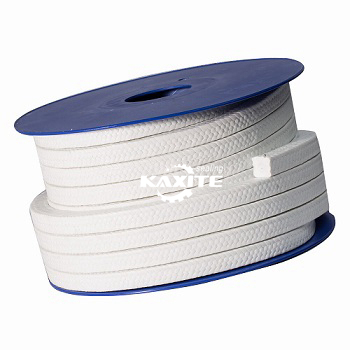
A maintenance planner at a pulp mill replaces the gland packing on a black liquor pump every three weeks. The packing is a white PTFE Packing, chosen because it was specified on the original equipment list. The pump runs at 120 degrees Celsius and the medium is strongly alkaline. The packing extrudes, hardens, and loses its seal. The planner tries a graphite packing, and the gland life extends to eight months. The material did not fail because it was defective. It failed because it was selected without matching the material to the temperature and the chemical environment. This guide compares PTFE packing and graphite packing and explains which material suits which industrial sealing condition.
1. Why Does a Packing Material That Works in One Pump Fail in Another?
Gland packing is selected on four criteria: chemical compatibility, temperature, shaft speed, and medium cleanliness. A material that satisfies all four criteria in one pump may fail one criterion in another. PTFE is chemically inert to almost every industrial medium, but it has a low thermal conductivity and a limited temperature range. Graphite has a high thermal conductivity and a high temperature range, but it is not suitable for strong oxidizing media. The failure in the pulp mill was not a PTFE quality problem. It was a temperature and alkalinity problem. In our factory, we review the four criteria with the customer before recommending a packing material. Kaxite has been manufacturing sealing materials for over 15 years.
The planner's mistake is common. The original equipment list is often written for a generic service, and the plant later changes the process temperature or the concentration without revisiting the packing specification. The packing then becomes the weakest point in the system.
2. How Do PTFE Packing and Graphite Packing Differ in Chemical Compatibility?
PTFE Packing is resistant to almost all acids, alkalis, solvents, and oxidizing agents. The exceptions are molten alkali metals, fluorine gas, and some chlorinated compounds at high temperature. Graphite packing is resistant to most acids and alkalis, but it is attacked by strong oxidizing media such as nitric acid, concentrated sulfuric acid, and hydrogen peroxide. The graphite is oxidized, and the packing loses its structure. The table below compares the chemical compatibility of the two materials.
| Medium category | PTFE Packing | Graphite packing |
| Mineral acids (HCl, H2SO4) | Excellent | Good (except oxidizing acids) |
| Nitric acid, hydrogen peroxide | Excellent | Not suitable (oxidized) |
| Caustic soda, alkaline slurries | Good (below 120°C) | Excellent |
| Organic solvents | Excellent | Good |
| Steam and hot water | Limited (below 150°C) | Excellent |
In our factory, we check the medium against the compatibility chart for each material. For a mixed acid stream or an oxidizing medium, we recommend PTFE. For a hot alkaline stream or a steam service, we recommend graphite. Ningbo Kaxite Sealing Materials Co., Ltd. provides a chemical compatibility chart with each packing order.
3. How Do Temperature and Thermal Conductivity Set the Operating Boundary?
The temperature limit of PTFE packing is about 260 degrees Celsius in continuous service, but the practical limit in a stuffing box is lower because PTFE has a low thermal conductivity. The heat generated by the shaft friction cannot escape, and the packing overheats. Graphite packing has a thermal conductivity ten times higher than PTFE, so it conducts the friction heat away from the shaft and the gland. The practical temperature limit of graphite is 450 degrees Celsius in air and higher in steam. The table below compares the thermal properties.
| Property | PTFE Packing | Graphite packing |
| Continuous temperature limit | 260°C (material), 150 – 180°C (practical) | 450°C (air), 650°C (steam) |
| Thermal conductivity | 0.25 W/mK | 2.5 – 5.0 W/mK |
| Friction coefficient | 0.04 – 0.10 | 0.10 – 0.15 |
| Shaft wear | Low | Moderate to high (requires hardened shaft) |
Sealing engineer's note: The practical temperature limit of PTFE packing is much lower than the material datasheet suggests because the stuffing box cannot dissipate the friction heat. In our factory, we recommend PTFE packing only for services below 150 degrees Celsius unless the gland is cooled or the shaft speed is low. Graphite packing is the better choice for high temperature, but it requires a hardened shaft because the graphite is more abrasive. Ningbo Kaxite Sealing Materials Co., Ltd. provides the shaft hardness requirement for each graphite packing grade.
4. Why Do Shaft Speed and Medium Cleanliness Change the Material Choice?
The shaft speed determines the friction heat and the wear rate. PTFE has a lower friction coefficient and is gentler on the shaft, so it is preferred for high speed and for soft shafts. Graphite has a higher friction coefficient and is more abrasive, so it is preferred for low speed and for hardened shafts. The medium cleanliness also matters. PTFE packing is a braided structure that can trap particles, and the particles can damage the shaft. Graphite packing is more tolerant of dirty media because the graphite particles are themselves lubricating. In our factory, we recommend PTFE for clean media and high speed, and graphite for dirty media and low speed. We also recommend a lantern ring and a clean flush for either material when the medium contains abrasive particles. Ningbo Kaxite Sealing Materials Co., Ltd. provides a selection table that maps the speed and the cleanliness to the recommended material.
The shaft surface finish is also a factor. PTFE packing requires a smooth shaft, typically Ra 0.4 micrometers or better, to maintain the seal without excessive wear. Graphite packing can tolerate a rougher shaft, but the rougher surface increases the wear on the packing.
5. How Should Maintenance Teams Verify and Select the Right Packing Material?
The selection should follow five steps. The first is to identify the medium and the concentration. The second is to measure the maximum temperature, including the friction heat. The third is to measure the shaft speed and the shaft hardness. The fourth is to check the medium cleanliness. The fifth is to select the material that satisfies all four criteria and to verify the selection with the compatibility chart and the temperature limit. The verification at receipt should include a visual inspection of the braid, a dimensional check of the cross section, and a check of the material certificate. In our factory, we perform these checks on every batch and provide the test report with the shipment. Ningbo Kaxite Sealing Materials Co., Ltd. also offers a packing selection review for critical pumps.
We recommend that the maintenance team record the packing material, the installation date, and the gland adjustment history for each pump. This record allows the team to compare the service life of different materials in the same service and to make an evidence-based selection for the next replacement.
Frequently Asked Questions About PTFE Packing and Graphite Packing Selection
Summary for Maintenance Planners and Sealing Engineers
PTFE Packing and graphite packing serve different industrial sealing conditions. PTFE is chemically inert and low friction, which makes it suitable for clean media, high shaft speed, and moderate temperature. Graphite has high thermal conductivity and high temperature resistance, which makes it suitable for steam, hot alkaline media, and dirty service, but it is not suitable for strong oxidizing media and it requires a hardened shaft. The selection should be based on four criteria: chemical compatibility, temperature, shaft speed, and medium cleanliness. The material should be verified at receipt with the certificate and the dimensional check. Ningbo Kaxite Sealing Materials Co., Ltd. has been manufacturing sealing materials for over 15 years and provides full packing selection and verification support for our customers.
