

What Are Micro Thermoelectric Coolers for Lidar and Why Do They Matter for Precision Sensing?
2026-02-10
Micro Thermoelectric Coolers for Lidar are becoming essential components in modern sensing systems where temperature stability directly influences measurement accuracy, signal quality, and system longevity. In high-precision optical detection, even minor temperature fluctuations can degrade laser wavelength stability, introduce noise, or shorten component lifespan. Micro Thermoelectric Coolers for Lidar provide compact, reliable thermal management by actively transferring heat away from sensitive optical and electronic elements. This ensures consistent performance in demanding environments such as autonomous vehicles, industrial mapping, robotics, and environmental monitoring. Companies like Fuzhou X-Meritan Technology Co., Ltd. are advancing this field by delivering highly engineered micro thermoelectric solutions tailored for integrated photonics and detector cooling applications.
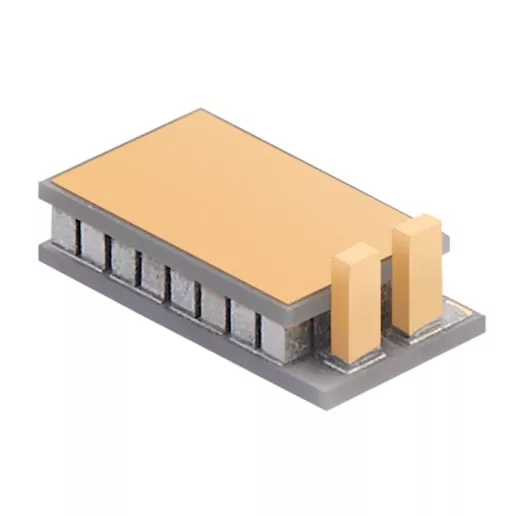
1. Introduction to Micro Thermoelectric Cooling
Micro thermoelectric cooling technology uses the Peltier effect to create heat transfer across semiconductor junctions when electrical current flows through them. Unlike traditional cooling systems relying on refrigerants or mechanical compressors, Micro Thermoelectric Coolers for Lidar operate silently, without moving parts, and in miniature footprints suitable for compact sensor modules.
These cooling devices are typically integrated directly into photodiode assemblies, laser transmitters, or optical receivers, where maintaining stable thermal conditions is critical for maintaining alignment accuracy and signal consistency.
2. How Micro Thermoelectric Coolers for Lidar Work
At the core of Micro Thermoelectric Coolers for Lidar lies a solid-state heat pump constructed from arrays of semiconductor couples. When powered:
-
One side absorbs heat from the target component
-
The other side dissipates heat to a heat sink
-
Thermal regulation is precisely controlled via current modulation
Key working steps:
-
Electrical input generates temperature differential
-
Heat is actively transported away from optics/electronics
-
Temperature sensors provide feedback for closed-loop control
This process enables temperature stabilization within fractions of a degree, supporting sensitive lidar measurement requirements.
3. Importance and Functional Role in Lidar Systems
The importance of Micro Thermoelectric Coolers for Lidar can be understood through their multiple roles:
Signal Stability
Temperature control ensures stable laser emission wavelengths, improving distance accuracy.
Noise Reduction
Cooling reduces thermal noise in detectors, increasing signal-to-noise ratio.
Device Protection
Heat management extends component lifespan and prevents performance drift.
Environmental Adaptability
Reliable operation across extreme outdoor temperature variations.
Primary functions list:
-
Laser diode temperature regulation
-
Photodetector cooling
-
Optical alignment preservation
-
Thermal drift minimization
4. Application Effects and Performance Benefits
Implementing Micro Thermoelectric Coolers for Lidar delivers measurable system improvements:
-
Enhanced range detection accuracy
-
Reduced calibration frequency
-
Lower system failure rates
-
Increased reliability for autonomous navigation
In industries such as automotive safety, smart infrastructure, and surveying, these improvements translate directly into operational efficiency and data reliability.
5. Product Features from Fuzhou X-Meritan Technology Co., Ltd.
Fuzhou X-Meritan Technology Co., Ltd. specializes in advanced micro thermoelectric cooling solutions engineered for high-precision sensing environments.
Highlighted Capabilities
-
Ultra-compact module design
-
High heat pumping density
-
Precise temperature control response
-
Customizable dimensions and electrical characteristics
-
Durable materials for long operational cycles
Typical Parameter Overview
| Feature | Description |
|---|---|
| Size Range | Miniature form factors for embedded optics |
| Cooling Capacity | Optimized for micro-detector loads |
| Control Accuracy | Fine temperature stabilization |
| Integration | Compatible with lidar module assembly |
| Reliability | Long service life, minimal maintenance |
These solutions are designed to support next-generation lidar system developers seeking efficiency, precision, and integration flexibility.
6. Comparison Table: Cooling Methods for Lidar Modules
| Cooling Method | Size | Precision | Noise | Maintenance |
|---|---|---|---|---|
| Air Cooling | Large | Moderate | Low | Low |
| Liquid Cooling | Medium | High | Medium | High |
| Micro Thermoelectric Coolers for Lidar | Compact | Very High | Silent | Minimal |
This comparison illustrates why thermoelectric micro cooling technology is increasingly preferred for compact, precision-oriented sensing modules.
7. Implementation Considerations
Before integrating Micro Thermoelectric Coolers for Lidar into system design, engineers should evaluate:
-
Thermal load calculations
-
Heat sink compatibility
-
Power supply requirements
-
Control circuit integration
-
Environmental exposure conditions
Proper system-level design ensures optimal efficiency and maximizes performance returns.
8. Conclusion
Micro Thermoelectric Coolers for Lidar play a crucial role in enabling accurate, stable, and reliable sensing in modern technological ecosystems. Their compact size, precision control, and maintenance-free operation make them indispensable for advanced optical detection platforms. As lidar applications expand into more demanding industries, robust thermal management becomes a strategic performance factor rather than a secondary consideration.
With proven expertise and customizable engineering support, Fuzhou X-Meritan Technology Co., Ltd. provides professional cooling solutions designed to meet evolving industry needs. If you are seeking dependable thermal management technology to enhance your lidar systems, contact us today to explore tailored solutions and technical collaboration opportunities.
