

What are the challenges in joining ceramic parts to metal assemblies
2026-01-23
The integration of ceramic parts into metal assemblies represents a frontier in modern engineering, unlocking capabilities for extreme environments in aerospace, energy, and semiconductor manufacturing. However, achieving a reliable, durable bond between these dissimilar materials is a significant technical hurdle. At Kingsoon, we specialize in advanced materials and understand the critical challenges engineers face when combining the high strength and thermal stability of ceramics with the ductility and toughness of metals. This blog explores the primary obstacles and the principles behind overcoming them.
The core difficulties in joining ceramic parts to metals stem from their fundamentally different physical and chemical properties. These challenges must be meticulously addressed to ensure assembly integrity.
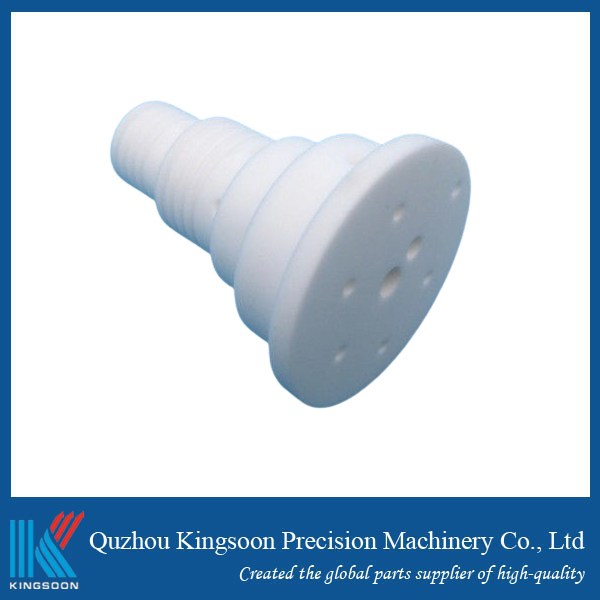
Primary Challenges in Ceramic-to-Metal Joining:
-
Thermal Expansion Mismatch: Ceramics and metals expand and contract at different rates when heated or cooled. This can induce severe thermal stresses at the joint interface, leading to cracking or bond failure during operation or manufacturing.
-
Interfacial Bonding: Achieving a strong chemical or mechanical bond is difficult due to the non-reactive nature of most ceramics. The joint often requires an intermediary layer or specific surface treatments.
-
Wettability and Joint Design: Molten metals typically do not "wet" ceramic surfaces well, making processes like brazing challenging. The geometric design of the joint itself is also crucial for stress distribution.
-
Long-Term Reliability: Joints must withstand operational stresses—thermal cycling, mechanical load, and corrosion—over the product's entire lifecycle without degradation.
Common Joining Methods and Their Characteristics:
| Method | Process Description | Key Advantage | Primary Consideration |
|---|---|---|---|
| Active Metal Brazing | Uses brazing alloys with active elements (Ti, Zr) to improve wetting on the ceramic parts. | Strong, hermetic seals; good for complex shapes. | Requires precise control of atmosphere (vacuum/inert gas). |
| Diffusion Bonding | Applies high pressure and temperature to create atomic diffusion at the interface. | High joint strength; minimal residual stress. | Long process time; requires very smooth surfaces. |
| Mechanical Fastening | Uses physical interlocking, clamping, or adhesive bonding. | No high heat; suitable for large parts. | Stress concentration points; may not be hermetic. |
Ceramic Parts FAQ
What are the most critical factors when designing a ceramic-to-metal joint?
The most critical factors are managing the coefficient of thermal expansion (CTE) mismatch through compliant interlayers or graded transitions, and ensuring impeccable surface preparation of the ceramic to facilitate bonding.
Can standard adhesives be used to join ceramic parts to metal?
While some high-performance epoxies or silicone-based adhesives can be used for low-stress, non-hermetic applications, they generally lack the strength and thermal stability for demanding environments. High-temperature brazing or diffusion bonding are preferred for critical assemblies.
How does Kingsoon ensure the reliability of its joined ceramic-metal components?
Kingsoon leverages material science expertise to select optimal alloy/ceramic pairs, employs precise process controls during brazing, and conducts rigorous non-destructive testing (like X-ray inspection) to verify joint integrity and long-term performance.
Successfully merging ceramic parts with metal assemblies demands a deep understanding of material science and precision engineering. It is not merely a joining process but a system-level design consideration from the outset. As a leader in advanced material solutions, Kingsoon possesses the technical proficiency to navigate these challenges, delivering components that perform reliably under the most strenuous conditions.
Contact us today to discuss your specific application. Let Kingsoon's expertise in ceramic parts integration provide the robust, high-performance solution your project requires.
