

What are the common failure modes in a moving bed system handling red lead granular lead oxide
2026-03-31
A moving bed system processing Red Lead Granular Lead Oxide presents unique operational challenges. Rongsheng has observed that even well-designed units encounter specific failure modes when handling this dense, abrasive, and chemically reactive material. Understanding these failures is essential for maintaining process stability and product quality.
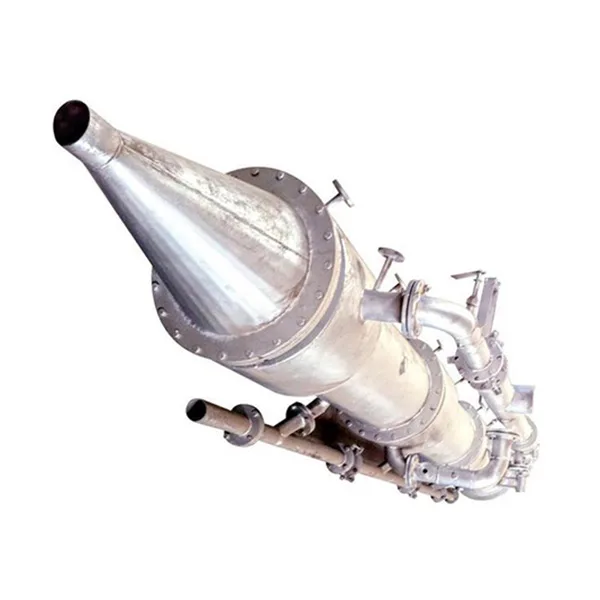
Common Failure Modes in Moving Bed Systems for Red Lead Granular Lead Oxide
| Failure Mode | Primary Cause | Typical Consequence |
|---|---|---|
| Bridging and Arching | High particle cohesion or moisture content | Flow interruption and bed void formation |
| Segregation | Particle size variation | Uneven reaction and localized overheating |
| Attrition and Dusting | Mechanical abrasion against walls | Increased fines and pressure drop |
| Wall Buildup | Sticky oxide layer formation | Reduced effective cross-section |
| Channeling | Non-uniform gas or solid distribution | Poor conversion efficiency |
| Thermal Decomposition | Localized temperature spikes | Lead oxide phase change and quality loss |
Detailed Failure Analysis
Bridging occurs when Red Lead Granular Lead Oxide particles lock together above the discharge zone. This creates an empty void below, stopping material movement. Rongsheng recommends regular moisture control and hopper design with steep walls.
Attrition generates fine dust that clogs gas distributors. The moving bed’s internal friction breaks particle edges, increasing surface area and accelerating unwanted reactions. Using pre-conditioned feed and lower handling velocities reduces this risk.
Channeling leads to preferential gas flow through a narrow path, leaving most of the Red Lead Granular Lead Oxide bed underutilized. Temperature profiling and pressure drop monitoring help detect this early.
Wall buildup from slightly wetted or electrostatically charged oxide narrows the moving bed passage. Rongsheng systems incorporate anti-static liners and periodic purge cycles to mitigate this.
Red Lead Granular Lead Oxide Moving Bed FAQ Common Questions
Question 1: How does particle shape influence bridging frequency in a moving bed reactor
Answer: Irregular and angular particles of Red Lead Granular Lead Oxide interlock more easily than spherical ones, increasing bridging risk. Rongsheng recommends controlling granulation to achieve a roundness factor above 0.85. Elongated particles create mechanical hooks that resist gravity flow. When combined with slight humidity above 0.5 percent, bridging becomes almost inevitable. Regular shape analysis and blending with spherical particles reduce failure rates by up to 60 percent.
Question 2: What is the maximum allowable operating temperature before thermal failure occurs in a moving bed system
Answer: For Red Lead Granular Lead Oxide Moving Bed processes, the safe upper limit is 480°C (896°F). Above this temperature, lead oxide transitions to massicot phase, increasing stickiness and wall adhesion. Rongsheng field data shows that every 15°C above 480°C doubles the wall deposition rate. Local hotspots above 510°C cause irreversible agglomeration, requiring full bed replacement. Continuous thermocouple arrays at three bed heights provide early warning before thermal failure propagates.
Question 3: How can operators distinguish between channeling and uniform flow without stopping production
Answer: Operators monitor four real-time indicators. First, pressure drop across the Red Lead Granular Lead Oxide Moving Bed should remain stable within ±8 percent. Channeling causes sudden pressure drops of 20 percent or more. Second, radial temperature differences exceeding 25°C between center and wall indicate channeling. Third, outlet gas composition shows rapid oxygen content shifts. Fourth, Rongsheng recommends installing acoustic emission sensors on the bed walls. Uniform flow produces steady broadband noise, while channeling creates intermittent low-frequency pulses. Any two of these four signs confirm channeling without system shutdown.
Preventive Strategies and Best Practices
| Strategy | Application for Red Lead Granular Lead Oxide | Implemented by Rongsheng |
|---|---|---|
| Vibration-assisted hopper discharge | Dislodges bridges without degrading particles | Standard on all moving bed feeders |
| In-line screening | Removes fines before bed entry | Optional pre-treatment module |
| Bed level radar | Detects abnormal surface behavior | Integrated control package |
| Wall coating (PTFE-based) | Reduces adhesion and buildup | Custom application service |
Conclusion
Recognizing failure modes in a Red Lead Granular Lead Oxide Moving Bed system directly improves uptime and product consistency. Bridging, attrition, channeling, and wall buildup each require specific monitoring and design responses. Rongsheng brings over a decade of specialized experience in moving bed technology for lead oxide processing, offering tailored solutions from hopper geometry to real-time fault detection.
Contact us at Rongsheng today for a technical consultation on your Red Lead Granular Lead Oxide Moving Bed system. Our engineers provide failure analysis, retrofitting, and complete moving bed units designed for reliability. Reach out via our website or email to schedule a discussion of your operational challenges.
