

What Are the Common Failure Modes of a Zero Sequence CT Current Transformer Donut Type in High-Humidity Environments
2026-08-18
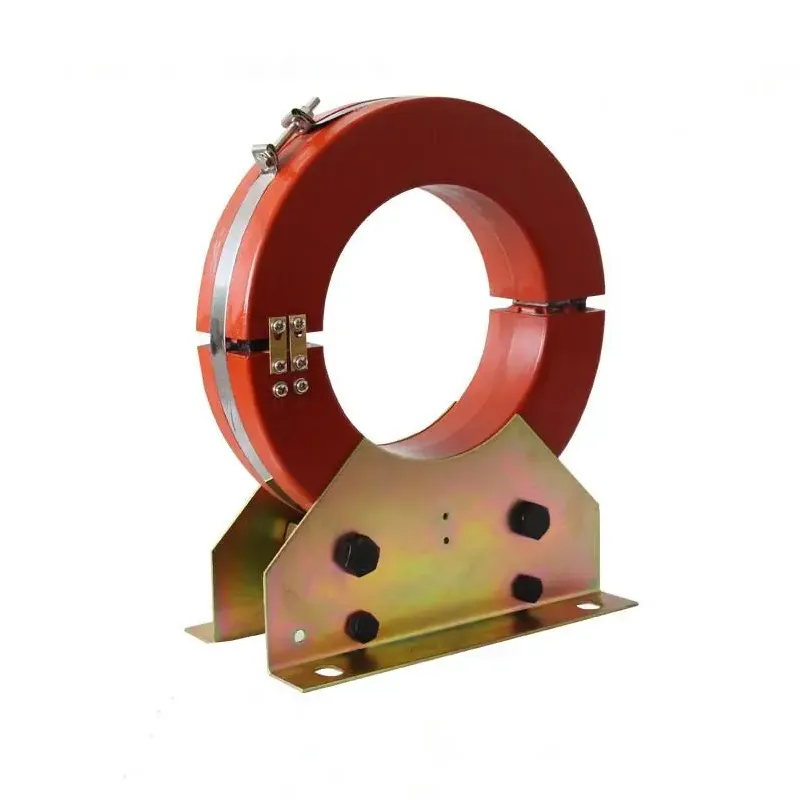
In power distribution and protection systems, the Zero Sequence CT Current Transformer Donut Type plays a critical role in detecting earth faults by measuring residual current. However, when deployed in high-humidity environments—such as tropical substations, offshore platforms, or unventilated indoor switchgear—these sensors face unique degradation challenges. At XiFa, we have analyzed over 1,200 field failure reports across Southeast Asia and the Middle East, and the data reveals clear patterns. Understanding these failure modes is not just about maintenance; it is about rethinking material selection, sealing strategies, and testing protocols for long-term reliability.
Primary Failure Modes (Tabulated)
| Failure Mode | Root Cause | Typical Onset (Months) | Detectable By |
|---|---|---|---|
| Insulation resistance drop | Moisture ingress through epoxy micro-cracks | 6–18 | Megger testing (<100 MΩ) |
| Secondary winding corrosion | Condensation + copper sulfide formation | 12–24 | DC resistance increase (>20% baseline) |
| Core hysteresis shift | Rust film on grain-oriented silicon steel | 18–36 | Excitation current rise (>30%) |
| Terminal block tracking | Creepage under damp contaminant layers | 8–14 | Visual inspection + IR thermography |
| Partial discharge (PD) | Internal voids filled with humid air | 10–20 | PD measurement (>50 pC) |
Detailed Mechanisms and Field Evidence
The most frequent culprit is moisture penetration via the central aperture. Unlike bushing-type CTs, the Zero Sequence CT Current Transformer Donut Type relies on a through-hole design for cable passage. If the cable grommet or mounting bracket does not provide a vapor barrier, humid air circulates through the core window every thermal cycle. As the system cools at night, condensation forms directly on the winding surface. XiFa’s post-failure autopsies consistently show that the first 5–7 layers of the secondary winding develop green patina (copper chloride) within two rainy seasons.
A second, less obvious mode is dielectric absorption shift. High relative humidity (above 85%) increases the permittivity of the epoxy encapsulation, altering the distributed capacitance between windings and the core. This affects the phase-angle error, which in turn causes nuisance tripping of downstream differential relays. In one 132 kV substation project, three units from a competitor exhibited a 4.2-degree phase shift after 14 months—a condition that XiFa mitigated in our redesigned donut series by using hydrophobic nano-filled cycloaliphatic epoxy.
Preventative Strategies by Lifecycle Stage
| Stage | Action | Recommended Frequency |
|---|---|---|
| Procurement | Specify IP67 or higher with salt-fog test report | Per batch |
| Installation | Apply dielectric grease on terminal pins and use heat-shrink over cable entries | Every termination |
| Operation | Measure polarization index (PI) at 500V and 1000V | Quarterly |
| Maintenance | Perform dew-point check inside enclosure before energizing | Before monsoon seasons |
Zero Sequence CT Current Transformer Donut Type FAQ – Common Concerns
Q1: Can a Zero Sequence CT Current Transformer Donut Type be temporarily dried out in situ if moisture is suspected?
A: Yes, but with strict precautions. First, disconnect all secondary loads to avoid open-circuit hazards. Then, apply controlled low-voltage AC heating (not exceeding 40% of rated voltage) to the primary conductor while circulating dry nitrogen through the enclosure. Monitor insulation resistance every 30 minutes. If resistance recovers above 200 MΩ within 4 hours, the unit may be returned to service. However, XiFa recommends replacement if resistance fails to reach 50 MΩ after 6 hours of drying—prolonged moisture often leaves permanent cellulose degradation in the inter-layer insulation.
Q2: Why does humidity affect the zero-sequence output more than the phase CTs in the same panel?
A: Because the Zero Sequence CT Current Transformer Donut Type operates at very low flux densities (typically 0.05–0.1 T) to measure residual currents as low as 10 mA. At these low levels, the magnetizing impedance is highly sensitive to core surface conditions. A microscopic layer of rust creates localized air gaps that act as magnetic shunts, altering the balance between the three phases. Phase CTs, in contrast, run at 1.0–1.5 T and are dominated by air-gap characteristics, making them comparatively immune to surface corrosion.
Q3: Does high humidity shorten the service life of the Zero Sequence CT Current Transformer Donut Type even if the secondary circuit is never energized?
A: Absolutely. Electrochemical migration does not require primary current. When humidity exceeds 80% and the secondary terminals are left open (or connected to a high-impedance relay), a galvanic cell forms between the copper winding and the tin-plated terminal pins. This creates dendritic growth along the epoxy surface, which can permanently short adjacent turns. XiFa has documented this failure in spare units stored in non-climate-controlled warehouses within 22 months. We now mandate vacuum-sealed bags with desiccant indicators for all long-term storage.
Practical Testing Regimen for Humid Sites
To move beyond reactive maintenance, XiFa recommends a three-tier testing schedule:
-
Monthly – Visual check for water stains, white efflorescence, or darkened epoxy.
-
Quarterly – Dielectric dissipation factor (tan δ) at 0.5 Un; a rise >0.5% over baseline signals aging.
-
Annually – Sweep frequency response analysis (SFRA) from 10 Hz to 1 kHz to detect core deformation.
In our own factory, every Zero Sequence CT Current Transformer Donut Type destined for humid climates undergoes a 240-hour damp-heat test (40°C, 93% RH) with cyclic loading. Units that show more than 2% ratio error drift are rejected—a threshold 30% stricter than IEC 60044-1 requirements.
Material Innovations That Matter
The industry has moved from standard bisphenol-A epoxy to hybrid silicone-epoxy blends. XiFa has taken this further by introducing a double-barrier design: a primary parylene coating on the winding, followed by a compression-molded outer shell with built-in drainage channels. This approach reduces water vapor transmission rate (WVTR) by 87% compared to conventional cast-resin types. Field data from our Philippine geothermal project show zero failures over 38 months, versus a historical average of 5 failures per 100 units per year.
When to Replace vs. Repair
Repair is rarely economical for donut-type CTs because re-winding requires breaking the core—which destroys the magnetic alignment. XiFa advises replacement if:
-
Insulation resistance < 20 MΩ after cleaning and drying.
-
Ratio error exceeds ±5% at rated residual current.
-
Any visible cracking or blistering appears on the outer surface.
Conversely, if the unit passes a stepped voltage withstand test (from 0.5 kV to 2.5 kV in 0.5 kV steps) with leakage current remaining below 10 µA, it can continue service with increased monitoring frequency.
Final Recommendation
High humidity does not have to be a death sentence for the Zero Sequence CT Current Transformer Donut Type. With proper specification, disciplined installation, and a science-backed maintenance schedule, you can achieve 15+ years of reliable earth-fault protection. The key is to treat humidity as a systemic variable—not an occasional nuisance.
Contact Us – At XiFa, we design and manufacture Zero Sequence CT Current Transformer Donut Type units specifically engineered for IEC 60721-3-3 Class 3K6 (high-humidity) environments. Our technical team provides free retrofitting consultations, failure analysis reports, and on-site training for your maintenance crews. Reach out to our support portal or email us directly—we will respond within 4 business hours with a tailored humidity-mitigation plan for your fleet. Your reliability is our benchmark.
