

What Are The Common Manufacturing Processes For Forming Plastic Blisters?
2025-12-30
In our factory, we utilize advanced thermoforming techniques to produce high-quality plastic electronics blister packaging. Thermoforming involves heating plastic sheets until they become pliable and then molding them into the desired shape using a rigid mold. Vacuum forming is a variation of this process where our factory applies vacuum pressure to pull the softened plastic sheet onto the mold surface, ensuring precise detailing for intricate designs.
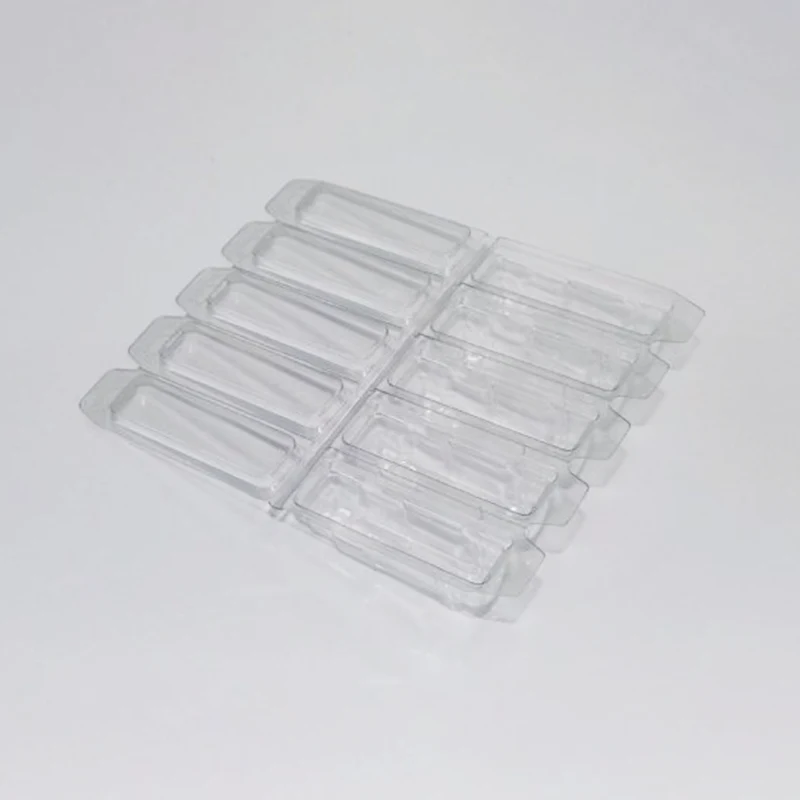
These processes are ideal for packaging sensitive electronic components because they offer consistent thickness, durability, and visual clarity.
| Process | Advantages | Typical Use |
| Thermoforming | High precision, uniform thickness, scalable production | Standard Plastic Electronics Blister packaging |
| Vacuum Forming | Cost-effective, suitable for complex shapes | Custom blister packs for electronic accessories |
Why Is Injection Molding Important for Plastic Blister Manufacturing?
Our factory also leverages injection molding to produce robust Plastic Electronics Blister components. Injection molding involves melting plastic pellets and injecting them into molds under high pressure. This process allows our engineers to create highly detailed and durable blister packs, suitable for protecting delicate electronics during transport. The repeatability of injection molding ensures that each piece maintains consistent quality, which is critical for mass production of electronic packaging.
How Does Forming Pressure Affect the Quality of Plastic Electronics Blister?
Controlling forming pressure is essential in our production lines at Dongguan Weidu Technology Co., Ltd. Higher pressure can help achieve deeper draws and more accurate shapes, while lower pressure reduces the risk of material thinning. Our production team monitors temperature, pressure, and cooling time to maintain the structural integrity of each Plastic Electronics Blister, ensuring that our clients receive packaging that is both protective and aesthetically pleasing.
| Parameter | Recommended Range |
| Forming Temperature | 160-200°C |
| Forming Pressure | 0.5-1.2 MPa |
| Cooling Time | 30-60 seconds |
| Material Thickness | 0.3-1.2 mm |
Which Materials Are Best Suited for Plastic Blisters in Electronics Packaging?
Our team prefers PET, PVC, and PS materials for producing Plastic Electronics Blister due to their clarity, strength, and ease of forming. PET offers excellent rigidity and heat resistance, PVC is cost-effective and provides good visual presentation, while PS is lightweight and ideal for custom designs. Selecting the right material in our factory ensures that the blister packaging can withstand handling and environmental factors while maintaining an attractive display.
What Quality Control Measures Ensure Reliable Plastic Electronics Blister Packaging?
At Dongguan Weidu Technology Co., Ltd., our quality control includes dimensional inspection, visual clarity checks, and strength testing. Each batch of Plastic Electronics Blister undergoes rigorous evaluation to ensure it meets both client specifications and international packaging standards. Our inspection procedures help prevent deformation, cracking, or warping, which are critical for packaging sensitive electronic devices.
Our engineers focus on design optimization to enhance the functionality of Plastic Electronics Blister. Features such as custom cavity shapes, stacking compatibility, and secure locking mechanisms are integrated into our designs. By optimizing these factors, our factory reduces material waste and ensures that electronic components are held securely during shipping and display. We also provide clients with design consulting to maximize both efficiency and presentation value.
FAQ
Question: What is the most common method used to form Plastic Electronics Blister?
Answer: Thermoforming and vacuum forming are the most widely used processes because they allow for efficient shaping of plastic sheets into protective and visually appealing packaging.
Question: How does injection molding benefit electronic blister packaging?
Answer: Injection molding produces highly detailed and durable Plastic Electronics Blister packs, providing consistency and strength for mass production and ensuring electronic components are protected during transit.
Question: Which factors influence the quality of formed plastic blisters?
Answer: Forming temperature, pressure, cooling time, and material selection are critical factors that affect clarity, strength, and dimensional accuracy of Plastic Electronics Blister, ensuring reliable performance in electronic packaging.
Conclusion
Understanding the common manufacturing processes for Plastic Electronics Blister is essential for delivering high-quality packaging solutions. Our factory at Dongguan Weidu Technology Co., Ltd. combines thermoforming, vacuum forming, and injection molding with strict quality control and design optimization to ensure every product meets client expectations. By selecting the appropriate materials and controlling forming parameters, our team guarantees durable, attractive, and functional packaging. Contact our technical team today to discuss your customized Plastic Electronics Blister needs and receive a free consultation on packaging solutions.
