

What Are the Common Mistakes to Avoid in Audio Sheet Metal Enclosure Design
2026-03-17
Designing a high-performance Audio Sheet Metal Enclosure requires precision, technical knowledge, and an understanding of acoustic behavior. Even experienced engineers can overlook critical details that compromise sound quality and durability. At Zhongyilong, we have identified the most frequent pitfalls in Audio Sheet Metal Enclosure development to help you achieve superior results.
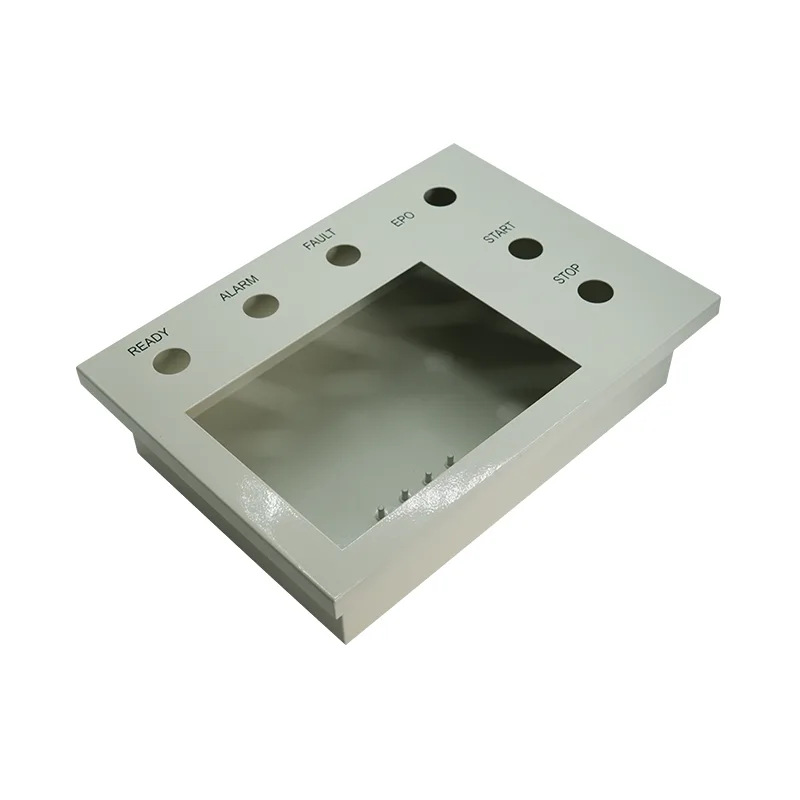
Critical Design Errors and Their Consequences
| Mistake | Consequence | Solution |
|---|---|---|
| Insufficient material thickness | Resonance and unwanted vibrations | Use minimum 1.5mm steel for rigid structures |
| Poor seam sealing | Air leaks causing frequency distortion | Apply continuous welding or acoustic seals |
| Ignoring thermal management | Component overheating and failure | Integrate ventilation or heat sinks early |
| Inadequate EMI shielding | Electrical interference and noise | Design continuous conductive paths |
Five Common Mistakes That Ruin Audio Enclosures
1. Neglecting Resonance Control
Thin or improperly braced Audio Sheet Metal Enclosure panels act like drumheads, coloring the sound with their own resonant frequencies. Always incorporate stiffening ribs or constrained layer damping.
2. Overlooking Manufacturing Tolerances
Designing without considering bending radii or welding access leads to costly rework. Zhongyilong recommends consulting fabricators during the design phase.
3. Improper Port and Vent Placement
Placing ventilation holes near sensitive components or speaker drivers creates turbulence noise and compromises acoustic isolation.
4. Ignoring Cable Management
Unsecured internal wiring vibrates against metal surfaces, creating rattles and potential short circuits. Include dedicated cable routing channels.
5. Forgetting About Service Access
Permanently sealed enclosures make component replacement impossible. Design removable panels with captive fasteners.
Best Practices Checklist
-
Perform finite element analysis for modal frequencies
-
Specify proper material grade (SPCC, SECC, or aluminum)
-
Include gaskets for airtight sealing
-
Design for electromagnetic compatibility
-
Verify grounding points for safety
-
Test prototype for acoustic performance
Audio Sheet Metal Enclosure FAQ
What gauge of sheet metal is recommended for professional audio enclosures?
For most professional audio applications, Zhongyilong recommends 16-gauge (1.5mm) to 14-gauge (2.0mm) cold-rolled steel. Thinner materials risk panel resonance, while thicker adds unnecessary weight without acoustic benefit. For subwoofer applications, 12-gauge (2.7mm) provides maximum rigidity.
How do I prevent electromagnetic interference in my Audio Sheet Metal Enclosure?
Proper Audio Sheet Metal Enclosure design for EMI prevention requires continuous electrical conductivity between all panels. Avoid painted surfaces at joining points, use conductive gaskets around openings, and ensure all panels have low-impedance contact. Zhongyilong recommends zinc-plated materials with consistent grounding paths to chassis ground.
What finishing process protects the enclosure without affecting sound quality?
Powder coating between 60-80 microns thickness provides excellent protection without acoustic degradation. However, avoid thick coatings on mating surfaces that need electrical continuity. For premium applications, Zhongyilong offers electrostatic painting with masked grounding points to maintain both aesthetics and performance.
Partner with Experts for Flawless Results
Avoiding these common mistakes requires experience and technical precision. At Zhongyilong, we specialize in precision Audio Sheet Metal Enclosure manufacturing with over 15 years of industry expertise. Our engineering team collaborates with you from concept to completion, ensuring your design achieves optimal acoustic performance.
Contact us today for a design review and quotation. Let Zhongyilong transform your audio enclosure concept into reality with manufacturing excellence.
