

What Are The Common Problems And Solutions For Current Transformer Saturation
2026-02-03
A Current Transformer CT is fundamental for safe and accurate measurement and protection in electrical systems. However, Current Transformer saturation is a prevalent issue that can compromise system integrity, leading to inaccurate metering or, more critically, protection relay failure. At XiFa, we specialize in providing robust solutions and high-quality instruments to diagnose and prevent these problems, ensuring your operations remain reliable and safe.
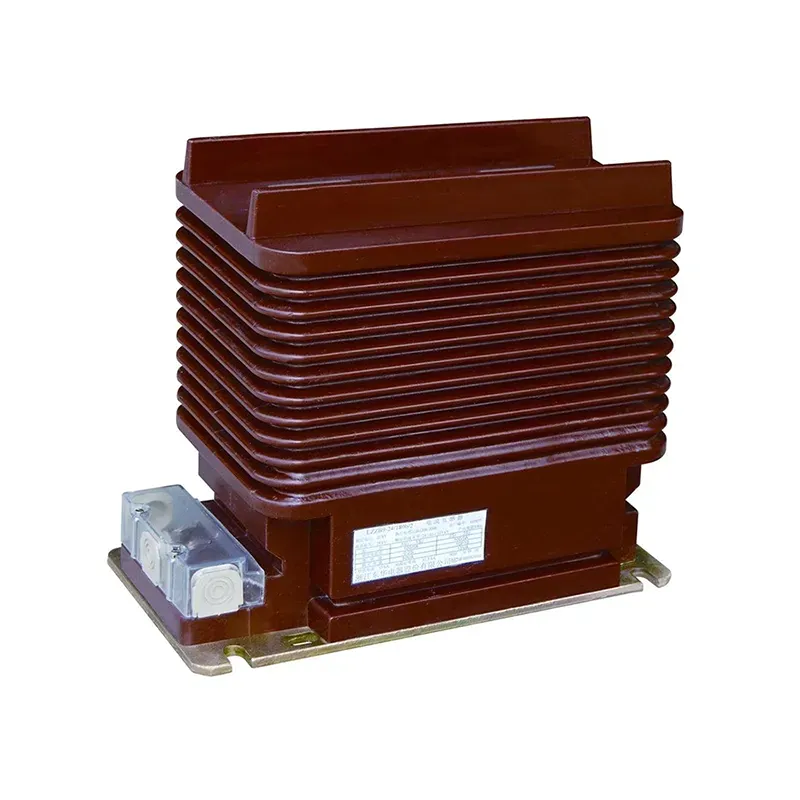
Saturation occurs when the CT's core can no longer support an increase in magnetic flux. This primarily happens under two conditions:
-
Excessive Primary Current: From faults, intrush currents, or overloads.
-
Incorrect CT Parameters: Such as improper sizing, high burden, or a lower-than-required accuracy limit factor (ALF).
The consequences are severe: protective relays may under-perform or fail to operate, while revenue metering can become significantly inaccurate.
Common Problems Leading to CT Saturation
The root causes can typically be categorized as follows:
| Problem Category | Specific Cause | Consequence |
|---|---|---|
| System Conditions | Asymmetric fault currents (DC offset) | Severe transient saturation |
| Motor starting & transformer intrush | Temporary saturation, relay misoperation | |
| Design & Selection | CT rating too low for application | Premature saturation during faults |
| Accuracy Limit Factor (ALF) not matched to burden | Protection CT fails to maintain accuracy | |
| Installation & Maintenance | Excessive secondary circuit burden (long wires) | Increased voltage drive, earlier saturation |
| Open-circuited secondary winding | Extreme saturation risk & dangerous overvoltage |
Effective Solutions to Prevent Saturation
Implementing the right solutions is key to system reliability.
-
Proper CT Specification: Select a CT with a sufficiently high ALF (e.g., Class 5P20, 10P20) that accounts for the total connected burden and maximum fault current.
-
Reduce Secondary Burden: Minimize the length and increase the cross-section of secondary wiring. Use XiFa's low-impedance test equipment to measure actual burden.
-
Use Linear Core CTs: For critical protection circuits, consider CTs with air-gaps (e.g., Class PR, PX) that offer superior linearity and transient response.
-
Regular Testing: Employ a XiFa CT Analyzer to verify Current Transformer knee-point voltage, excitation curve, and ratio under simulated conditions to ensure they perform as intended.
Current Transformer CT FAQ
What is the most dangerous condition for a CT secondary circuit?
An open-circuited secondary winding is extremely hazardous. It can cause the core to saturate severely, inducing extremely high and potentially lethal voltages across the open terminals, while also demagnetizing the core and damaging insulation.
How can I tell if a CT has saturated in service?
Indicators include distorted secondary current waveforms (visible with an advanced analyzer like those from XiFa), unexplained protection relay misoperations or failures to trip, and significant discrepancies in energy metering data during load peaks or faults.
Does a higher CT ratio prevent saturation?
Not necessarily. While a higher ratio reduces secondary current, the key factor is the CT's core capability, defined by its knee-point voltage and ALF. A CT with a high ratio but a low ALF will still saturate quickly under fault conditions if not properly specified for the burden.
Ensuring your Current Transformers are immune to saturation is not optional—it's critical for safety and accuracy. Don't leave your protection system to chance. Contact us today at XiFa to schedule a consultation. Our experts can provide a comprehensive system assessment, recommend the right CT solutions, and equip your team with the industry-leading test instruments needed for proactive maintenance. Let us help you build a more resilient electrical infrastructure.
