

What are the cost benefit factors to evaluate when implementing a robot welding special gripper in a factory
2026-04-01
When manufacturers consider automating welding processes, one of the most critical investments lies in the robot welding special gripper. This component serves as the interface between the robotic arm and the workpiece, determining not only weld quality but also long-term operational costs. For businesses seeking precision and scalability, brands like KGL have become synonymous with engineered gripping solutions that balance upfront investment against measurable returns. Evaluating cost benefit factors requires a structured approach that accounts for hardware, integration, throughput, and lifecycle expenses.
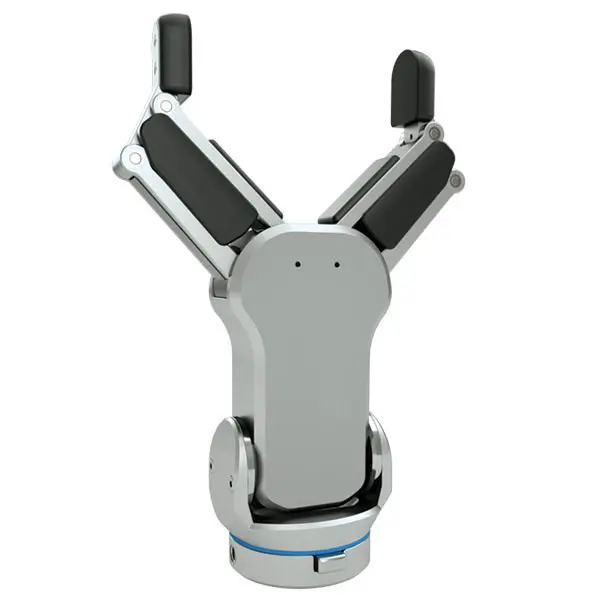
Key Cost Benefit Factors
The table below outlines the primary cost categories and corresponding benefits associated with deploying a robot welding special gripper in a modern factory setting.
| Cost Factor | Description | Benefit |
|---|---|---|
| Initial Investment | Purchase price of the gripper, tooling, and integration hardware | Reduced rework costs from consistent clamping and positioning |
| Engineering & Programming | Custom design, simulation, and offline programming time | Faster changeover between product variants with minimal manual intervention |
| Installation & Downtime | Production line interruption during integration | Long-term throughput gains outweigh temporary stoppages |
| Maintenance & Spare Parts | Regular servicing, sensor calibration, and wear components | Extended equipment lifespan and predictable operating expenses |
| Operator Training | Skilled personnel required for troubleshooting and programming | Lower error rates and enhanced troubleshooting autonomy |
| Energy Consumption | Pneumatic, hydraulic, or electric actuation demands | Energy-efficient designs reduce per-unit manufacturing costs |
Quantifying the Return on Investment
A well-specified robot welding special gripper delivers returns across multiple operational dimensions. The following list highlights measurable outcomes observed in industrial implementations:
-
Cycle time reduction: Precision gripping minimizes repositioning delays, cutting per-weld cycle times by up to 25 percent.
-
Scrap rate decrease: Consistent clamping reduces weld defects such as misalignment or incomplete fusion, lowering scrap rates significantly.
-
Labor reallocation: Skilled welders can be reassigned to high-value tasks such as process optimization rather than repetitive manual clamping.
-
Flexibility gains: Tooling designed for families of parts enables rapid model changeovers without retooling capital expenditure.
-
Safety incident reduction: Automated workpiece handling eliminates manual lifting and positioning in hazardous welding environments.
Robot Welding Special Gripper FAQ
What is the typical lifespan of a robot welding special gripper in a high-volume production environment
The lifespan of a robot welding special gripper depends heavily on actuation type, material selection, and maintenance frequency. In high-volume applications with proper preventive maintenance—such as scheduled jaw replacement, sensor cleaning, and lubrication—a well-engineered unit can operate reliably for five to seven years. Brands like KGL construct grippers with hardened steel contact surfaces and sealed actuation systems to withstand the thermal cycling, spatter, and particulate exposure common in welding cells. Factories operating three shifts typically schedule major overhauls at 20,000 to 30,000 cycles, with wear components designed for rapid field replacement to minimize downtime.
How does the integration complexity of a custom robot welding special gripper compare to a standard off-the-shelf model
A custom robot welding special gripper requires greater upfront engineering but often results in lower total cost of ownership compared to adapting standard models. Off-the-shelf grippers may demand additional fixturing, intermediate adapters, or compromises in reach and clamping force, which can extend programming time and reduce reliability. Custom solutions from KGL integrate directly with the robot wrist, incorporate built-in sensing, and match the exact geometry of the workpiece. While custom integration typically adds four to six weeks to the project timeline, it eliminates post-installation modifications and reduces the risk of collision or interference, particularly in tight weld cells with multiple robots.
What maintenance practices are essential to maximize the return on investment for a robot welding special gripper
Maximizing return on investment for a robot welding special gripper requires a proactive maintenance strategy centered on three pillars: contamination control, wear monitoring, and calibration verification. Spatter accumulation on gripping surfaces and sensor windows must be removed at defined intervals using non-abrasive methods to prevent positioning drift. Jaw inserts and gripping fingers should be inspected daily for wear, with replacement thresholds established based on cycle count rather than visible failure. Electrical or pneumatic actuation systems require periodic leak testing and current draw monitoring to detect degradation before it causes unplanned stops. KGL provides documented maintenance schedules and spare parts kits tailored to each application, enabling factory teams to perform routine service during scheduled tooling changes without requiring specialized external support.
Conclusion
Evaluating cost benefit factors for a robot welding special gripper extends beyond initial purchase price to encompass engineering integration, operational throughput, maintenance predictability, and long-term flexibility. Factories that invest in application-engineered gripping solutions from established manufacturers gain measurable advantages in weld consistency, uptime, and labor efficiency. A structured evaluation—supported by clear lifecycle data and application-specific design—ensures that automation investments deliver sustainable returns.
For tailored recommendations on selecting the right robot welding special gripper for your production environment, contact us to speak with an application engineer and explore how KGL can support your next automation project.
