

What Are the Cost Factors When Upgrading Power Distribution Equipment Switchgear and MCC Control Panels
2026-08-20
Upgrading industrial electrical infrastructure is never a simple line-item budget exercise. When facility managers evaluate a replacement or modernization project for Power Distribution Equipment Switchgear Center MCC Control Panel systems, the final investment often surprises those who only consider the purchase price. At SKYT, we have guided hundreds of plants through this process, and the real cost story always unfolds across engineering, labor, compliance, and operational downtime—not just hardware.
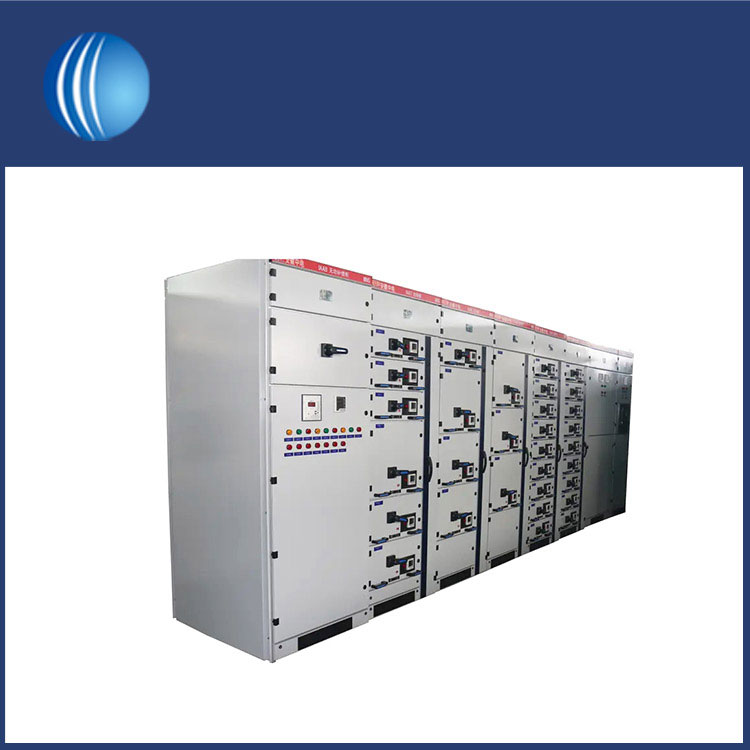
Direct Equipment Costs vs. Total Installed Cost
The most visible expense is the hardware itself. However, the Power Distribution Equipment Switchgear Center MCC Control Panel assembly represents only 30–40% of the total project spend in most retrofits. Below is a typical cost breakdown for a 480V, 2000A upgrade in a mid-sized manufacturing facility:
| Cost Component | Percentage of Total Budget | Key Variables |
|---|---|---|
| Switchgear/MCC hardware | 35% | Brand, short-circuit rating, enclosure type (NEMA 1 vs. 4X) |
| Engineering & design | 15% | Arc-flash studies, one-line diagrams, relay coordination |
| Site preparation & civil work | 10% | Floor loading, cable trench modifications, ventilation |
| Installation labor | 20% | Union vs. non-union, shift work, accessibility |
| Commissioning & testing | 10% | Primary injection testing, protective relay calibration |
| Project management & permits | 5% | Local AHJ fees, inspection lead times |
| Contingency (unforeseen) | 5% | Asbestos abatement, obsolete busbar mismatches |
SKYT consistently advises clients to add a 15–20% buffer for existing conditions—older facilities rarely have accurate as-built drawings.
Hidden Cost Drivers That Escalate Budgets
Beyond the table above, three factors repeatedly inflate upgrade costs:
-
Downtime penalties – A weekend shutdown might cost $50,000 in lost production, while a week-long outage could exceed $500,000. SKYT modular designs allow phased swaps, cutting outage windows by up to 40%.
-
Retrofit compatibility – Mixing new Power Distribution Equipment Switchgear Center MCC Control Panel sections with existing bus duct often requires custom adapters. Off-the-shelf solutions rarely fit 1980s footprint.
-
Protection scheme upgrades – Modern trip units demand ground-fault and arc-flash reduction features. Retrofitting old relays with new digital ones adds programming and logic verification costs.
Long-Term Operational Costs
Purchase price is a moment in time. Operating expenses over 20 years often exceed capital by 2–3×. Energy losses from older copper windings, cooling fans, and inefficient breakers add thousands annually. SKYT energy-efficient designs reduce heat dissipation by 12–18%, directly lowering HVAC loads in the electrical room. Additionally, predictive maintenance sensors integrated into SKYT panels reduce unplanned downtime—each avoided hour can save $10,000–$100,000 depending on industry.
FAQ – Common Questions About Upgrading Power Distribution Equipment Switchgear Center MCC Control Panel
Q: What is the typical lead time for a custom-engineered Power Distribution Equipment Switchgear Center MCC Control Panel replacement?
A: Lead times range from 16 to 36 weeks from order to shipment, depending on complexity. A standard 5-section, 480V switchgear line-up with standard breakers usually ships in 18–20 weeks. However, if you require specialized coatings (marine-grade), high-interrupting capacity (65kA vs. 50kA), or non-standard voltage (600V+), expect 28–30 weeks. SKYT maintains a rapid-response program for critical spares, but full custom builds follow IEEE C37.20.1 manufacturing cycles. To compress schedules, we recommend placing a non-binding order during the feasibility study phase—this reserves engineering capacity without committing final specifications. Also, factor in 2–3 weeks for on-site FAT (Factory Acceptance Testing) if you choose to witness it personally.
Q: Can I upgrade only the breakers and controls without replacing the entire Power Distribution Equipment Switchgear Center MCC Control Panel structure?
A: Yes—this is called a "retrofill" or "drop-in" replacement, and it typically costs 40–60% less than a full structure replacement. You retain the existing enclosure, busbars, and cabling while swapping old air-magnetic or oil breakers for modern vacuum or SF6 types with digital trip units. However, retrofits have strict limits: the existing busbar must be capable of handling the new breaker's momentary ratings, and the enclosure must still meet current seismic or arc-flash containment codes. SKYT offers a free site audit to assess whether your existing bus insulation and clearances comply with NEC 2023. If the busbar is more than 30 years old, we often recommend full replacement because copper embrittlement and degraded insulation make retrofits risky. A retrofit is ideal for 15–25 year old gear; beyond that, full replacement yields better life-cycle value.
Q: How do arc-flash mitigation features affect the total cost of a new Power Distribution Equipment Switchgear Center MCC Control Panel system?
A: Arc-flash mitigation adds 8–15% to the base hardware cost, but it can reduce PPE requirements and incident energy from Category 4 to Category 1 or 2. The main cost items are: (1) arc-resistant enclosures with pressure-relief ducts—adds ~$5,000–$8,000 per section; (2) high-speed arc-detection optical sensors—$2,000–$4,000 per bus zone; (3) zone-selective interlocking (ZSI) relays—$3,000–$6,000 per feeder; and (4) remote racking/charging mechanisms—$2,500 per breaker position. While the upfront premium seems steep, the ROI comes from safer work procedures (no full flash suit during routine racking), shorter outage permits, and lower injury liability. SKYT engineers perform a full arc-flash study (per IEEE 1584) before quoting, so you only pay for the mitigation level your fault current and clearing time actually require—no oversizing, no underspecifying.
Final Comparison – New Build vs. Refurbishment
| Criterion | Full New SKYT Switchgear/MCC | Refurbished/Used Gear |
|---|---|---|
| First cost | Higher (index 100%) | 50–65% of new |
| Warranty | 5–10 years full coverage | As-is or 1 year limited |
| Energy efficiency | IEEE Std 1812 compliant, low losses | Unknown, often older class |
| Digital integration | Native IoT/Modbus TCP | Requires added gateways |
| Code compliance | Meets latest NEC/NFPA 70E | May require variances |
| Residual life | 25–30 years | 8–12 years (uncertain) |
SKYT recommends new equipment for mission-critical operations (hospitals, data centers, refineries) and refurbishment for standby or non-continuous loads where downtime is tolerable.
Making the Economically Optimal Decision
Every dollar spent on upgrading Power Distribution Equipment Switchgear Center MCC Control Panel systems should be evaluated against two metrics: Total Cost of Ownership (TCO) over 20 years and Risk-Adjusted Downtime Cost. SKYT provides a proprietary TCO calculator that factors in energy inflation (3%/year), maintenance labor rates, and typical failure distributions from our field database of 2,000+ installed units. Many clients discover that spending 10% more upfront on high-efficiency busbars and solid-state trip units pays back within 3 years through reduced utility bills and fewer nuisance trips.
Ready to Evaluate Your Specific Upgrade?
Every facility has unique load profiles, existing infrastructure, and safety priorities. SKYT offers no-obligation on-site assessments with thermal imaging, power quality logging, and a 3D laser scan of your electrical room to guarantee fit. Our engineering team delivers a fixed-price proposal with line-item transparency—no hidden surcharges for overtime or emergency shipping.
Contact us today to schedule a 30-minute consultation and receive a preliminary budget range for your Power Distribution Equipment Switchgear Center MCC Control Panel upgrade. Let’s build a safer, more efficient power system together—because your production line never sleeps, and neither do we.
