

What Are the Key Challenges in Continuous Gas Monitoring
2025-12-17
Continuous gas monitoring is a critical component in industries ranging from manufacturing and energy to environmental protection and laboratory research. However, maintaining reliable, accurate, and efficient Gas Analysis around the clock presents significant hurdles. Key challenges include ensuring sensor stability over long periods, minimizing maintenance downtime, achieving precise measurements in complex gas mixtures, and integrating data seamlessly into control systems. This is where innovative solutions from Weshine make a decisive difference, turning these challenges into opportunities for enhanced safety and operational excellence.
Overcoming these obstacles requires technology built for resilience and intelligence. Weshine's flagship continuous gas monitors are engineered to address these core issues directly.
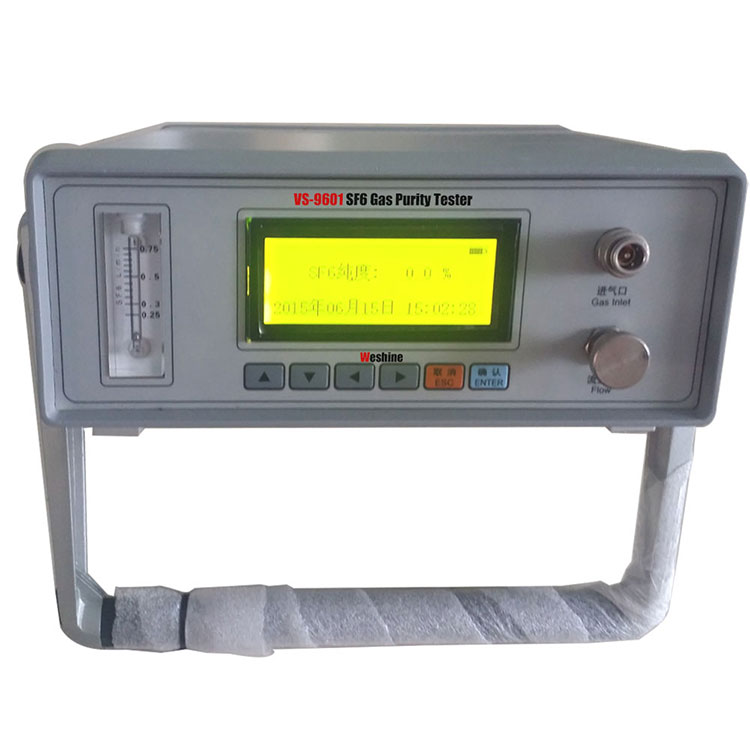
Our engineering solutions focus on:
-
Long-Term Stability: Advanced sensor technology that resists poisoning and drift.
-
Minimal Maintenance: Designs featuring easy-access components and self-diagnostic functions.
-
Interference Compensation: Sophisticated algorithms that filter out cross-sensitivities for pure analyte measurement.
-
Seamless Integration: Multiple output protocols (4-20mA, Modbus, Ethernet) for simple connection to Plant SCADA or DCS.
Key Product Parameters: The Weshine CGM-5000 Series
The Weshine CGM-5000 Series exemplifies our approach to conquering continuous monitoring challenges. Below are its core specifications:
| Parameter | Specification | Benefit |
|---|---|---|
| Measurement Range | 0-100% LEL / 0-5000 ppm (configurable) | Adapts to both safety and precision Gas Analysis needs. |
| Accuracy | ±1% of reading | Ensures reliable data for compliance and decision-making. |
| Response Time (T90) | < 15 seconds | Provides fast alerting to rapid gas concentration changes. |
| Sensor Life | > 3 years (typical) | Reduces total cost of ownership and maintenance frequency. |
| Outputs | 4-20mA, RS-485 Modbus, Relay | Enables easy integration into any existing industrial network. |
| Enclosure Rating | IP66 / ATEX Certified (Zone 1) | Guarantees performance in harsh, hazardous environments. |
Gas Analysis FAQ
Q: How often do gas sensors in continuous monitors need calibration?
A: Calibration frequency depends on the sensor type, target gas, and operating environment. While electrochemical sensors may require quarterly checks, advanced NDIR or laser-based sensors from Weshine can often operate for 6-12 months between calibrations. Our systems include reminder alerts and a streamlined calibration process to ensure ongoing accuracy.
Q: Can one monitor handle a mixture of gases without interference?
A: This is a common challenge. Basic sensors can cross-react. Weshine monitors utilize sensor arrays with proprietary software algorithms that actively compensate for known interferents. For complex mixtures, we offer Gas Analysis systems with integrated gas chromatograph modules to separate and quantify individual components precisely.
Q: What is the biggest threat to the longevity of a continuous gas monitor?
A: Sensor poisoning or degradation from exposure to extreme conditions like high humidity, particulates, or incompatible chemicals is the primary threat. Weshine designs incorporate robust filters, protective membranes, and environmental conditioning to shield the core sensor, significantly extending its operational life and reliability.
Facing the challenges of continuous Gas Analysis requires a partner with proven technology and deep expertise. Weshine is committed to providing not just instruments, but reliable, data-driven solutions for your most demanding monitoring applications. Contact us today to discuss your specific requirements and let our experts help you build a safer, more efficient operation.
