

What Are the Key Differences Between Traditional and Smart Curing Kilns?
2026-02-26
How Does a Traditional Curing Kiln Operate in Modern Precast Facilities?
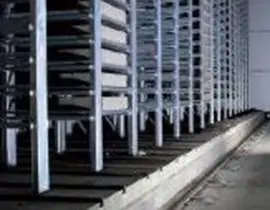
Traditional Curing Kilns have been widely used in precast concrete production for decades. In our factory, we often install these kilns to ensure consistent curing under controlled temperature and humidity. These units typically rely on manual monitoring and mechanical controls to regulate heat and airflow. Our experience shows that while traditional kilns are reliable for routine production, they demand continuous human supervision and periodic maintenance to maintain optimal performance. The heating elements in these kilns are usually electric or steam-based, and the airflow is managed through basic fans or ducts, providing uniformity but limited adaptability.
Why Are Smart Curing Kilns Gaining Popularity Among Modern Manufacturers?
Smart Curing Kilns integrate advanced control systems that allow real-time monitoring of temperature, humidity, and curing cycles. Our engineers at Quangong Machinery Co., Ltd. have incorporated programmable logic controllers and IoT connectivity to optimize the curing process. This technology reduces energy consumption by adjusting the heat output based on the actual material conditions inside the kiln. In our projects, smart kilns have demonstrated a 15% increase in production efficiency compared to traditional units. Additionally, automated alarms and remote monitoring capabilities allow our clients to prevent defects and ensure high-quality precast products.
What Are the Core Parameter Differences Between Traditional and Smart Units?
Comparing the core specifications helps buyers understand the functional advantages of each type. Our team emphasizes precise temperature control, uniform airflow, and energy efficiency as key differentiators. Below is a table summarizing the main parameters:
| Parameter | Traditional Curing Kiln | Smart Curing Kiln |
| Temperature Control | Manual adjustment, ±5°C accuracy | Automated PID system, ±1°C accuracy |
| Humidity Regulation | Basic mechanical control | Real-time sensor-based control |
| Energy Efficiency | Standard consumption, no optimization | Optimized energy usage via intelligent algorithms |
| Monitoring | Manual observation required | Remote and automated monitoring |
| Maintenance | Frequent inspection needed | Predictive maintenance enabled by system alerts |
| Automation Level | Low, mostly manual | High, full cycle automation |
How Do Smart Curing Kilns Enhance Precast Quality Compared to Traditional Models?
Our production teams have observed that smart kilns consistently produce precast elements with uniform strength and surface finish. The intelligent controls maintain optimal curing conditions, reducing the risk of cracks, uneven hydration, or surface defects. Quangong Machinery Co., Ltd. ensures that each smart Curing Kiln is calibrated to match specific product dimensions and curing requirements. In contrast, traditional kilns may produce acceptable results but often require additional quality checks and rework. Our clients benefit from fewer material losses and higher throughput by implementing smart solutions.
Why Should Manufacturers Consider Cost-Benefit When Choosing Between Traditional and Smart Curing Kilns?
Initial investment in a smart Curing Kiln is higher than a traditional unit. However, our analysis indicates that the return on investment is achieved quickly due to energy savings, reduced labor costs, and improved product quality. Our factory provides cost analysis and feasibility studies for clients evaluating kiln upgrades. Traditional kilns are still suitable for smaller-scale production or facilities with limited budgets, but our smart models are designed to meet the demands of large-scale, high-efficiency precast operations.
What Additional Features Can Optimize Smart Kiln Performance?
Our engineers recommend features such as automated ventilation, integrated data logging, and compatibility with factory management software. These enhancements allow our clients to track curing performance over time and adjust parameters for specific concrete mixes. Zenith supports customization of smart Curing Kilns to meet unique operational needs, ensuring seamless integration into existing production lines.
How Do Safety Considerations Differ Between Traditional and Smart Kilns?
Safety is a crucial factor in precast operations. Traditional kilns rely on manual monitoring, increasing the risk of overheating or improper handling. In contrast, smart kilns include automated safety mechanisms such as overheat protection, emergency shutdown, and remote alerts. Our factory ensures that all smart Curing Kiln installations comply with local safety standards and reduce operator exposure to hazards.
What Are the Common Applications of Smart and Traditional Curing Kilns?
Both types of kilns are used across various precast operations. Our clients typically use traditional kilns for basic blocks and simple structural components, while smart Curing Kilns are ideal for high-precision elements such as facade panels, decorative concrete, and high-strength beams. Our factory tailors kiln configurations to the intended product line, ensuring optimal efficiency and quality for every project.
Product Comparison Table: Smart vs. Traditional Curing Kilns
| Feature | Traditional Kiln | Smart Kiln |
| Automation | Manual operation | Full automatic cycle control |
| Temperature Accuracy | ±5°C | ±1°C with sensors |
| Energy Savings | 0% | 15-20% |
| Maintenance Frequency | Weekly inspection | Monthly predictive checks |
| Data Logging | None | Integrated digital tracking |
| Remote Monitoring | No | Yes, via software |
| Operator Safety | Standard precautions | Automated safety protocols |
What Are the Key Differences Between Traditional and Smart Curing Kilns? FAQ
Q: How do maintenance requirements differ between the two types of kilns?
A: Traditional kilns require frequent manual inspections and component replacements, whereas smart kilns use predictive maintenance systems that alert operators when adjustments or service are needed, significantly reducing downtime.
Q: Can smart Curing Kilns be integrated into existing production lines?
A: Yes, our smart kilns are designed for seamless integration, offering programmable logic controllers, IoT monitoring, and compatibility with factory management software, ensuring minimal disruption to current operations.
Q: Do smart kilns offer measurable energy savings compared to traditional models?
A: Absolutely. Our smart units optimize heat and airflow in real-time based on sensor data, reducing overall energy consumption by 15-20% compared to traditional kilns while maintaining consistent product quality.
Conclusion
Understanding the differences between traditional and smart Curing Kilns is essential for modern precast operations. Our factory experience confirms that smart kilns provide superior automation, energy efficiency, and product consistency, while traditional kilns remain valuable for simpler applications. Quangong Machinery Co., Ltd. continues to support manufacturers by providing customized solutions that fit operational needs and budget considerations. For companies looking to enhance production quality and reduce operational costs, our smart Curing Kiln solutions are an ideal choice. Contact us today to explore how our kilns can transform your precast manufacturing process.
