

What are the key limitations of a Single Impeller Surface Centrifugal Pump when handling viscous fluids
2026-05-19
When selecting a Single Impeller Surface Centrifugal Pump for industrial transfer duties, many engineers initially assume that performance degradation only becomes severe at extremely high viscosities. In practice, even moderately viscous fluids—ranging from 100 to 500 centipoise (cP)—can significantly alter pump behavior. SINYOA has observed through thousands of field applications that a Single Impeller Surface Centrifugal Pump operates on velocity-based energy transfer, which struggles against the frictional losses inherent to thick media. Understanding these limitations is critical for avoiding premature wear, cavitation, and system downtime.
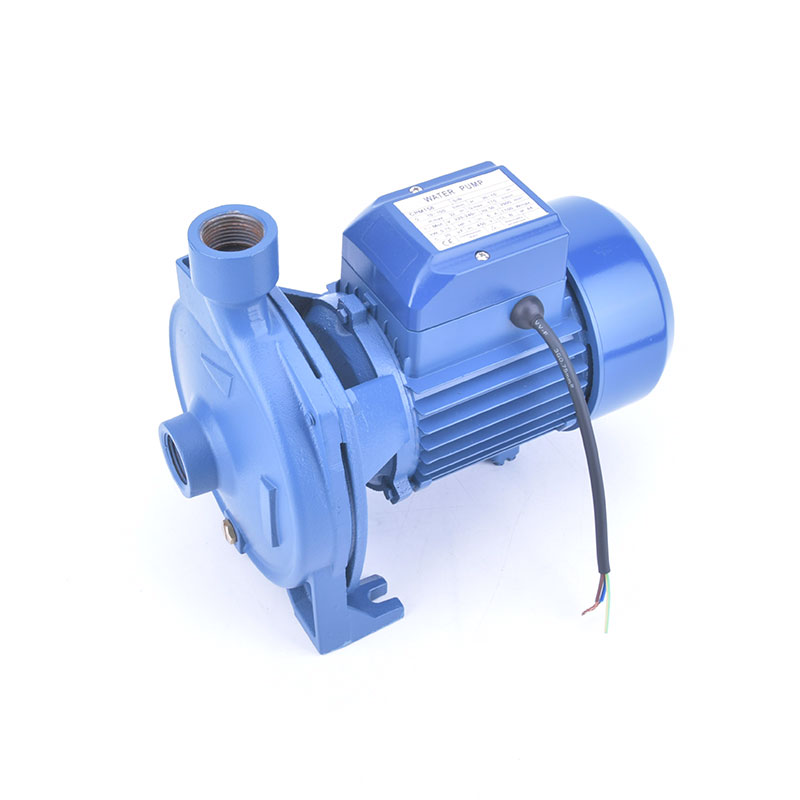
Primary limitations in viscous fluid handling
The table below outlines the core performance constraints when a Single Impeller Surface Centrifugal Pump is applied to viscous liquids.
| Limitation Category | Effect at 500 cP | Root Cause |
|---|---|---|
| Head reduction | 30–50% drop vs. water performance | Increased boundary layer friction inside the impeller passages |
| Flow rate decline | 40–60% reduction at same RPM | Poor recirculation control and higher drag losses |
| Efficiency loss | Drops below 30% in many models | Hydraulic friction dominates over inertial energy conversion |
| NPSH requirement | Rises by 2–4 meters | Viscous fluid resists rapid acceleration into the impeller eye |
Beyond these quantifiable shifts, a Single Impeller Surface Centrifugal Pump also experiences uneven discharge pressure pulsation when pumping heavy oils, syrups, or polymer solutions. The single impeller lacks the staging of multi-stage designs, meaning it cannot rebuild pressure progressively. Consequently, if the fluid viscosity exceeds 300 cP, many standard models become unsuitable without major modification.
Why viscosity matters more for this pump type
Unlike positive displacement pumps, a Single Impeller Surface Centrifugal Pump relies on high rotational speed to fling fluid outward. Viscous drag dissipates that kinetic energy into heat before the fluid reaches the volute. Additionally, internal recirculation zones expand as viscosity increases, reducing the effective impeller diameter. SINYOA recommends that clients always perform viscosity correction calculations using the Hydraulic Institute standards before finalizing any pump selection for viscous duties.
Single Impeller Surface Centrifugal Pump FAQ – Common questions answered
Question 1: Can a Single Impeller Surface Centrifugal Pump handle fluids up to 1000 cP without damage
Answer: Operating a standard Single Impeller Surface Centrifugal Pump at 1000 cP will not necessarily cause immediate mechanical damage, but performance becomes severely compromised. Flow rates typically drop by over 70%, and the pump may run dry due to insufficient fluid reaching the eye. Prolonged operation at this viscosity also leads to overheating because the pumped fluid cannot remove frictional heat quickly. For consistent 1000 cP duty, SINYOA advises switching to a progressive cavity or rotary lobe pump. If a centrifugal solution is mandatory, a modified open impeller with larger clearances and a derated motor is required.
Question 2: How do I know if my Single Impeller Surface Centrifugal Pump is struggling with viscosity
Answer: The most reliable indicators are a sudden drop in discharge pressure while the amperage draw remains normal or increases, and a significant reduction in flow despite no changes in suction conditions. Another clear sign is audible low-frequency pulsation or intermittent vibration caused by unstable recirculation. SINYOA recommends installing a flow meter and pressure gauge directly at the pump nozzle. If the measured head falls below 60% of the water performance curve at the same flow point, viscosity is the likely culprit. Also check the pump casing temperature: excessive heat indicates that viscous shear is converting too much mechanical energy into thermal energy.
Question 3: Can I oversize the motor to compensate for viscosity losses in a Single Impeller Surface Centrifugal Pump
Answer: Oversizing the motor alone does not resolve the hydraulic limitations of a Single Impeller Surface Centrifugal Pump. Even with double the nameplate power, the impeller and volute geometry remain unchanged, meaning the pump cannot convert extra shaft power into higher head or flow when handling viscous fluids. The actual bottleneck is the flow path design, not available torque. A larger motor might prevent thermal overload tripping, but the pump will still operate far to the left of its best efficiency point, causing recirculation, noise, and seal failures. SINYOA emphasizes that proper correction involves either trimming the impeller for a lower viscosity-equivalent duty or selecting a wider-channel impeller specifically designed for thick media.
Best practices and final recommendations
For facilities that must occasionally pump viscous liquids, maintaining a Single Impeller Surface Centrifugal Pump can still be viable if the viscosity stays below 250 cP and the pump operates intermittently. However, continuous high-viscosity service demands a different hydraulic design. SINYOA offers viscosity-rated impeller retrofits and full pump replacements engineered with boundary layer reduction features.
Contact us today for a detailed viscosity performance analysis of your Single Impeller Surface Centrifugal Pump application. The SINYOA engineering team will provide corrected curves, material recommendations, and a clear upgrade path to ensure reliable long-term operation.
