

What are the latest advancements in coating technologies for improving corrosion resistance of precision shafts
2026-03-20
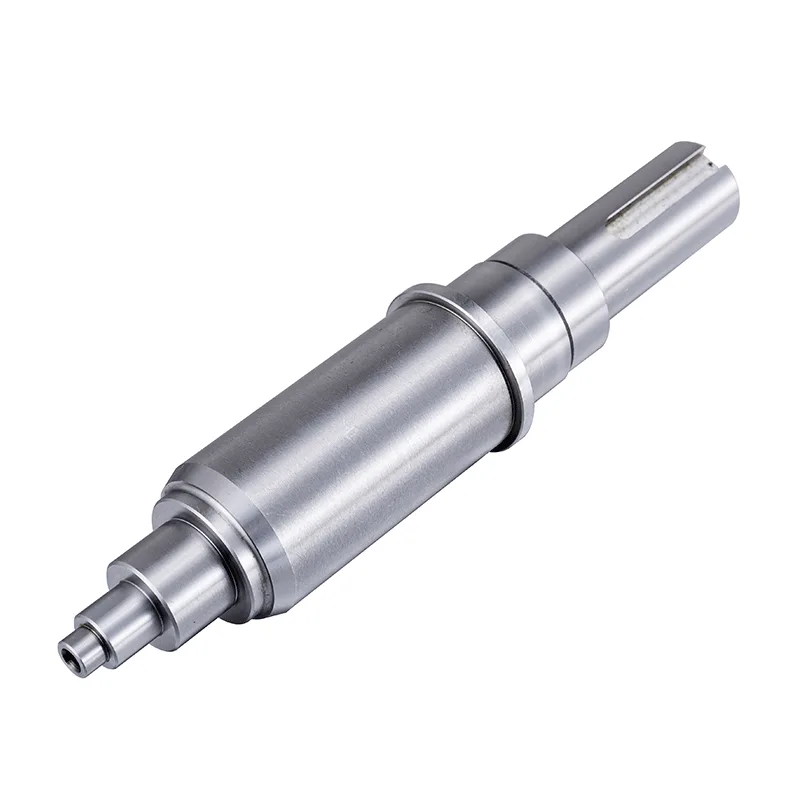
In the world of high-performance engineering, the longevity and reliability of a Precision Shaft are often determined not just by its dimensional accuracy, but by its ability to withstand harsh environmental conditions. As industrial applications push further into marine, chemical processing, and high-humidity environments, the demand for superior corrosion resistance has skyrocketed. S-SEN has been at the forefront of integrating cutting-edge coating technologies to ensure that every Precision Shaft maintains its integrity under extreme duress. Today, we explore the latest advancements that are redefining surface protection standards.
The Evolution of Coating Technologies
Modern coating solutions for Precision Shaft components have moved far beyond traditional paint or simple nickel plating. The current landscape focuses on nano-engineered ceramics, diamond-like carbon (DLC), and advanced thermal spray technologies. These methods not only provide a barrier against oxidation but also enhance surface hardness and reduce friction, creating a synergistic effect that prolongs equipment life.
| Coating Type | Corrosion Resistance | Key Advantage | Typical Application |
|---|---|---|---|
| Diamond-Like Carbon (DLC) | Excellent (Chemically inert) | Lowest friction coefficient | Aerospace & Hydraulics |
| High-Velocity Oxygen Fuel (HVOF) | Superior (Dense microstructure) | High wear & impact resistance | Marine & Oil & Gas |
| Nano-Ceramic Composite | Outstanding (Pore-free) | High temperature stability | Chemical Processing |
| Electroless Nickel (High-Phos) | Good (Amorphous structure) | Uniform thickness uniformity | Precision Electronics |
Advanced Deposition Techniques
One of the most significant advancements is the refinement of Physical Vapor Deposition (PVD) and High-Power Impulse Magnetron Sputtering (HiPIMS). These technologies allow S-SEN to apply coatings with atomic-level precision. Unlike conventional methods that risk altering the shaft’s geometry, HiPIMS produces a dense, defect-free layer that adheres to the substrate without compromising the micron-level tolerances required for a high-grade Precision Shaft.
Furthermore, the integration of smart coatings is emerging. These are multilayer systems where the top layer offers hardness, while an underlying sacrificial layer provides active corrosion protection. If the outer surface is scratched, the secondary layer reacts with the environment to form a protective film, effectively “self-healing” minor defects.
Frequently Asked Questions About Precision Shaft Coatings
Q: How does a coating affect the dimensional tolerance of a Precision Shaft?
A: Dimensional tolerance is a critical concern. Standard coating processes like dip or spray can add uneven thickness, often ranging from 25 to 250 microns, which can disrupt press-fit assemblies or bearing alignments. However, advanced technologies such as PVD (Physical Vapor Deposition) and HiPIMS utilized by S-SEN allow for coating thicknesses as low as 1 to 5 microns with exceptional uniformity. This ensures that the final Precision Shaft remains within the original tolerance class (e.g., IT5 or IT6) without requiring costly post-grinding operations. The process is precisely calibrated to account for the coating buildup, ensuring that the functional dimensions remain intact.
Q: Which coating is best for a Precision Shaft exposed to saltwater environments?
A: For saltwater (marine) environments, the combination of a high-velocity oxygen fuel (HVOF) applied tungsten carbide coating, sealed with a proprietary organic sealer, currently represents the industry best practice. HVOF creates an extremely dense, low-porosity layer that prevents chloride ion penetration, which is the primary cause of pitting corrosion in stainless steel shafts. Unlike hard chrome, which is susceptible to micro-cracking in saline conditions, HVOF coatings provide a compressive residual stress on the substrate, actively resisting crack propagation. S-SEN often specifies this solution for Precision Shaft applications in offshore drilling and naval propulsion systems, where failure due to corrosion is not an option.
Q: Can coating technologies improve the fatigue life of a Precision Shaft?
A: Yes, but only with careful process selection. Historically, some coating processes introduced tensile residual stresses that actually reduced fatigue life. However, modern advancements like low-temperature PVD and shot-peening pre-treatments have reversed this trend. When S-SEN engineers apply a DLC or CrN coating using optimized parameters, the process can induce compressive residual stresses on the shaft surface. This compressive layer acts as a barrier against fatigue crack initiation. In recent fatigue tests, Precision Shaft components treated with these advanced coatings exhibited up to a 30% increase in fatigue strength compared to uncoated shafts, particularly in high-cycle, rotating-bending applications.
Sustainability and Compliance
Beyond performance, modern coating advancements focus on environmental compliance. The industry is rapidly moving away from hard chrome plating due to hexavalent chromium restrictions (ELV, RoHS). Alternatives like trivalent chromium and thermal spray ceramics offer a safer profile without sacrificing hardness. S-SEN integrates these sustainable alternatives to ensure that every Precision Shaft meets global environmental standards while delivering superior corrosion protection.
Conclusion
The right coating transforms a Precision Shaft from a simple mechanical component into a durable asset capable of operating in the most aggressive environments. From nano-ceramic composites that withstand chemical attack to DLC coatings that eliminate wear and corrosion simultaneously, the technology landscape is evolving rapidly.
By leveraging these advanced surface engineering solutions, S-SEN ensures that your critical components achieve maximum mean time between failures (MTBF) and lower total cost of ownership.
Contact us today to discuss your specific application requirements. Our engineering team specializes in matching the ideal coating technology to your Precision Shaft specifications, ensuring performance that lasts.
